
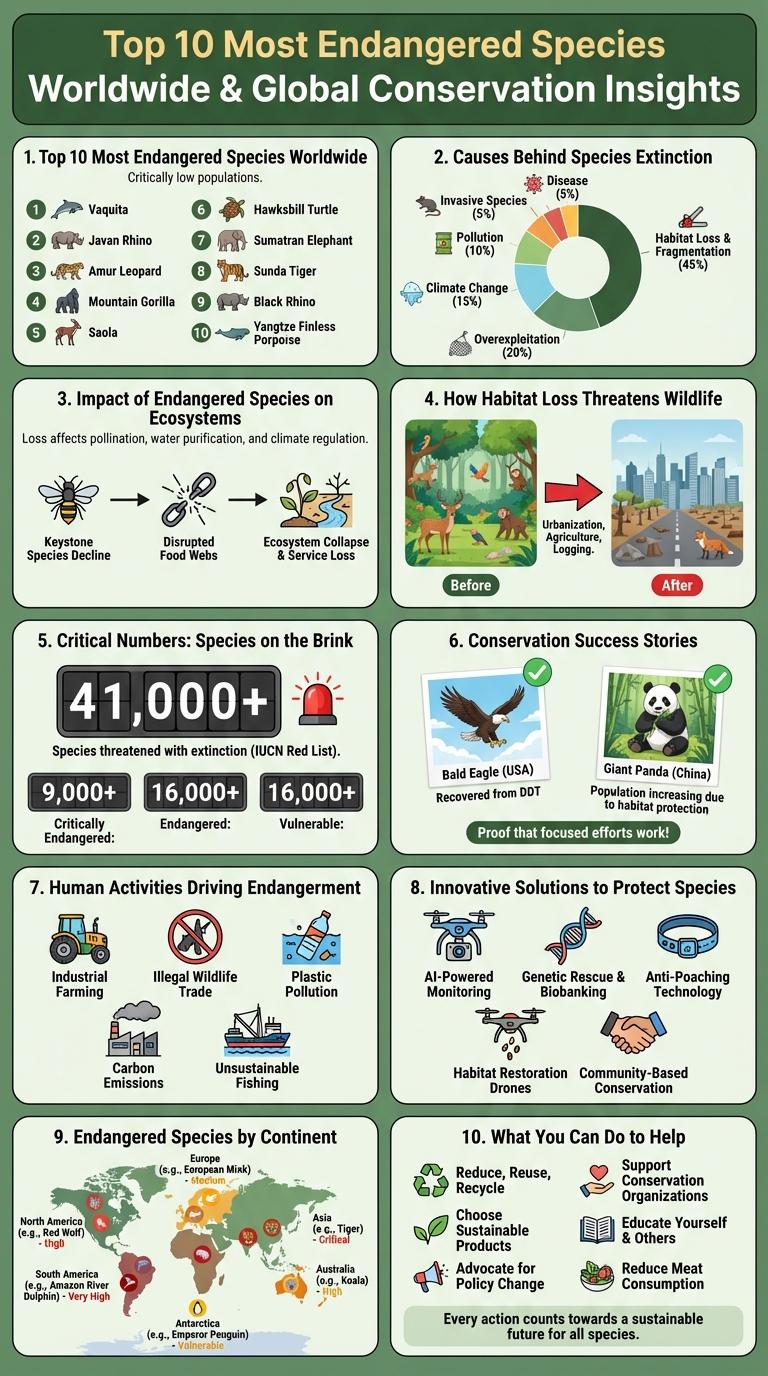
Infographics about endangered species visually highlight the critical threats these animals face and the urgent need for conservation efforts. They use clear, impactful graphics and concise data to raise awareness and educate the public on biodiversity loss. By emphasizing key statistics and conservation actions, these infographics inspire support for protecting vulnerable wildlife worldwide.
Top 10 Most Endangered Species Worldwide
Endangered species face an imminent risk of extinction, threatening global biodiversity and ecosystem stability. Protecting these species is crucial for maintaining ecological balance and preserving natural heritage.
The top 10 most endangered species worldwide include the Amur Leopard, Vaquita, Javan Rhino, Sumatran Orangutan, and Yangtze Giant Softshell Turtle. Each species suffers from habitat loss, poaching, and environmental changes that reduce their populations drastically. Conservation efforts focus on habitat protection, anti-poaching laws, and breeding programs to prevent extinction.
Causes Behind Species Extinction
Species extinction occurs due to a combination of natural and human-induced factors. Understanding the primary causes helps in developing effective conservation strategies.
- Habitat Loss - Destruction of natural environments due to urbanization, agriculture, and deforestation disrupts ecosystems and reduces species populations.
- Pollution - Contaminants in water, air, and soil degrade habitats and poison wildlife, harming reproductive and survival rates.
- Climate Change - Rising temperatures and altered weather patterns shift habitats and food availability, stressing species beyond their adaptability.
Impact of Endangered Species on Ecosystems
Endangered species play a critical role in maintaining the balance and health of ecosystems. Their decline can disrupt food chains and ecological processes, leading to negative environmental consequences.
- Biodiversity Loss - The extinction of species reduces genetic diversity, weakening ecosystem resilience against environmental changes.
- Disrupted Food Webs - The removal of a species affects predator-prey relationships, causing overpopulation or decline of other species.
- Habitat Degradation - Endangered species often help in seed dispersal and pollination, vital for sustaining plant communities and habitat integrity.
Protecting endangered species ensures the preservation of ecosystem functions and the stability of natural habitats.
How Habitat Loss Threatens Wildlife
Habitat loss is the leading cause of wildlife endangerment worldwide. Deforestation, urban development, and agriculture reduce the natural spaces animals depend on.
When habitats shrink, species face food shortages and fewer breeding areas. This disruption leads to population declines and increases extinction risks.
Critical Numbers: Species on the Brink
| Species | Population Estimate |
|---|---|
| Vaquita (Phocoena sinus) | Less than 10 individuals |
| Amur Leopard (Panthera pardus orientalis) | Around 100 individuals |
| Javan Rhino (Rhinoceros sondaicus) | Approximately 80 individuals |
| Yangtze Giant Softshell Turtle (Rafetus swinhoei) | 3 known individuals |
| Mountain Pygmy Possum (Burramys parvus) | Around 2,000 individuals |
Conservation Success Stories
Endangered species conservation has witnessed remarkable success stories worldwide, showcasing the positive impact of dedicated efforts. The Bald Eagle, once on the brink of extinction, has made a dramatic recovery due to habitat protection and banning harmful pesticides. Similarly, the Giant Panda population has increased through focused breeding programs and habitat preservation, symbolizing hope for global wildlife conservation.
Human Activities Driving Endangerment
Human activities are the primary drivers of species endangerment worldwide. Deforestation, pollution, and urban expansion disrupt natural habitats, putting countless species at risk.
Overhunting and illegal wildlife trade also contribute significantly to declining populations. Climate change, fueled by human actions, further accelerates the threat to biodiversity.
Innovative Solutions to Protect Species
How can innovative technology aid in the protection of endangered species? Cutting-edge tools such as drones and satellite tracking provide real-time data on animal movements and habitats. This information enables conservationists to respond swiftly to threats like poaching and habitat loss.
What role do genetic techniques play in species preservation? Advances in gene editing and biobanking help maintain genetic diversity and revive dwindling populations. These methods support breeding programs and improve the resilience of endangered animals.
How are artificial intelligence and machine learning used in conservation efforts? AI analyzes vast ecological datasets to predict risks and optimize resource allocation. Machine learning algorithms identify patterns in animal behavior and environmental changes, enhancing protection strategies.
What impact does community-led innovation have on protecting endangered species? Local communities develop sustainable practices and use mobile apps to report sightings or illegal activities. This grassroots involvement ensures culturally sensitive and effective conservation solutions.
How do eco-friendly technologies contribute to habitat restoration? Renewable energy projects and biodegradable materials reduce environmental footprints near critical ecosystems. Restoring natural habitats supports the survival and growth of endangered species populations.
Endangered Species by Continent
Endangered species face varying threats across different continents, reflecting diverse ecosystems and human impacts. Africa struggles with poaching affecting elephants and rhinoceroses, while Asia's forests house critically endangered tigers and orangutans. In the Americas, habitat loss threatens species like the jaguar and the Amazon river dolphin, highlighting urgent conservation needs globally.