
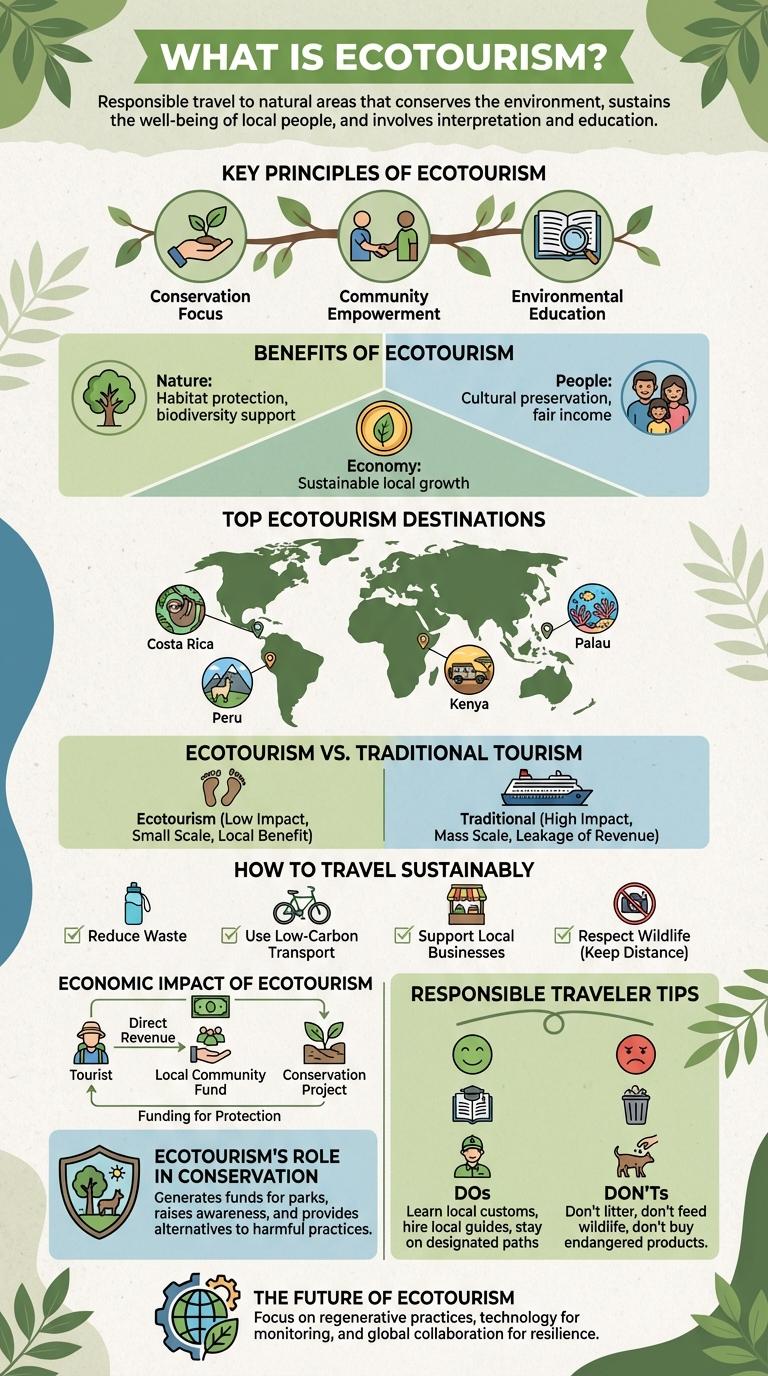
Ecotourism promotes responsible travel to natural areas, emphasizing conservation and sustainability. It supports local communities while minimizing environmental impact. Infographics visually highlight key benefits and practices of ecotourism, making complex data easy to understand.
What is Ecotourism?
| Aspect | Description |
|---|---|
| Definition | Ecotourism is responsible travel to natural areas that conserves the environment and improves the well-being of local people. |
| Purpose | Promotes environmental awareness and sustainable development while minimizing ecological impact. |
| Key Features | Involves education, conservation efforts, respect for local culture, and support for local economies. |
| Examples | Visiting protected natural parks, wildlife safaris, community homestays with eco-friendly practices. |
| Benefits | Preserves biodiversity, supports conservation funding, and fosters cultural exchange. |
Key Principles of Ecotourism
Ecotourism is a responsible travel approach that prioritizes environmental conservation and supports local communities. It promotes sustainable interactions with natural habitats and cultural heritage to minimize negative impacts.
- Conservation Focus - Ecotourism emphasizes protecting ecosystems and biodiversity while educating visitors about environmental issues.
- Community Engagement - It actively involves local populations in tourism planning and benefits to foster economic empowerment and cultural preservation.
- Minimal Impact - Travelers follow guidelines that reduce waste, prevent habitat disturbance, and ensure sustainable resource use.
- Education and Awareness - Ecotourism encourages learning about natural environments and cultural traditions to promote responsible behavior.
- Sustainable Infrastructure - Facilities and services are designed to have low environmental footprints and uphold best conservation practices.
Implementing these principles ensures ecotourism contributes positively to both nature and local societies.
Benefits of Ecotourism
Ecotourism promotes sustainable travel to natural areas, conserving the environment and improving the well-being of local people. It fosters awareness about conservation and supports preservation efforts worldwide.
Benefits of ecotourism include boosting local economies through job creation and responsible tourism revenue. It encourages education on biodiversity and sustainable practices, helping to protect fragile ecosystems.
Top Ecotourism Destinations
Ecotourism promotes sustainable travel to natural areas, conserving the environment and improving the well-being of local communities. Top ecotourism destinations include Costa Rica, known for its diverse rainforests and wildlife; Iceland, famous for its geothermal landscapes and glacier hiking; and Madagascar, offering unique biodiversity and endemic species. These destinations provide immersive, responsible travel experiences that foster environmental awareness and cultural respect.
Ecotourism vs. Traditional Tourism
Ecotourism emphasizes responsible travel to natural areas, promoting conservation and supporting local communities. It focuses on minimizing environmental impact while educating travelers about ecosystems and sustainability.
Traditional tourism primarily aims at entertainment and relaxation, often disregarding environmental consequences. It usually involves higher resource consumption and less engagement with local cultures or conservation efforts.
How to Travel Sustainably
Travel sustainably by choosing eco-friendly accommodations that prioritize energy efficiency and waste reduction. Support local communities by purchasing handmade goods and dining at locally-owned restaurants to boost the regional economy. Use low-impact transportation methods like biking, walking, or public transit to minimize your carbon footprint while exploring natural environments.
Economic Impact of Ecotourism
Ecotourism generates substantial economic benefits by promoting sustainable travel practices that support local economies. It encourages investment in conservation while creating job opportunities in rural and protected areas.
- Job Creation - Ecotourism provides employment in communities through guiding, hospitality, and craft production.
- Local Revenue - Visitor spending during ecotourism directly funds local businesses and government conservation efforts.
- Conservation Funding - A portion of ecotourism income finances protected area management and biodiversity preservation.
Ecotourism's Role in Conservation
Ecotourism promotes responsible travel to natural areas, aiming to conserve the environment and support local communities. It plays a crucial role in protecting biodiversity and fostering sustainable development.
By encouraging awareness and appreciation of natural habitats, ecotourism motivates conservation efforts and funding. It provides economic incentives for preserving endangered ecosystems and wildlife. Local communities benefit from employment opportunities, reducing reliance on harmful activities like deforestation and poaching.
Responsible Traveler Tips
Ecotourism promotes sustainable travel that conserves the environment and respects local cultures. Travelers play a vital role in minimizing their impact while maximizing positive contributions to the destinations they visit.
- Research Before Traveling - Understand the local environment, customs, and regulations to avoid unintentional harm.
- Support Local Communities - Choose local guides, accommodations, and businesses to boost the local economy sustainably.
- Minimize Waste - Carry reusable items and properly dispose of trash to reduce pollution and protect natural habitats.