
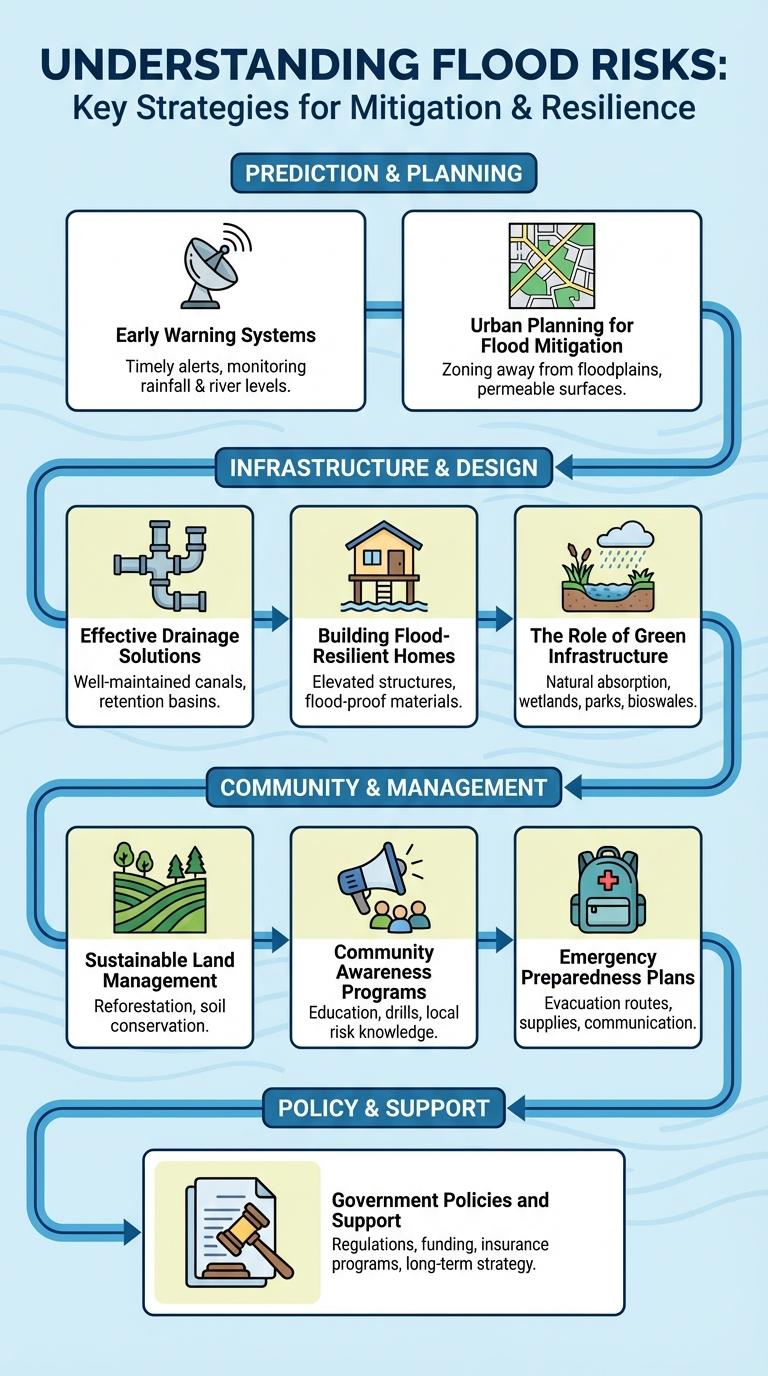
Flood prevention relies on strategic measures such as robust infrastructure, effective water management, and community preparedness to minimize damage. Understanding key techniques like levees, drainage systems, and early warning alerts enhances resilience against potential floods. Visual representations in infographics simplify complex data, making flood prevention strategies accessible and actionable for diverse audiences.
Understanding Flood Risks
Understanding flood risks is essential for effective flood prevention and management. Flood risks vary based on geographic location, weather patterns, and land use.
Identifying high-risk areas helps communities prepare and implement protective measures. Accurate flood risk assessment relies on data such as rainfall intensity, river levels, and soil saturation.
Early Warning Systems
Early Warning Systems play a crucial role in flood prevention by detecting rising water levels and issuing timely alerts. These systems use advanced sensors and weather data to predict floods, allowing communities to prepare and respond efficiently. Implementing reliable early warning networks reduces the risk of damage, saves lives, and minimizes economic losses during flood events.
Urban Planning for Flood Mitigation
Urban planning plays a crucial role in reducing flood risks in cities. Effective design and infrastructure can significantly minimize flood damage and protect communities.
- Green Infrastructure - Incorporates parks, green roofs, and permeable pavements to absorb stormwater and reduce runoff.
- Flood Zoning - Regulates land use by restricting construction in flood-prone areas to prevent property damage.
- Stormwater Management Systems - Utilizes retention basins, drainage networks, and pump stations to control water flow during heavy rainfall.
Effective Drainage Solutions
Effective drainage solutions are essential for flood prevention, minimizing water accumulation during heavy rainfall. Properly designed systems channel excess water away from vulnerable areas, reducing flood risk.
Key drainage solutions include permeable pavements, retention basins, and stormwater drains. These methods improve water absorption and control runoff, safeguarding communities from flooding.
Building Flood-Resilient Homes
Building flood-resilient homes is essential for reducing damage during floods and ensuring safety. Incorporating flood-resistant materials and elevated designs helps protect properties against rising waters.
Key strategies include raising the foundation above expected flood levels and using water-resistant insulation and flooring. Installing flood vents allows water to flow through, minimizing structural pressure. Proper landscaping and drainage systems can direct water away from the home, further reducing flood impact.
Sustainable Land Management
Flood prevention requires effective sustainable land management to reduce runoff and improve water absorption. Implementing eco-friendly practices helps maintain natural flood buffers and supports long-term environmental health.
- Vegetative Cover - Planting trees and grasses stabilizes soil and enhances water infiltration, reducing surface runoff.
- Contour Farming - Farming along land contours slows water flow and minimizes soil erosion during heavy rains.
- Wetland Restoration - Restoring wetlands acts as natural sponges, absorbing excess floodwater and filtering pollutants.
Community Awareness Programs
Community awareness programs play a vital role in flood prevention by educating residents about risks and safety measures. Effective communication helps reduce flood damage and improves emergency response.
- Educational Workshops - Local workshops inform residents about flood risks, evacuation routes, and preparedness steps.
- Public Service Announcements - Targeted announcements via media platforms increase awareness during flood season.
- Community Drills - Organized drills simulate flood scenarios to ensure residents know timely and safe evacuation procedures.
Empowering communities with knowledge enhances resilience and minimizes the impact of floods.
Emergency Preparedness Plans
Emergency preparedness plans play a crucial role in flood prevention by outlining specific actions to protect lives and property. These plans include evacuation routes, communication strategies, and resource allocation to ensure rapid response during flood events. Effective preparation minimizes damage and accelerates recovery efforts, enhancing community resilience.
The Role of Green Infrastructure
How does green infrastructure contribute to flood prevention? Green infrastructure uses natural systems like wetlands, rain gardens, and permeable pavements to absorb and slow stormwater. These methods reduce surface runoff, minimizing the risk of floods in urban and rural areas.
What are the key types of green infrastructure for flood control? Key types include rain gardens, green roofs, permeable pavements, bioswales, and urban forests. Each helps capture and filter rainwater, promoting groundwater recharge and lowering flood risk.
Why is green infrastructure preferred over traditional drainage systems? Green infrastructure supports natural water cycles and improves water quality while managing floods. Unlike concrete drains, it provides ecological benefits and adapts better to climate change effects.
How does urban green space impact flood resilience? Urban green spaces act as natural buffers by absorbing excess rainwater and slowing its flow. This decreases pressure on stormwater systems and prevents flooding in densely populated areas.
What are the economic benefits of implementing green infrastructure for flood prevention? Implementing green infrastructure reduces costs related to flood damage and stormwater management. Investments in green infrastructure can increase property values and create jobs in landscaping and environmental planning.