
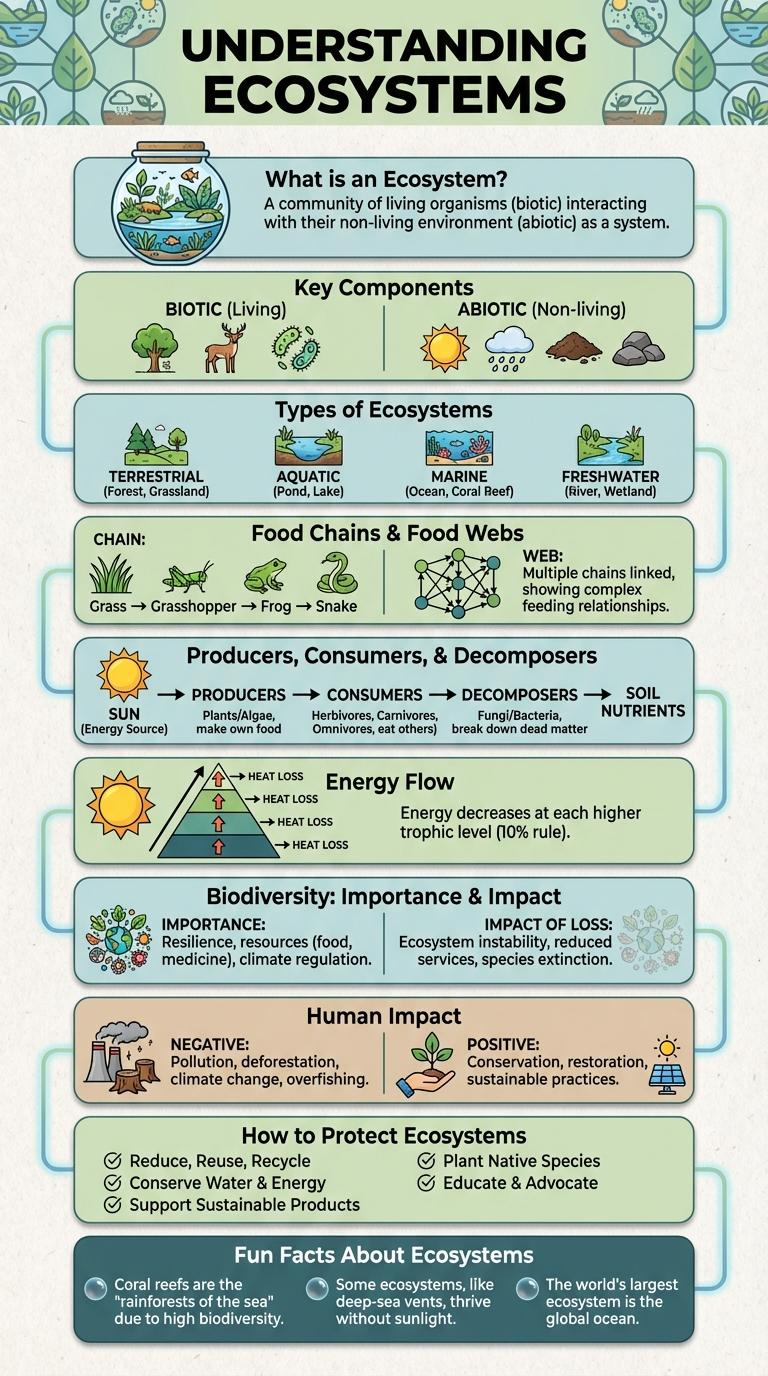
Ecosystems are complex networks where living organisms interact with their environment, maintaining balance and supporting life. This infographic visually breaks down the components and functions of ecosystems, illustrating energy flow, food chains, and biodiversity. Understanding these interactions highlights the importance of preserving natural habitats for ecological stability.
What is an Ecosystem?
An ecosystem is a community of living organisms interacting with their physical environment. It includes both biotic components like plants and animals, and abiotic factors such as soil, water, and climate.
These interactions create a complex web of energy flow and nutrient cycling. Ecosystems vary in size and type, ranging from forests and deserts to freshwater and marine systems.
Key Components of an Ecosystem
| Key Component | Description |
|---|---|
| Producers | Organisms like plants and algae that create energy through photosynthesis. |
| Consumers | Animals that consume producers or other consumers for energy. |
| Decomposers | Fungi and bacteria that break down dead matter, recycling nutrients. |
| Abiotic Factors | Non-living elements like sunlight, water, soil, and temperature influencing ecosystem functions. |
| Habitat | The natural environment where a community of organisms live and interact. |
Types of Ecosystems
An ecosystem is a community of living organisms interacting with their physical environment. Types of ecosystems include terrestrial and aquatic, each supporting diverse life forms. Understanding these ecosystems helps in conservation and environmental management.
| Type of Ecosystem | Description |
|---|---|
| Terrestrial | Land-based ecosystems like forests, deserts, and grasslands. |
| Aquatic | Water-based ecosystems including freshwater and marine environments. |
| Forest | Dense vegetation zones with high biodiversity. |
| Desert | Areas with sparse rainfall and specialized flora and fauna. |
| Wetlands | Transitional zones between terrestrial and aquatic ecosystems. |
Food Chains and Food Webs
Food chains illustrate the direct flow of energy from one organism to another, starting with producers like plants and moving to consumers such as herbivores and carnivores. Food webs consist of interconnected food chains that demonstrate the complex feeding relationships within an ecosystem. These structures highlight the energy transfer and dependency among organisms, maintaining ecosystem balance and biodiversity.
Producers, Consumers, and Decomposers
An ecosystem consists of interconnected living organisms interacting with their physical environment. Key components include producers, consumers, and decomposers, each playing vital roles in energy flow and nutrient cycling.
- Producers - Organisms like plants and algae convert sunlight into energy through photosynthesis, forming the base of the food chain.
- Consumers - Animals that consume producers or other consumers to obtain energy, classified as herbivores, carnivores, or omnivores.
- Decomposers - Fungi and bacteria break down dead organic matter, recycling nutrients back into the soil for producers to use.
Energy Flow in Ecosystems
Energy flow in ecosystems describes the transfer of energy from one organism to another through feeding relationships. Sunlight is the primary energy source that drives this process, starting with producers like plants.
Producers convert solar energy into chemical energy via photosynthesis, forming the base of the food chain. Herbivores consume producers, and carnivores eat herbivores, transferring energy through trophic levels. Energy diminishes at each level due to metabolic processes, with only about 10% passing to the next group.
Biodiversity: Importance and Impact
Why is biodiversity crucial for ecosystems? Biodiversity ensures resilience by supporting ecosystem stability and productivity. It enables species to adapt to environmental changes, maintaining ecological balance.
How does biodiversity impact human well-being? Healthy biodiversity provides essential services like clean air, water, and food resources. It also offers medicinal resources and supports economies through agriculture and tourism.
What role do different species play in biodiversity? Each species contributes unique functions, such as pollination, nutrient cycling, and habitat formation. The loss of any species can disrupt these processes and weaken ecosystem health.
How does biodiversity loss affect the environment? Reduced biodiversity leads to decreased ecosystem productivity and increased vulnerability to disturbances. This can result in habitat degradation and loss of ecosystem services vital for survival.
How can biodiversity conservation benefit ecosystems? Protecting diverse species strengthens ecosystem resilience and productivity. Conservation efforts support ecosystem functions, ensuring sustainability for future generations.
Human Impact on Ecosystems
Human activities significantly affect ecosystems worldwide, altering natural processes and biodiversity. Understanding these impacts is crucial for developing sustainable practices and protecting the environment.
- Deforestation - The removal of forests for agriculture and urban development disrupts habitats and decreases biodiversity.
- Pollution - Industrial and chemical pollutants contaminate air, water, and soil, harming plants and animals within ecosystems.
- Climate Change - Human-induced climate change shifts temperature and weather patterns, threatening species survival and ecosystem stability.
How to Protect Ecosystems
Healthy ecosystems are vital for maintaining biodiversity and supporting life on Earth. Protecting these natural systems ensures the survival of countless species and the well-being of human communities.
- Reduce Pollution - Limiting waste and contaminants helps preserve air, water, and soil quality essential for ecosystem health.
- Conserve Natural Habitats - Protecting forests, wetlands, and oceans maintains biodiversity and supports species survival.
- Promote Sustainable Practices - Using resources responsibly reduces environmental impact and supports ecosystem regeneration.
Collective efforts in education, policy, and individual action are key to safeguarding ecosystems for future generations.