
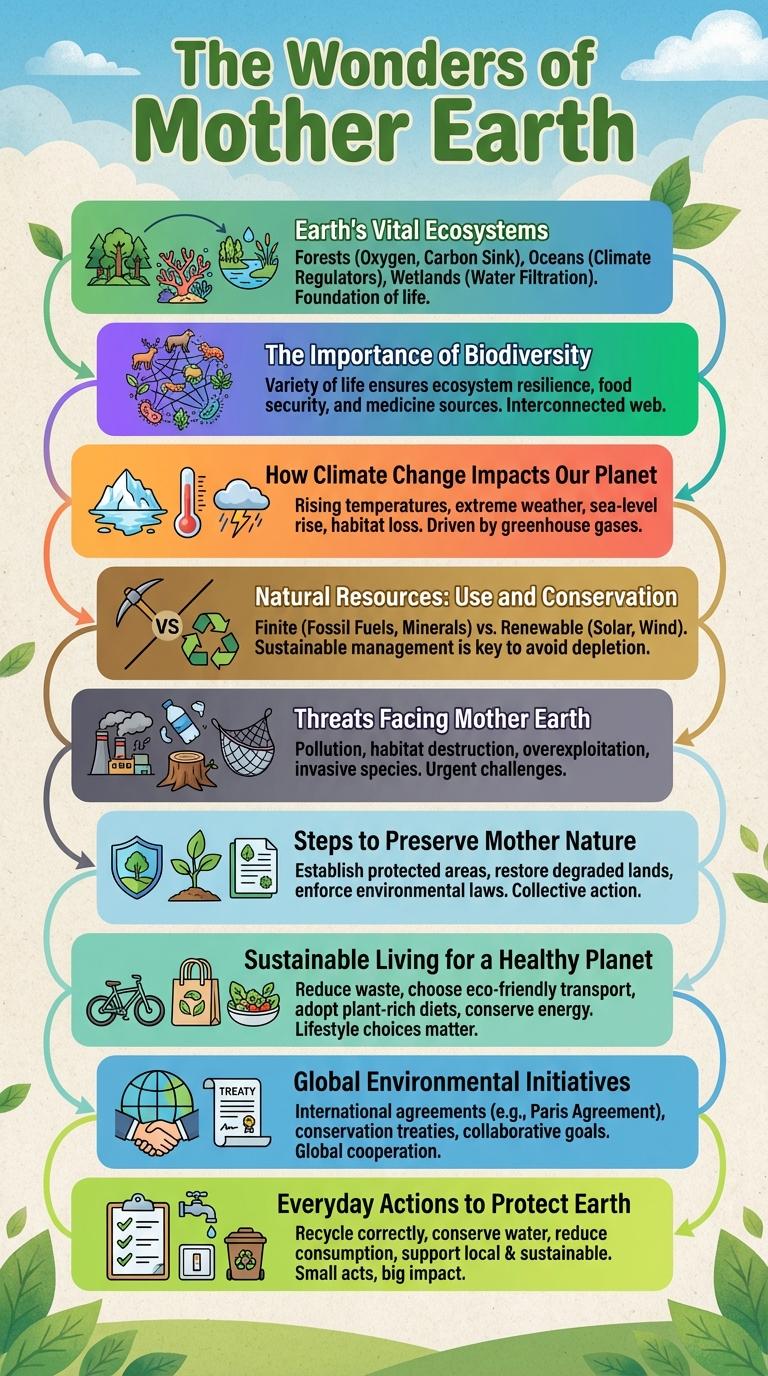
Mother Earth embodies the planet's natural beauty and the vital ecosystems sustaining all life forms. This infographic highlights Earth's diverse landscapes, rich biodiversity, and the urgent need for environmental conservation. Understanding these elements fosters greater awareness and inspires actions to protect our shared home.
The Wonders of Mother Earth
| Aspect | Description |
|---|---|
| Oceans | Cover 71% of Earth's surface, home to diverse marine life and crucial for climate regulation. |
| Forests | Provide oxygen, store carbon, and house over 80% of terrestrial species. |
| Mountains | Reservoirs of biodiversity and fresh water, shaping weather and providing habitats. |
| Deserts | Unique ecosystems with specialized flora and fauna adapted to extreme conditions. |
| Coral Reefs | Support 25% of marine species, protect shorelines, and contribute to fisheries. |
Earth's Vital Ecosystems
Mother Earth sustains life through diverse and vital ecosystems essential for planetary health. These ecosystems regulate climate, support biodiversity, and provide resources for human survival.
- Forests - They cover 31% of the Earth's land area and act as carbon sinks, reducing greenhouse gases.
- Oceans - Oceans absorb over 30% of carbon dioxide emissions and provide habitat for 80% of marine species.
- Wetlands - Wetlands filter pollutants, store floodwaters, and support over 40% of endangered species globally.
The Importance of Biodiversity
Biodiversity is essential for maintaining healthy ecosystems that support life on Earth. It provides vital services such as clean air, water, and fertile soil, which are crucial for human survival. Protecting biodiversity ensures a resilient environment capable of adapting to changes and sustaining future generations.
How Climate Change Impacts Our Planet
Climate change accelerates the melting of polar ice caps, leading to rising sea levels worldwide. This threatens coastal communities and disrupts marine ecosystems.
Increased global temperatures cause more frequent and severe weather events such as hurricanes and droughts. These changes jeopardize agriculture, wildlife habitats, and human health across the planet.
Natural Resources: Use and Conservation
Mother Earth provides a wealth of natural resources essential for human survival, including water, minerals, and forests. These resources support agriculture, energy production, and biodiversity.
Conservation efforts aim to manage natural resources sustainably to prevent depletion and environmental damage. Practices such as recycling, reforestation, and water conservation help maintain Earth's balance and support future generations.
Threats Facing Mother Earth
What are the major threats facing Mother Earth today?
Mother Earth is challenged by deforestation, which reduces biodiversity and disrupts ecosystems. Pollution from industries and human activities contaminates air, water, and soil, harming wildlife and human health.
How does climate change impact the planet?
Climate change leads to rising global temperatures and extreme weather events, affecting habitats and food security. Melting ice caps and rising sea levels threaten coastal communities and marine life.
Why is habitat destruction harmful to Earth's ecosystems?
Habitat destruction results in loss of species and decreased biodiversity, weakening ecosystem resilience. Urban expansion and agriculture replace natural landscapes, disrupting animal migration and plant growth.
What role does plastic pollution play in harming marine environments?
Plastic pollution causes ingestion and entanglement of marine animals, leading to injury or death. Microplastics enter the food chain, affecting aquatic species and human health.
How do human activities accelerate these environmental threats?
Industrialization, overconsumption, and improper waste management intensify resource depletion and pollution. Unsustainable practices undermine Earth's ability to regenerate and maintain balance.
Steps to Preserve Mother Nature
Preserving Mother Earth is essential for maintaining biodiversity and ensuring a sustainable future. Simple, actionable steps can significantly reduce environmental impact and protect natural resources.
- Reduce Plastic Waste - Minimize single-use plastics to prevent pollution in oceans and landfills.
- Conserve Water - Use water efficiently to preserve freshwater ecosystems and reduce scarcity.
- Plant Trees - Trees absorb carbon dioxide and help restore natural habitats.
Sustainable Living for a Healthy Planet
Mother Earth provides the essential resources needed for life, yet these resources are finite and require responsible stewardship. Sustainable living involves reducing waste, conserving water, and using renewable energy sources to minimize environmental impact. Embracing eco-friendly habits fosters a healthier planet for current and future generations.
Global Environmental Initiatives
Mother Earth faces numerous environmental challenges that require urgent and coordinated global responses. Various initiatives aim to protect natural resources, reduce pollution, and promote sustainability worldwide.
- Paris Agreement - An international climate treaty focused on limiting global warming to below 2degC through national commitments to reduce greenhouse gas emissions.
- United Nations Sustainable Development Goals - A set of 17 goals addressing global challenges such as clean energy, climate action, and life on land and below water.
- Global Environmental Facility - A funding mechanism supporting projects that conserve biodiversity, combat climate change, and improve environmental health in developing countries.
These global initiatives collectively work to safeguard Earth's ecosystems and ensure a sustainable future for all.