
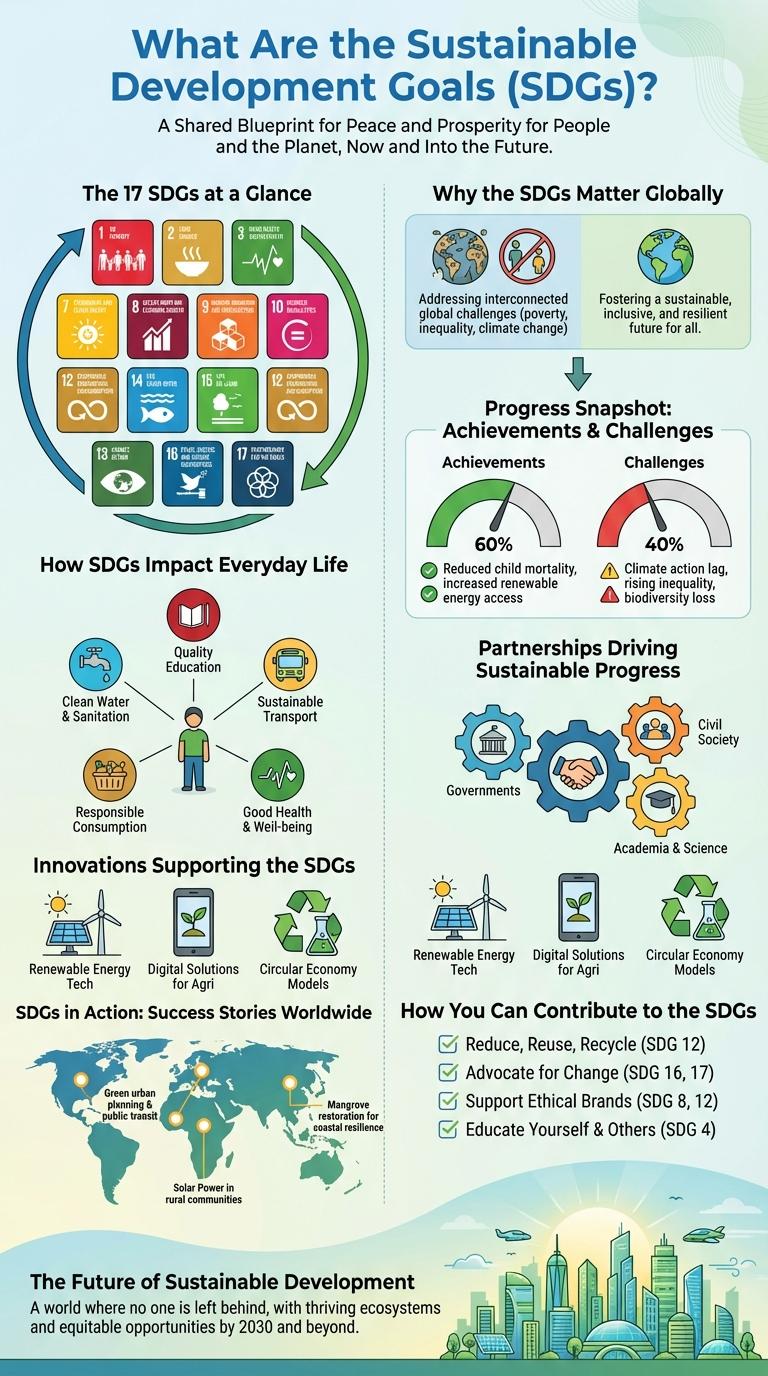
Sustainable Development Goals (SDGs) aim to address global challenges like poverty, inequality, and climate change through a unified framework. Each goal targets specific areas such as clean energy, quality education, and responsible consumption to foster a better future. Infographics visually simplify these complex objectives, highlighting progress and inspiring collective action.
What Are the Sustainable Development Goals (SDGs)?
The Sustainable Development Goals (SDGs) are a set of 17 global objectives established by the United Nations in 2015 to address pressing social, economic, and environmental challenges worldwide. These goals aim to create a more equitable and sustainable future for all by 2030.
- Global Framework - The SDGs provide a universal blueprint for development initiatives across countries and sectors.
- Inclusive Goals - They target issues like poverty, health, education, climate change, and inequality.
- Measurable Targets - Each goal includes specific targets and indicators for monitoring progress.
Achieving the SDGs requires collaborative efforts from governments, businesses, and civil society worldwide.
The 17 SDGs at a Glance
The 17 Sustainable Development Goals (SDGs) are a universal call to action to end poverty, protect the planet, and ensure prosperity for all by 2030. These goals address global challenges including health, education, inequality, climate change, and environmental sustainability.
Each goal has specific targets tracked by indicators to measure progress worldwide. Together, the 17 SDGs provide a comprehensive framework to achieve a better and more sustainable future for everyone.
Why the SDGs Matter Globally
The Sustainable Development Goals (SDGs) address critical global challenges such as poverty, inequality, and climate change. They provide a universal framework for countries to work towards a more sustainable and equitable future.
SDGs matter globally because they promote economic growth, social inclusion, and environmental protection simultaneously. Over 190 countries have committed to achieving these 17 goals by 2030, emphasizing worldwide collaboration. Progress on the SDGs can lead to improved health, education, and prosperity for billions of people.
Progress Snapshot: Achievements & Challenges
| Goal | Progress Snapshot: Achievements & Challenges |
|---|---|
| No Poverty | Significant reduction in extreme poverty globally; ongoing challenges in regions affected by conflict and climate impact. |
| Quality Education | Increased enrollment rates and digital learning expansion; disparities remain in low-income and rural areas. |
| Clean Water & Sanitation | Improved access to safe drinking water; sanitation facilities lag behind, especially in developing countries. |
| Climate Action | Growing adoption of renewable energy and emission reduction policies; global temperature rise continues, requiring accelerated efforts. |
| Gender Equality | Progress in legal frameworks promoting women's rights; persistent gender gaps in leadership and wage equality. |
How SDGs Impact Everyday Life
The Sustainable Development Goals (SDGs) influence daily life by promoting clean energy, quality education, and good health. These goals encourage responsible consumption and climate action, improving community well-being and environmental protection. Embracing SDGs helps create a balanced world where economic growth, social inclusion, and environmental sustainability coexist.
Partnerships Driving Sustainable Progress
How do partnerships accelerate the achievement of Sustainable Development Goals? Collaborative efforts between governments, businesses, and civil society create innovative solutions and share resources effectively. These alliances maximize impact by aligning goals and fostering inclusive, scalable progress.
| Partnership Type | Impact on SDGs |
|---|---|
| Government and Private Sector | Mobilizes funding and expertise for infrastructure and innovation |
| Nonprofits and Communities | Enhances local engagement and empowers marginalized groups |
| International Organizations | Coordinates global efforts and shares best practices |
| Academic Institutions | Drives research and knowledge sharing for sustainable solutions |
| Multistakeholder Coalitions | Ensures accountability and holistic progress monitoring |
Innovations Supporting the SDGs
Innovations play a critical role in advancing the United Nations Sustainable Development Goals (SDGs). Cutting-edge technologies and creative solutions accelerate progress toward global sustainability targets.
These innovations address challenges such as clean energy, smart agriculture, and inclusive education, driving measurable impacts worldwide.
- Renewable Energy Technologies - Solar and wind power innovations reduce carbon emissions and expand access to clean energy.
- Precision Agriculture - AI-driven farming improves crop yields while conserving water and soil resources.
- Digital Education Platforms - Online learning tools increase education accessibility in underserved regions.
SDGs in Action: Success Stories Worldwide
Sustainable Development Goals (SDGs) are transforming communities worldwide through innovative projects and strategic policies. Success stories demonstrate measurable progress in health, education, and environmental conservation.
Global initiatives showcase how targeted efforts foster sustainable growth and improve quality of life.
- Clean Water Access in Kenya - Community-led water purification systems provide safe drinking water to over 50,000 residents.
- Renewable Energy Expansion in Germany - Germany increased renewable energy usage to 45%, reducing carbon emissions significantly.
- Education for Girls in Bangladesh - Scholarship programs increased girls' school enrollment rates by 30% in rural areas.
- Urban Green Spaces in Brazil - Reforestation projects created over 1,000 hectares of urban green zones improving air quality.
- Waste Management in Japan - Advanced recycling initiatives achieved 90% waste diversion from landfills.
How You Can Contribute to the SDGs
Contributing to the Sustainable Development Goals (SDGs) is achievable through everyday actions that promote environmental, social, and economic well-being. Simple steps include reducing waste, supporting local communities, and advocating for clean energy. Collective individual efforts drive progress towards a healthier planet and equitable society.