
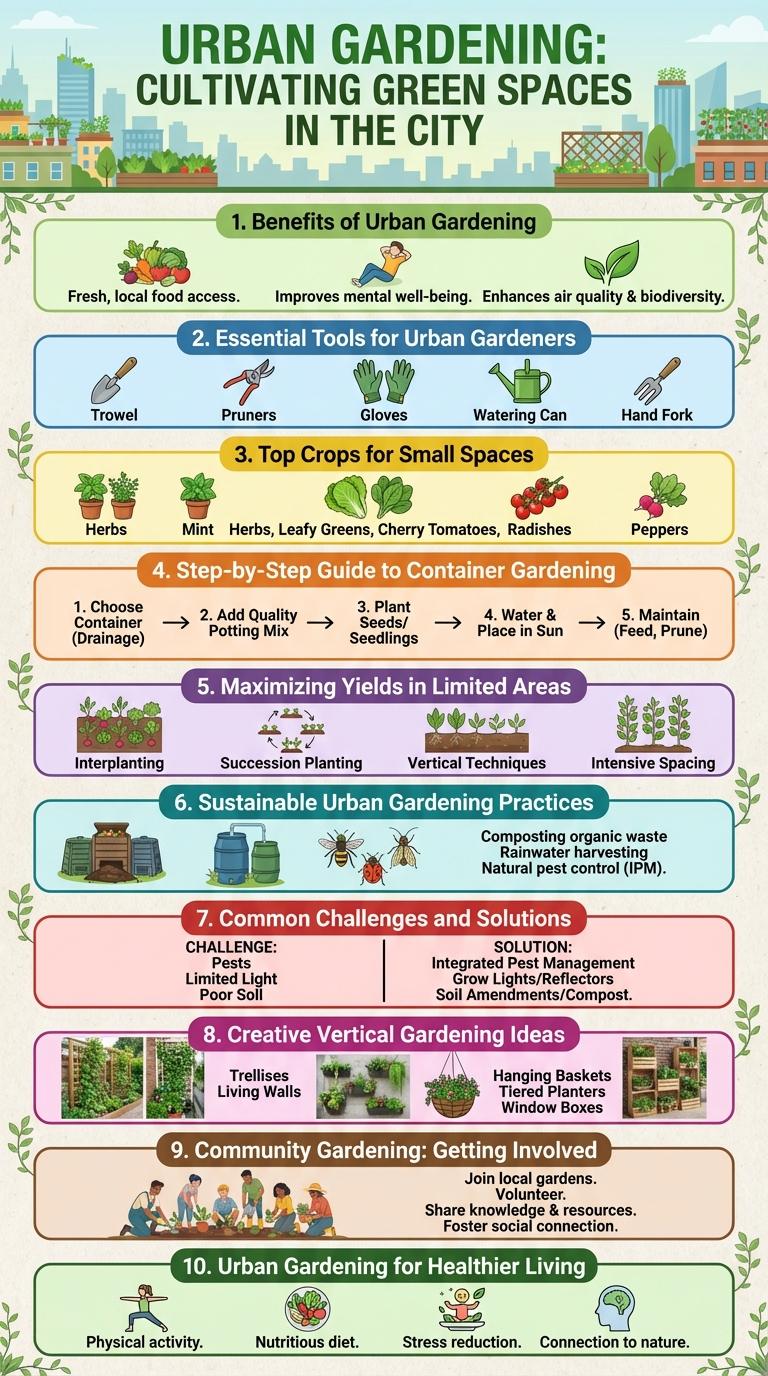
Urban gardening transforms limited city spaces into thriving green areas that boost mental health and improve air quality. Cultivating plants on rooftops, balconies, and community plots increases access to fresh produce and fosters community engagement. This infographic reveals key benefits, practical tips, and popular urban gardening methods to inspire city dwellers.
Benefits of Urban Gardening
What are the benefits of urban gardening in city environments? Urban gardening transforms unused urban spaces into green, productive areas that improve air quality. It promotes local food production and supports biodiversity within cities.
How does urban gardening impact physical and mental health? Engaging in urban gardening encourages physical activity and reduces stress levels. It fosters a sense of community and well-being among participants.
Why is urban gardening important for sustainability? Urban gardens help reduce carbon footprints by minimizing food transportation distances. They contribute to waste reduction through composting and efficient water use.
What economic advantages does urban gardening offer? Growing food locally decreases spending on store-bought produce and saves money. It can create opportunities for small businesses and community markets.
How does urban gardening influence education and awareness? Urban gardens serve as hands-on learning spaces about ecology and nutrition. They increase environmental awareness, particularly among children and urban residents.
Essential Tools for Urban Gardeners
Urban gardening transforms small spaces into vibrant green sanctuaries. Essential tools empower gardeners to cultivate thriving plants efficiently.
- Container Pots - Ideal for limited spaces, these pots support plant growth and mobility.
- Hand Trowel - A versatile digging tool that aids in planting and soil cultivation.
- Watering Can - Ensures precise watering to maintain optimal moisture levels.
- Pruning Shears - Helps maintain plant health by trimming dead or overgrown foliage.
- Soil Tester - Measures pH and nutrient levels for optimal soil conditions.
Utilizing these tools enhances productivity and success in urban gardening environments.
Top Crops for Small Spaces
Urban gardening transforms small spaces into green havens, providing fresh produce and improving air quality. Choosing the right crops maximizes yield in limited areas.
Top crops for small spaces include herbs like basil and mint, which require minimal room and grow quickly. Leafy greens such as spinach and kale thrive in containers and offer high nutritional value. Cherry tomatoes also flourish in small pots, delivering a bountiful harvest throughout the season.
Step-by-Step Guide to Container Gardening
| Step | Description |
|---|---|
| 1. Choose Containers | Select pots with drainage holes. Use materials like terracotta, plastic, or fabric grow bags. |
| 2. Select Soil | Use high-quality potting mix rich in organic matter for proper aeration and moisture retention. |
| 3. Pick Plants | Choose plants suited for container growth: herbs, leafy greens, compact vegetables, and flowers. |
| 4. Planting | Fill containers with soil, leaving 2 inches from the top. Plant seeds or seedlings according to instructions. |
| 5. Care & Maintenance | Water regularly, ensuring soil stays moist but not waterlogged. Fertilize every 2-4 weeks with balanced nutrients. |
Maximizing Yields in Limited Areas
Urban gardening maximizes yields by utilizing vertical space and container gardening techniques. Selecting high-yield, compact plant varieties enhances productivity in limited areas. Efficient watering and nutrient management ensure healthy growth and abundant harvests in small urban plots.
Sustainable Urban Gardening Practices
Sustainable urban gardening transforms city spaces into green, productive areas that enhance local biodiversity and reduce carbon footprints. Incorporating practices like composting and rainwater harvesting supports environmental health and resource conservation.
Using native plants and organic methods improves soil health and minimizes the need for chemical fertilizers and pesticides. Vertical gardens and container planting maximize limited space while promoting urban food security and community well-being.
Common Challenges and Solutions
Urban gardening faces common challenges such as limited space, poor soil quality, and pests. Innovative solutions include vertical gardening, container planting with enriched soil, and natural pest control methods. These strategies help maximize yield and maintain healthy plants in urban environments.
Creative Vertical Gardening Ideas
Urban gardening transforms small city spaces into lush green havens, enhancing air quality and boosting mental well-being. Vertical gardening maximizes limited areas by allowing plants to grow upward on walls, fences, or specially designed structures.
Creative vertical gardening ideas include using recycled wooden pallets, hanging planters, and modular wall systems that save space and add aesthetic appeal. Incorporating herbs, succulents, and flowering plants creates vibrant, sustainable urban oases suited for balconies, rooftops, or small patios.
Community Gardening: Getting Involved
Community gardening fosters social connections and promotes sustainable urban living. Getting involved enhances access to fresh produce and strengthens neighborhood ties.
- Join Local Gardens - Find nearby community garden projects through city websites or social media groups to get started.
- Volunteer Time - Contribute to planting, weeding, and organizing events to support garden maintenance and growth.
- Attend Workshops - Participate in gardening classes and seminars to improve skills and share knowledge with fellow gardeners.