
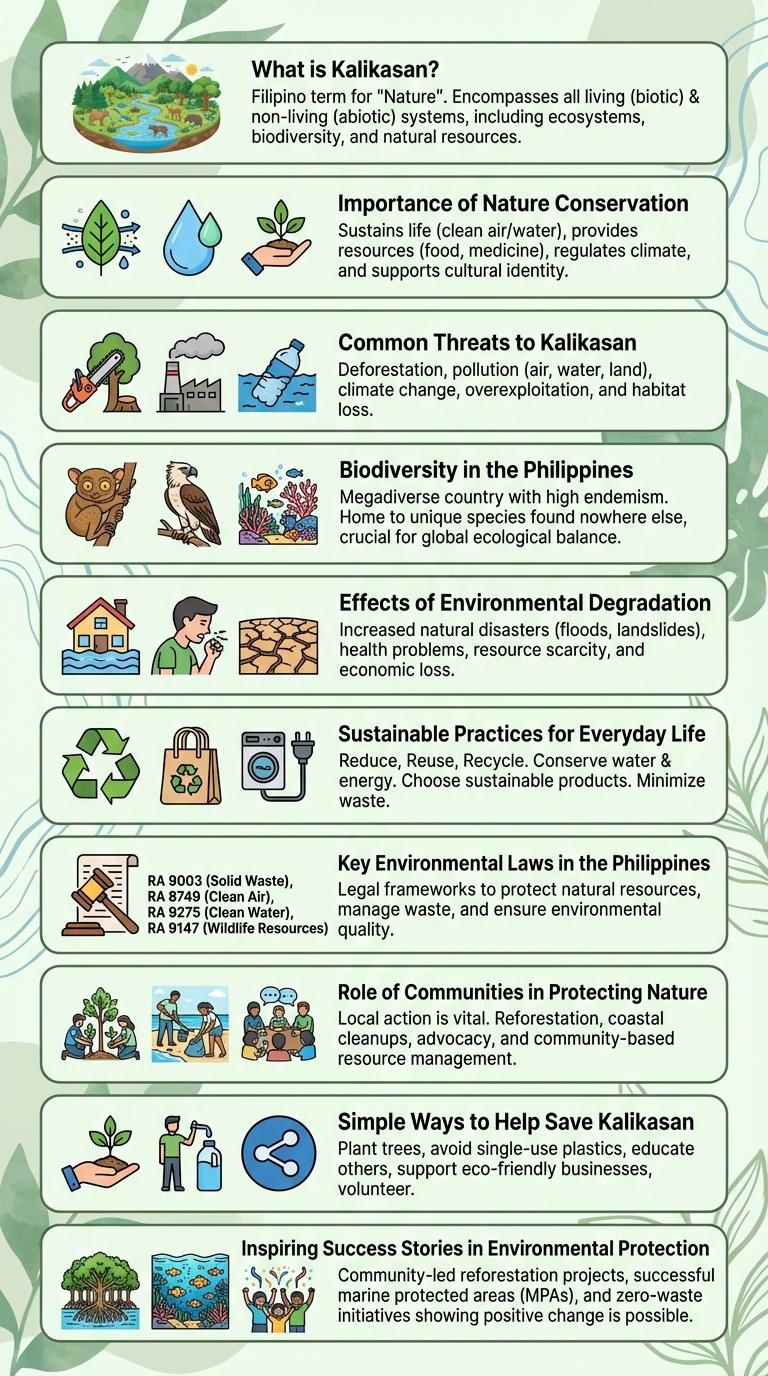
Kalikasan, the Filipino term for nature, embodies the rich biodiversity and natural beauty found in the Philippines. This infographic highlights key environmental features, conservation efforts, and the importance of sustainable practices to protect our natural heritage. Understanding these elements fosters awareness and encourages collective action towards preserving kalikasan for future generations.
What is Kalikasan?
Kalikasan is a Filipino term that translates to "nature" in English. It encompasses the environment, including plants, animals, and natural resources.
Kalikasan plays a vital role in sustaining life and maintaining ecological balance. Protecting kalikasan is essential for future generations and the planet's health.
Importance of Nature Conservation
| Aspect | Details |
|---|---|
| Definition | Nature conservation involves protecting ecosystems, wildlife, and natural resources to maintain biodiversity and ecological balance. |
| Ecological Benefits | Preserves habitats, ensures clean air and water, supports pollination, and maintains climate regulation. |
| Economic Value | Sustains agriculture, fisheries, and tourism, providing livelihoods and raw materials for industries. |
| Cultural Significance | Supports indigenous practices, spiritual values, and recreational activities linked to natural environments. |
| Global Impact | Mitigates climate change, reduces natural disaster risks, and preserves genetic diversity essential for future adaptation. |
Common Threats to Kalikasan
Kalikasan, the Filipino term for nature, faces numerous common threats that endanger its delicate balance. These threats include deforestation, pollution, and climate change, which contribute to habitat destruction, loss of biodiversity, and adverse environmental impacts. Addressing these challenges requires collective effort to promote sustainable practices and environmental awareness.
Biodiversity in the Philippines
The Philippines is recognized as one of the world's biodiversity hotspots. Its diverse ecosystems support a vast range of unique flora and fauna found nowhere else on Earth.
Conservation efforts are critical to protect these species from threats such as habitat loss and climate change.
- High Endemism - Over 52% of the country's wildlife species are endemic, meaning they exist only in the Philippines.
- Rich Marine Life - The Coral Triangle covers part of Philippine waters, hosting more than 2,000 fish species and extensive coral reefs.
- Threatened Species - Several species including the Philippine eagle and Tamaraw are listed as critically endangered due to human activities.
Effects of Environmental Degradation
Environmental degradation significantly affects biodiversity, leading to the loss of habitats and species extinction. It also disrupts ecosystem services that sustain human life, such as clean air, water purification, and soil fertility.
Air and water pollution caused by industrial activities result in health problems for both humans and wildlife. Climate change, driven by deforestation and greenhouse gas emissions, intensifies natural disasters, impacting agriculture and livelihoods worldwide.
Sustainable Practices for Everyday Life
Integrating sustainable practices into daily routines helps preserve the environment and conserve natural resources. Small actions collectively contribute to a healthier planet and promote ecological balance.
Adopting eco-friendly habits supports Kalikasan's mission to protect nature and ensure a sustainable future for generations.
- Reduce, Reuse, Recycle - Minimize waste by choosing reusable products and properly sorting recyclables.
- Conserve Water - Use water-efficient fixtures and avoid unnecessary water usage to protect freshwater resources.
- Choose Sustainable Transportation - Opt for walking, cycling, or public transit to decrease carbon emissions.
- Support Local and Organic Foods - Eating locally grown and pesticide-free foods reduces environmental impact and supports biodiversity.
- Use Energy-Efficient Appliances - Lower electricity consumption by switching to energy-saving devices and using renewable energy sources.
Key Environmental Laws in the Philippines
The Philippines has enacted several key environmental laws to protect its natural resources and promote sustainable development. These laws address issues such as pollution control, wildlife conservation, and waste management.
The National Integrated Protected Areas System (NIPAS) Act establishes protected areas to preserve biodiversity. The Clean Air Act aims to reduce air pollution through stricter emission standards. The Ecological Solid Waste Management Act promotes proper waste segregation and recycling to minimize environmental impact.
Role of Communities in Protecting Nature
How do communities contribute to protecting kalikasan? Communities play a vital role in preserving biodiversity and natural resources. Through collective efforts, they promote sustainable practices that reduce environmental degradation.
What are some community-led initiatives for environmental protection? Local groups often organize clean-up drives, reforestation projects, and awareness campaigns. These initiatives help restore ecosystems and educate members about responsible stewardship.
Why is community involvement essential in conservation efforts? Engagement fosters a sense of ownership and accountability for natural surroundings. It also enhances collaboration between residents and authorities, leading to more effective environmental policies.
How do traditional practices support nature preservation? Indigenous knowledge often includes sustainable agriculture, fishing, and resource management techniques. These methods maintain ecological balance and protect habitats from overexploitation.
What impact does community education have on kalikasan protection? Informing people about environmental issues encourages behavior change and eco-friendly lifestyles. Education empowers individuals to participate actively in safeguarding their local environment.
Simple Ways to Help Save Kalikasan
Protecting Kalikasan is essential for maintaining biodiversity and ensuring a healthy environment. Simple, daily actions can collectively make a significant impact in conserving natural resources.
- Reduce Plastic Use - Minimizing plastic consumption helps decrease pollution in oceans and landfills.
- Plant Trees - Trees improve air quality and provide habitats for wildlife, supporting ecosystem balance.
- Conserve Water - Using water efficiently preserves this vital resource and reduces environmental strain.
Every small effort contributes to the long-term preservation of Kalikasan for future generations.