
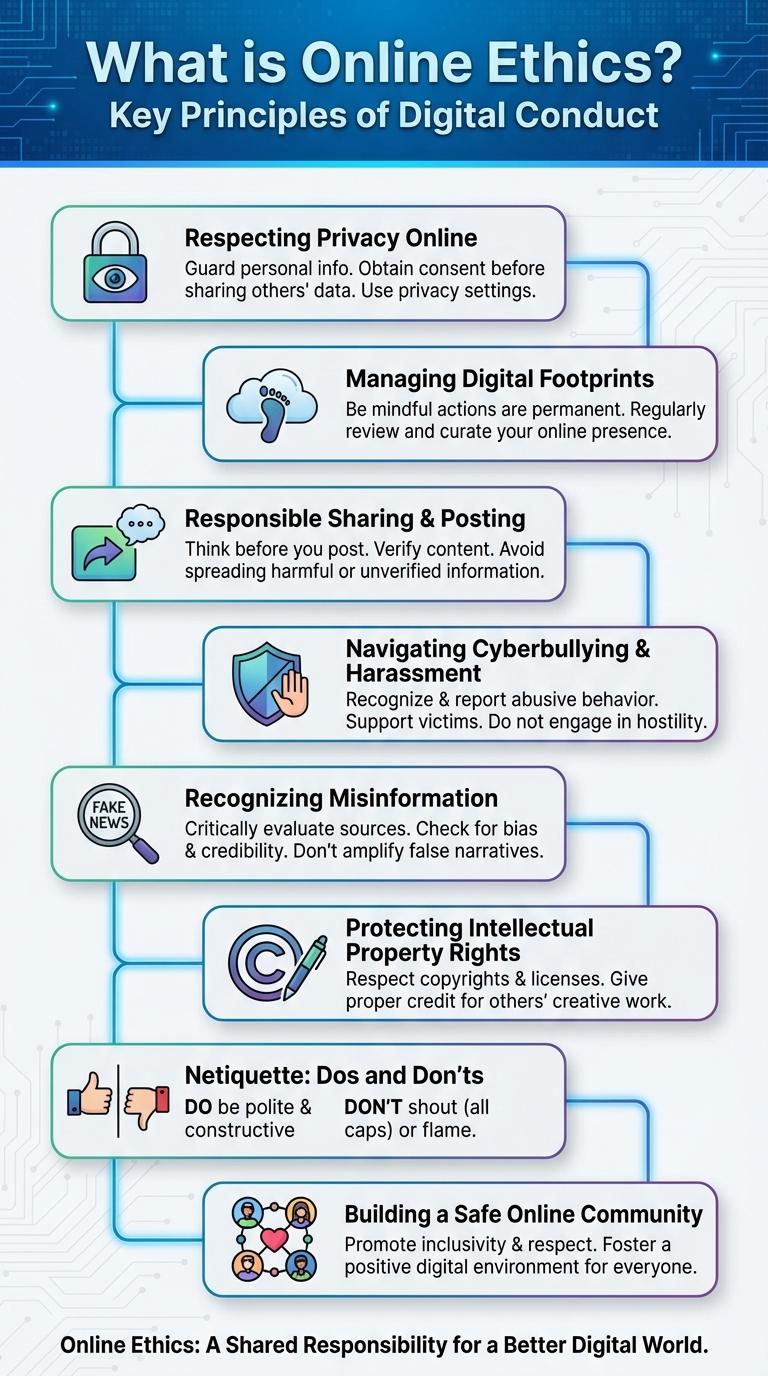
Online ethics encompass the principles guiding responsible and respectful behavior in digital spaces. Understanding these ethical standards helps individuals navigate privacy concerns, digital communication, and information sharing with integrity. This infographic highlights key practices for maintaining ethical conduct on the internet.
What is Online Ethics?
What is online ethics? Online ethics refers to the moral principles that guide behavior and decision-making on the internet. It ensures respectful, responsible, and lawful interaction in digital spaces.
Key Principles of Digital Conduct
Understanding the Key Principles of Digital Conduct is essential for maintaining integrity and respect in online interactions. Core principles include privacy, honesty, respect, and accountability. Adhering to these principles fosters a safe and trustworthy digital environment.
Respecting Privacy Online
Respecting privacy online is crucial for maintaining trust and security in digital interactions. Protecting personal information helps prevent misuse and promotes ethical behavior on the internet.
- Secure Personal Data - Use strong passwords and privacy settings to safeguard sensitive information from unauthorized access.
- Respect Confidentiality - Avoid sharing others' private information without explicit consent to maintain their digital privacy.
- Be Mindful of Permissions - Review app and website permissions carefully before granting access to personal data.
Managing Digital Footprints
| Key Aspect | Details |
|---|---|
| Definition | Digital footprint refers to the trail of data created by users on the internet through activities, posts, and interactions. |
| Visibility | Information shared online is often permanent and accessible to others, impacting personal and professional reputation. |
| Management Tips | Regularly review privacy settings, think before posting, and clean up old or unwanted content to control your digital footprint. |
| Security Impact | Unmanaged footprints can expose sensitive data to cyber threats such as identity theft and phishing attacks. |
| Ethical Responsibility | Being mindful of online actions respects others' privacy and promotes a safe digital environment. |
Responsible Sharing & Posting
Responsible sharing and posting online protect personal and others' privacy while promoting trustworthy content. It involves verifying information before sharing and respecting intellectual property rights.
Avoid spreading misinformation by cross-checking sources and thinking critically about content. Posting with empathy and accountability helps create a positive digital environment for everyone.
Navigating Cyberbullying & Harassment
Cyberbullying and harassment are pervasive issues in the digital world, impacting the mental health and well-being of users across all age groups. Understanding online ethics helps individuals recognize harmful behaviors and promotes a respectful virtual environment.
Recognizing cyberbullying involves identifying repeated harmful messages, threats, or exclusion aimed at an individual. Victims should document incidents and report them to platform moderators or trusted authorities. Promoting empathy and responsible communication online fosters safer communities for everyone.
Recognizing Misinformation
Recognizing misinformation online is crucial for maintaining ethical digital communication. Awareness and critical evaluation help prevent the spread of false information.
- Check the Source - Verify if the information comes from a reputable and reliable entity before trusting it.
- Analyze the Content - Look for signs of bias, sensationalism, or lack of supporting evidence in the message.
- Cross-Verify Facts - Compare information with multiple credible sources to confirm its accuracy and authenticity.
Protecting Intellectual Property Rights
Protecting intellectual property rights online safeguards creators' original work from unauthorized use and distribution. Respecting copyrights, trademarks, and patents promotes innovation and fair compensation. Users should always seek permission and give proper credit when sharing digital content.
Netiquette: Dos and Don'ts
Online ethics guide appropriate behavior and communication in digital spaces. Observing netiquette promotes respectful and effective interactions across the internet.
- Use Respectful Language - Communicate politely to foster positive and constructive dialogue.
- Avoid Sharing Personal Information - Protect your privacy by not disclosing sensitive details publicly.
- Do Not Spam - Refrain from sending unsolicited messages that disrupt online communities.
- Give Credit to Sources - Acknowledge original authors to respect intellectual property rights.
- Think Before You Post - Consider the impact of your content on others before sharing.
Following these netiquette dos and don'ts helps maintain a safe and respectful online environment.