
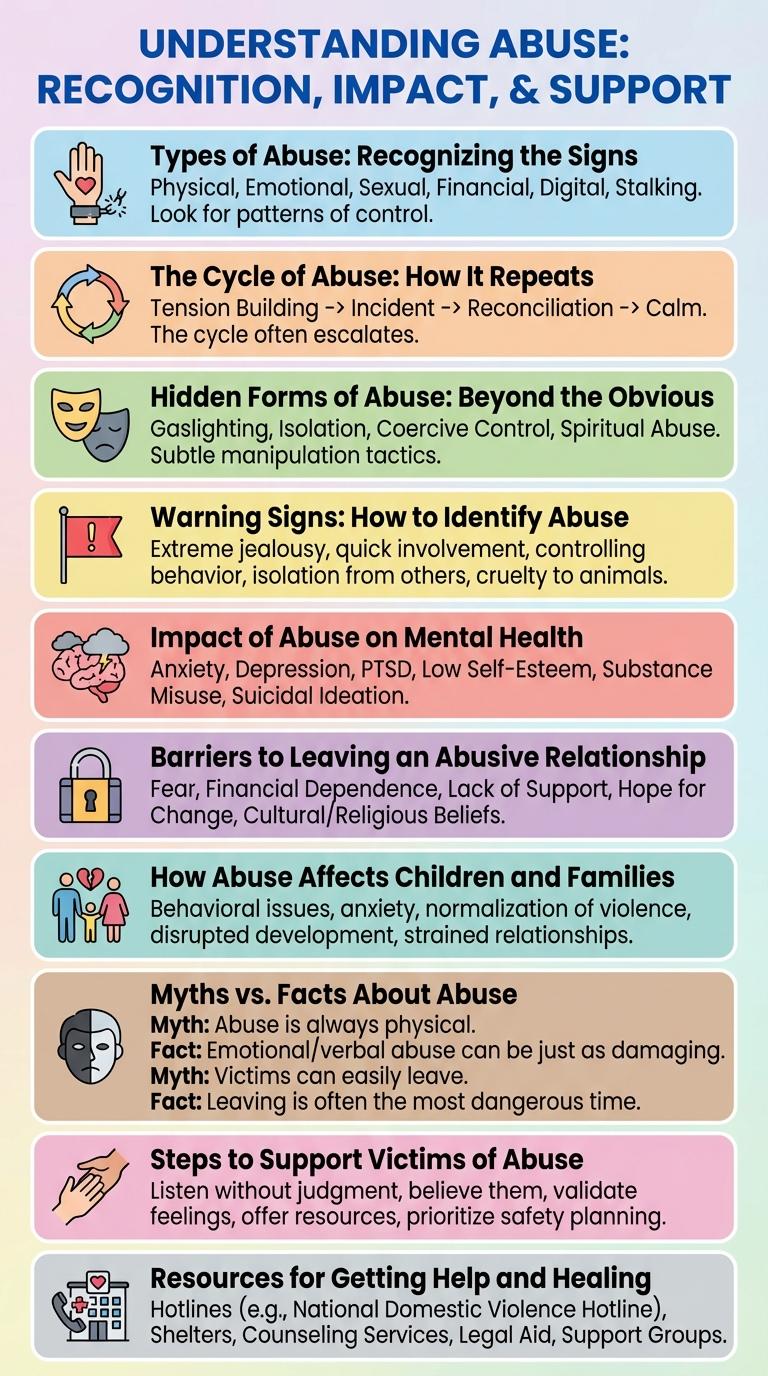
Understanding abuse is crucial for recognizing its various forms and effects on individuals and communities. Visual representations like infographics can effectively convey the signs, types, and prevention strategies of abuse. This tool aids in raising awareness and promoting education to foster safer environments.
Types of Abuse: Recognizing the Signs
Abuse manifests in various forms, each with distinct signs that are crucial to recognize for timely intervention. Understanding these types helps protect victims and promote awareness.
Identifying abuse early can prevent long-term harm and support recovery processes.
- Physical Abuse - Visible injuries, unexplained bruises, or frequent hospital visits indicate physical harm inflicted on the body.
- Emotional Abuse - Persistent criticism, humiliation, or controlling behavior damages mental health and self-esteem.
- Sexual Abuse - Non-consensual sexual contact or exploitation is a severe violation characterized by fear and trauma.
- Neglect - Failure to provide basic needs like food, shelter, or medical care results in neglect and endangers well-being.
- Financial Abuse - Unauthorized use of money, theft, or exploitation of financial resources undermines independence.
The Cycle of Abuse: How It Repeats
The cycle of abuse is a repetitive pattern that traps victims and perpetrators in a harmful relationship dynamic. Understanding this cycle is essential to breaking free and seeking help.
This pattern consists of phases that repeat and intensify over time without intervention.
- Tension Building - Stress and strain increase, causing frustration and fear in the victim.
- Incident of Abuse - Physical, emotional, or verbal abuse occurs, escalating the harm.
- Reconciliation - The abuser may apologize or provide excuses, temporarily restoring peace.
- Calm - A lull phase where abuse seems to stop, but underlying issues remain unresolved.
Hidden Forms of Abuse: Beyond the Obvious
Abuse extends beyond physical violence and can be subtle yet equally damaging. Recognizing hidden forms of abuse is crucial for early intervention and support.
- Emotional Abuse - Involves manipulation, constant criticism, and undermining self-worth without visible scars.
- Financial Abuse - Occurs when someone controls or restricts access to money and resources to exert power.
- Digital Abuse - Uses technology to harass, monitor, or intimidate a person, often unnoticed by outsiders.
- Neglect - The failure to provide basic emotional or physical needs, sometimes mistaken as indifference.
- Coercive Control - A pattern of behaviors that isolate, intimidate, and dominate a victim over time.
Awareness of these hidden abuses enables victims and allies to seek help and protection with greater confidence.
Warning Signs: How to Identify Abuse
What are the key warning signs of abuse to watch for? Abuse can manifest through physical injuries, emotional withdrawal, or sudden changes in behavior. Recognizing these signs early helps in providing timely support and intervention.
Impact of Abuse on Mental Health
Abuse significantly affects mental health, often leading to anxiety, depression, and post-traumatic stress disorder (PTSD). Victims may experience long-lasting emotional scars that disrupt their daily lives and relationships.
Mental health consequences from abuse include diminished self-esteem and increased risk of substance abuse. Early intervention and support are crucial for recovery and improving overall well-being.
Barriers to Leaving an Abusive Relationship
Barriers to leaving an abusive relationship include emotional, financial, and social challenges that trap victims in cycles of harm. Fear, low self-esteem, and lack of support often prevent individuals from seeking help or escaping.
Economic dependence and concerns for children's safety further complicate decisions to leave. Isolation imposed by abusers limits access to resources and reinforces feelings of helplessness.
How Abuse Affects Children and Families
| Type of Abuse | Impact on Children |
|---|---|
| Physical Abuse | Injuries, chronic health problems, developmental delays, increased aggression |
| Emotional Abuse | Low self-esteem, anxiety, depression, difficulty forming relationships |
| Sexual Abuse | Trauma, PTSD, trust issues, risky behaviors |
| Neglect | Malnutrition, poor hygiene, developmental delays, attachment disorders |
| Family Impact | Breakdown of trust, increased conflict, financial strain, intergenerational cycles of abuse |
Myths vs. Facts About Abuse
Abuse is often misunderstood due to widespread myths that distort the reality of victims' experiences. Common misconceptions include believing abuse only happens in certain environments or affects specific groups of people. Recognizing the facts helps to support survivors and promote awareness for prevention and intervention.
| Myth | Fact |
|---|---|
| Abuse only happens in poor or abusive families. | Abuse occurs in all social, economic, and cultural groups. |
| Victims provoke the abuse by their behavior. | Abuse is the abuser's choice and responsibility, not the victim's fault. |
| Children will always tell someone if being abused. | Many children hide abuse due to fear, shame, or manipulation. |
| Abuse is only physical harm. | Emotional, psychological, sexual abuse, and neglect are all forms of abuse. |
| Leaving the abuser immediately solves the problem. | Leaving is often the most dangerous time; support and safety planning are crucial. |
Steps to Support Victims of Abuse
Supporting victims of abuse requires understanding, patience, and immediate action to ensure their safety. Recognize the signs of abuse, listen without judgment, and provide a safe space for victims to share their experiences. Encourage access to professional help, legal resources, and community support networks to promote healing and protection.