
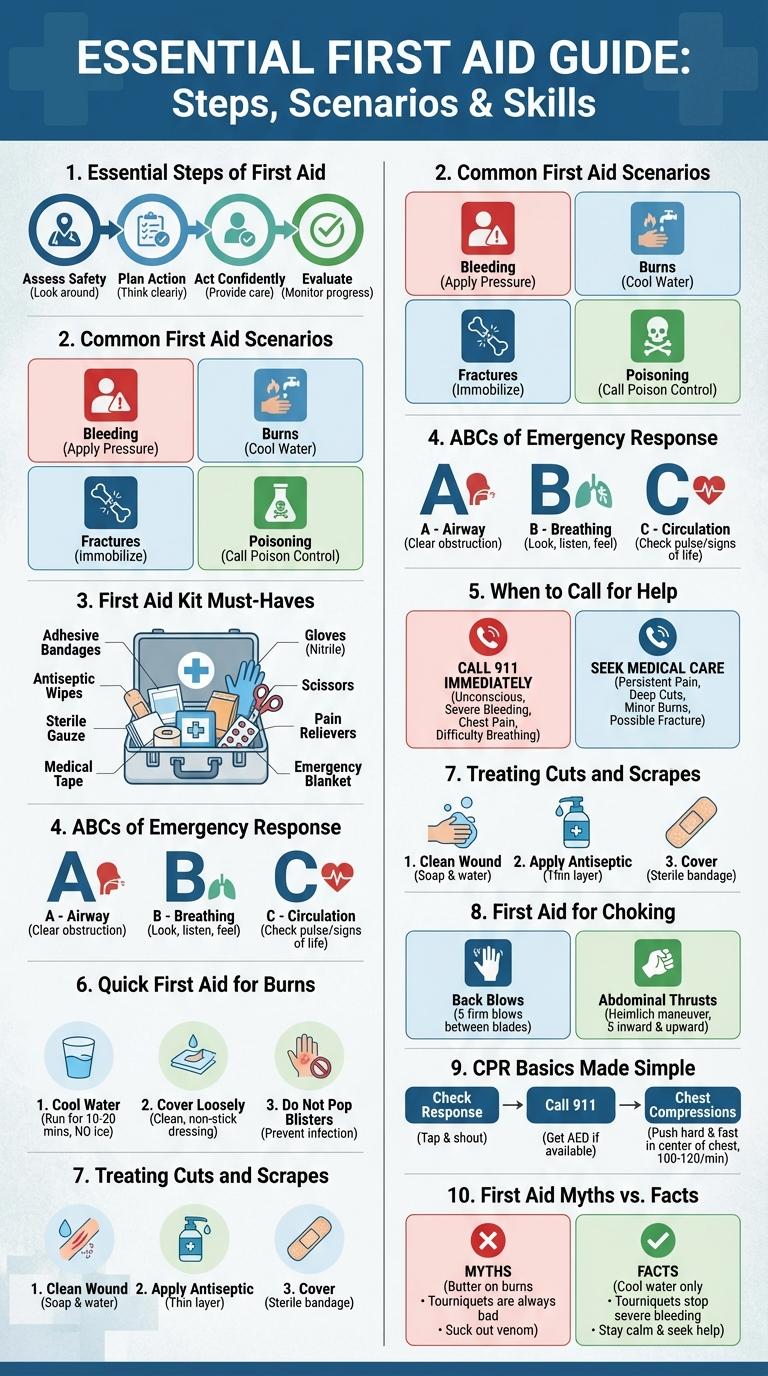
First aid provides immediate care during injuries or medical emergencies, crucial for preventing complications and saving lives. Understanding essential first aid techniques empowers individuals to respond confidently and effectively in critical situations. This infographic highlights key steps and tips to administer proper first aid quickly and safely.
Essential Steps of First Aid
First aid is the immediate care given to an injured or ill person before professional medical help arrives. Knowing the essential steps can save lives and prevent conditions from worsening.
The key steps include assessing the situation, ensuring safety, and calling emergency services. Providing basic care like CPR, controlling bleeding, and treating shock improves outcomes significantly.
Common First Aid Scenarios
First aid is essential for managing common injuries and emergencies before professional help arrives. Understanding basic first aid techniques can significantly improve outcomes in everyday scenarios.
- Bleeding Control - Apply direct pressure to wounds to stop bleeding and prevent infection.
- Burn Treatment - Cool burns with running water for at least 10 minutes to reduce tissue damage.
- Choking Response - Perform the Heimlich maneuver to clear airway obstructions quickly.
- Fracture Immobilization - Stabilize broken bones with splints to avoid further injury before medical help arrives.
- CPR Intervention - Conduct chest compressions and rescue breaths to maintain circulation during cardiac arrest.
First Aid Kit Must-Haves
Essential first aid kits provide critical supplies to handle common injuries and emergencies effectively. Key items include adhesive bandages, antiseptic wipes, sterile gauze pads, adhesive tape, and scissors. Properly stocked kits enhance preparedness and ensure timely response to wounds, burns, and minor medical situations.
ABCs of Emergency Response
The ABCs of Emergency Response are crucial steps to follow during first aid situations. They stand for Airway, Breathing, and Circulation, which help prioritize actions for saving lives.
First, ensure the airway is clear to allow unobstructed breathing. Next, check if the person is breathing and provide rescue breaths if needed. Finally, assess circulation by looking for signs of bleeding or pulse and begin CPR if necessary.
When to Call for Help
| When to Call for Help | Signs and Situations |
|---|---|
| Unconsciousness | The person does not wake up or respond to stimuli |
| Severe Bleeding | Blood flow is continuous, spurting or more than a cup in volume |
| Difficulty Breathing | Gasping, wheezing, or inability to speak clearly |
| Chest Pain | Persistent pain or pressure lasting more than a few minutes |
| Signs of Stroke | Sudden weakness, slurred speech, facial drooping |
Quick First Aid for Burns
Quick first aid for burns is essential to reduce damage and pain immediately after an injury. Proper treatment can prevent infection and improve healing outcomes.
- Cool the burn - Hold the burn under cool, running water for at least 10 minutes to lower skin temperature and stop tissue damage.
- Protect the area - Cover the burn with a sterile, non-stick bandage or clean cloth to prevent contamination and reduce pain.
- Avoid harmful substances - Do not apply ice, butter, or ointments that can worsen the injury or increase infection risk.
Treating Cuts and Scrapes
Treating cuts and scrapes promptly reduces the risk of infection and promotes faster healing. Proper first aid techniques help restore skin integrity and prevent complications.
- Clean the wound - Use mild soap and water to gently remove dirt and debris from the cut or scrape.
- Apply an antibiotic ointment - This helps prevent bacterial infection and keeps the wound moist for better healing.
- Cover with a sterile bandage - Protect the area from further injury and contamination by applying a clean dressing.
Monitor the wound for signs of infection such as increased redness, swelling, or pus, and seek medical care if these symptoms appear.
First Aid for Choking
What should you do if someone is choking and cannot breathe? Immediate action is crucial to prevent suffocation. Perform the Heimlich maneuver to dislodge the obstruction quickly and safely.
How can you recognize a choking emergency? Signs include inability to speak, difficulty breathing, coughing weakly, or clutching the throat. Quick identification allows timely first aid and can save lives.
What steps are involved in the Heimlich maneuver for adults? Stand behind the person, wrap your arms around their waist, make a fist above the navel, and deliver quick upward thrusts. Repeat until the object is expelled or the person can breathe normally.
How should you assist a choking infant under one year old? Place the infant face down on your forearm, give five gentle back slaps between the shoulder blades. If the object does not clear, turn the infant face up and give five chest thrusts.
When is it necessary to call emergency services during choking? Call immediately if the person becomes unconscious or cannot cough, speak, or breathe. Emergency responders provide advanced care beyond basic first aid.
CPR Basics Made Simple
CPR (Cardiopulmonary Resuscitation) is a lifesaving technique used during cardiac arrest to maintain blood flow to the brain and organs. Effective CPR combines chest compressions and rescue breaths, performed at the right rhythm and depth. Learning CPR basics can significantly increase survival rates in emergency situations.