
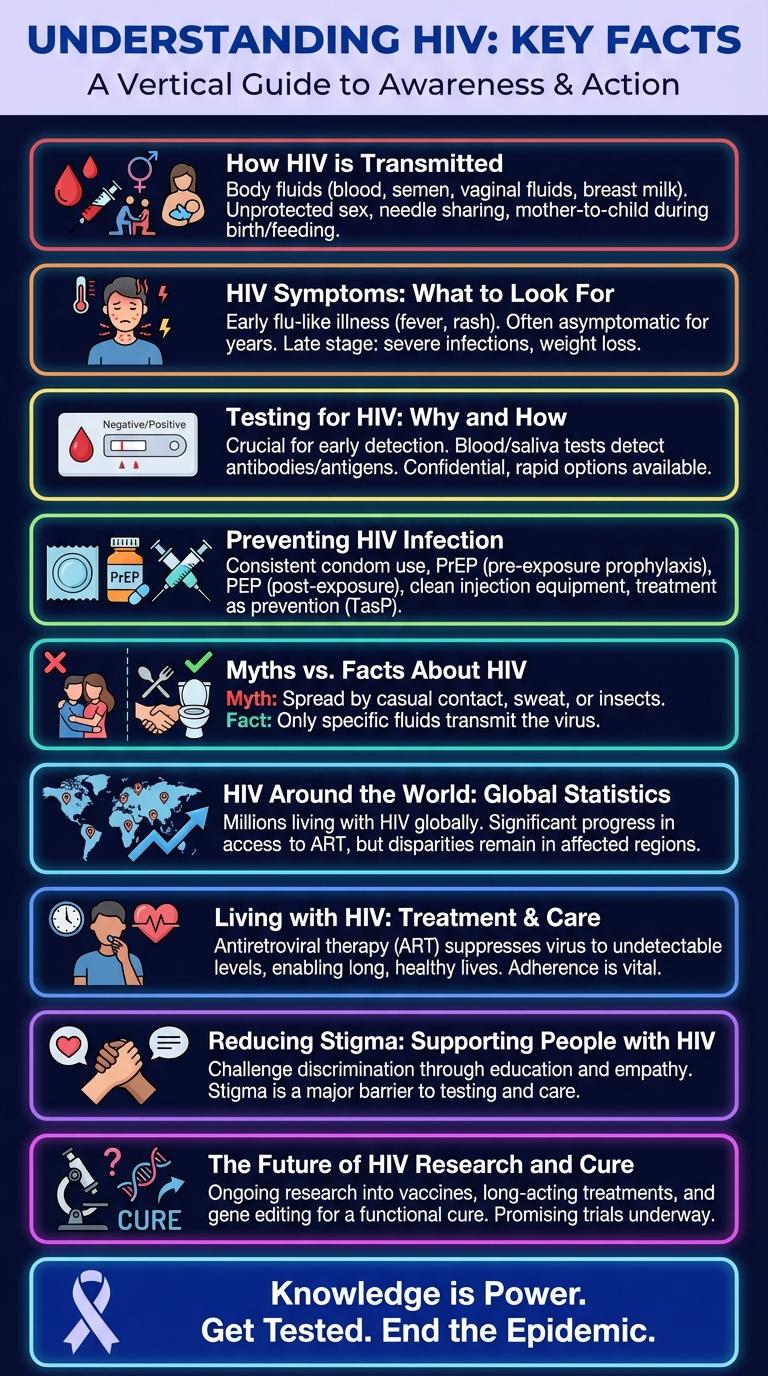
HIV remains a critical global health issue, impacting millions of individuals worldwide. Understanding the virus's transmission, symptoms, and prevention methods is essential for effective management and awareness. This infographic visually presents key facts and statistics to enhance public knowledge and promote informed health decisions.
Understanding HIV: Key Facts
Human Immunodeficiency Virus (HIV) attacks the body's immune system, specifically targeting CD4 cells (T cells), which help fight infections. Without treatment, HIV reduces the number of these cells, making the body more vulnerable to infections and diseases.
HIV is primarily transmitted through body fluids such as blood, semen, vaginal fluids, and breast milk. Early diagnosis and consistent antiretroviral therapy (ART) can manage HIV effectively, allowing individuals to live long, healthy lives.
How HIV is Transmitted
HIV, the virus that causes AIDS, is primarily spread through certain body fluids. Understanding how HIV is transmitted is crucial for effective prevention and treatment.
HIV transmission occurs when these fluids from an infected person enter the bloodstream of another person, bypassing the body's natural barriers.
- Unprotected Sexual Contact - HIV is commonly transmitted through vaginal, anal, or oral sex without the use of protection, such as condoms.
- Sharing Needles - Using contaminated needles or syringes for drug injection can transfer HIV directly into the bloodstream.
- Mother-to-Child Transmission - HIV can be passed from an infected mother to her baby during pregnancy, childbirth, or breastfeeding.
HIV Symptoms: What to Look For
What are the early symptoms of HIV to watch for? Flu-like symptoms such as fever, sore throat, and fatigue often appear within 2 to 4 weeks after exposure. These signs indicate the body's initial response to the virus.
How can HIV symptoms change over time? After the initial stage, many people experience a long period with few or no symptoms. This clinical latency phase can last several years without proper treatment.
Which skin-related symptoms might suggest HIV infection? Rashes, unexplained sores, and persistent skin infections are common indicators in early and advanced stages. Skin changes arise due to weakened immune defenses.
What neurological symptoms may occur with HIV? Memory loss, confusion, and headaches can develop as the virus affects the nervous system. These symptoms often signal progression to advanced HIV or AIDS.
When should someone seek medical testing for HIV symptoms? Testing is recommended if early signs appear after risk exposure or if unusual persistent symptoms develop. Early diagnosis dramatically improves treatment success and outcomes.
Testing for HIV: Why and How
Testing for HIV is crucial for early detection and effective treatment. Understanding the methods and reasons for testing helps reduce transmission and improve health outcomes.
Regular HIV testing enables timely diagnosis and access to lifesaving care.
- Importance of Early Detection - Identifying HIV early allows for prompt initiation of antiretroviral therapy, improving quality of life.
- Testing Methods - Common tests include rapid antibody tests, nucleic acid tests, and home testing kits.
- Who Should Get Tested - People with high-risk behaviors, pregnant women, and those with potential exposure should seek testing regularly.
Preventing HIV Infection
| Prevention Method | Key Information |
|---|---|
| Condom Use | Consistent and correct use of condoms during sex reduces HIV transmission risk by 85% or more. |
| Pre-Exposure Prophylaxis (PrEP) | Daily PrEP medication reduces the risk of sexually acquired HIV by over 90% when taken as prescribed. |
| Regular Testing & Treatment | Frequent HIV testing and early Antiretroviral Therapy (ART) lower viral load to undetectable levels, preventing transmission. |
| Safe Needle Practices | Use of sterile needles and syringe exchange programs prevent HIV spread among people who inject drugs. |
| Male Circumcision | Medical male circumcision can reduce female-to-male HIV transmission by approximately 60% in high-prevalence settings. |
Myths vs. Facts About HIV
HIV is often misunderstood due to widespread myths that perpetuate stigma and misinformation. Common myths include beliefs that HIV can spread through casual contact or that it only affects certain groups of people. Facts clarify that HIV is transmitted through specific activities like unprotected sex or sharing needles, and with proper treatment, individuals can live long, healthy lives.
| Myths | Facts |
|---|---|
| HIV spreads through hugging or touching. | HIV cannot be transmitted through casual contact such as hugging, shaking hands, or sharing utensils. |
| Only LGBTQ+ individuals get HIV. | HIV affects people of all genders, sexual orientations, and backgrounds worldwide. |
| You can identify someone with HIV by their appearance. | Many people with HIV look healthy and may not show any symptoms for years. |
| HIV is a death sentence. | With antiretroviral therapy (ART), people living with HIV can live long, healthy lives. |
| Condoms are 100% effective in preventing HIV. | Condoms significantly reduce the risk of HIV transmission but must be used correctly every time. |
HIV Around the World: Global Statistics
HIV affects millions of people worldwide, with varying prevalence across different regions. Sub-Saharan Africa remains the most impacted area, accounting for the majority of global HIV cases.
Approximately 38 million people were living with HIV globally in 2023. Eastern Europe and Central Asia have seen rising infection rates in recent years. Efforts to increase access to antiretroviral therapy have improved survival and reduced transmission significantly.
Living with HIV: Treatment & Care
Living with HIV requires consistent treatment to maintain a healthy immune system and prevent virus progression. Antiretroviral therapy (ART) is the primary method used to control HIV and reduce viral load to undetectable levels.
Regular medical care includes monitoring CD4 cell counts and viral load to assess health and treatment effectiveness. Supportive services such as counseling, nutrition guidance, and mental health care improve quality of life for people living with HIV.
Reducing Stigma: Supporting People with HIV
Reducing stigma around HIV is essential for improving the quality of life for those affected. Supportive environments encourage testing, treatment, and open conversations about HIV.
- Education - Providing accurate information about HIV transmission and treatment helps dispel myths and fears.
- Empathy - Showing understanding and compassion reduces discrimination against people living with HIV.
- Advocacy - Promoting inclusive policies and protecting rights ensures equitable access to healthcare and social support.
Building a stigma-free society empowers individuals with HIV to lead healthy, fulfilling lives.