
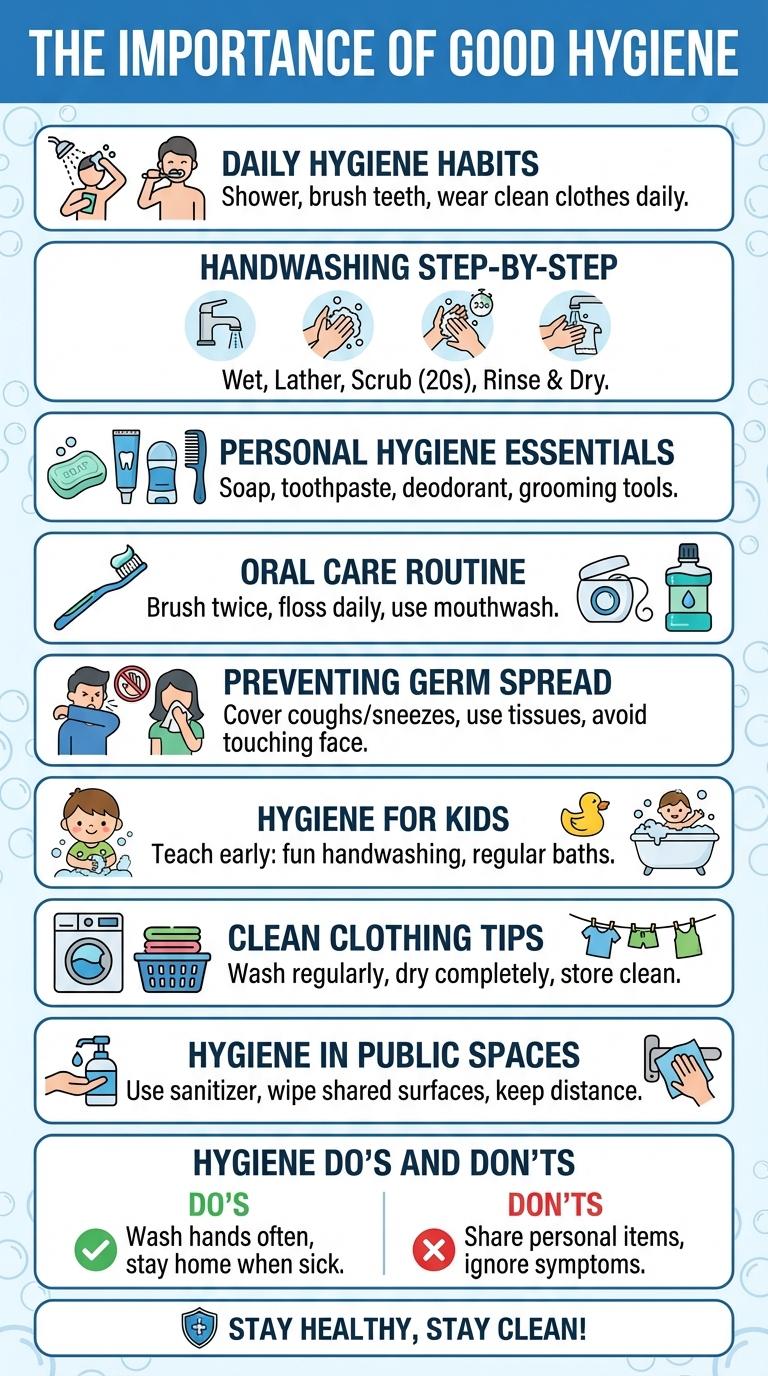
Effective hygiene practices are essential for maintaining health and preventing illness. Visualizing key habits such as handwashing, dental care, and personal cleanliness helps reinforce daily routines. Infographics provide clear, engaging guidance that supports better hygiene awareness and behavior.
The Importance of Good Hygiene
Good hygiene is essential for preventing the spread of illnesses and maintaining overall health. Regular handwashing, bathing, and oral care reduce the risk of infections and promote well-being.
Practicing good hygiene improves social acceptance and boosts self-confidence. Clean environments and personal care help inhibit harmful bacteria and viruses from causing diseases.
Daily Hygiene Habits
Daily hygiene habits are essential for maintaining overall health and preventing the spread of illnesses. Key practices include regular handwashing with soap, brushing teeth twice a day, and bathing or showering to remove dirt and bacteria. Consistent hygiene routines support skin health and boost immune function, contributing to a better quality of life.
Handwashing Step-by-Step
Effective handwashing is essential for preventing the spread of germs and maintaining personal hygiene. Following the correct steps ensures thorough cleaning of all hand surfaces.
- Wet Hands - Rinse your hands under clean, running water to prepare for lathering.
- Apply Soap - Use enough soap to cover all hand surfaces, including the backs and between fingers.
- Scrub Thoroughly - Rub hands together for at least 20 seconds, focusing on nails, palms, and wrists.
- Rinse Hands - Wash off all soap under clean, running water to remove germs and dirt.
- Dry Completely - Use a clean towel or air dryer to dry hands, preventing bacterial growth on damp skin.
Consistent handwashing following these steps significantly reduces the risk of infections.
Personal Hygiene Essentials
Personal hygiene essentials include regular hand washing, daily bathing, and proper oral care. Maintaining cleanliness reduces the risk of infections and promotes overall health. Using items like soap, toothpaste, and clean towels supports effective hygiene routines.
Oral Care Routine
Maintaining a consistent oral care routine is essential for preventing dental problems and ensuring fresh breath. Proper oral hygiene supports overall health and boosts confidence.
- Brush Twice Daily - Use fluoride toothpaste to remove plaque and prevent cavities effectively.
- Floss Daily - Clean between teeth to eliminate food particles and reduce gum disease risk.
- Regular Dental Checkups - Visit the dentist every six months for professional cleaning and early detection of issues.
Preventing Germ Spread
How can hygiene help in preventing the spread of germs? Proper hygiene practices significantly reduce the transmission of harmful bacteria and viruses. Regular handwashing and sanitizing surfaces are key methods to maintain a germ-free environment.
| Hygiene Practice | Effect on Germ Spread |
|---|---|
| Handwashing with soap | Removes up to 99.9% of germs on hands |
| Using hand sanitizer | Kills most germs when soap is unavailable |
| Cleaning surfaces regularly | Prevents germ buildup on frequently touched items |
| Avoiding face touching | Reduces virus entry points through eyes, nose, and mouth |
| Proper respiratory hygiene | Limits airborne germ transmission during coughing or sneezing |
Hygiene for Kids
Teaching children proper hygiene habits is essential for their health and well-being. Good hygiene helps prevent the spread of germs and reduces the risk of illness.
Encourage kids to wash their hands regularly with soap and water, especially before meals and after using the restroom. Regular brushing of teeth twice a day protects against cavities and promotes strong teeth.
Clean Clothing Tips
| Tip | Description |
|---|---|
| Wash Regularly | Launder clothes after every wear to remove dirt, sweat, and bacteria, maintaining hygiene and freshness. |
| Use Hot Water | Wash clothes in hot water when fabric allows, as heat kills germs and eliminates odors effectively. |
| Choose Proper Detergent | Select antibacterial or enzyme-based detergents to enhance cleaning and sanitize clothing efficiently. |
| Dry Thoroughly | Ensure clothes are completely dry before storing to prevent mold growth and unpleasant smells. |
| Avoid Overloading Washer | Do not overload the washing machine to ensure clothes are cleaned properly without residue buildup. |
Hygiene in Public Spaces
Hygiene in public spaces plays a crucial role in preventing the spread of infectious diseases. Effective sanitation practices help maintain a clean environment for everyone.
Regular handwashing, use of hand sanitizers, and proper waste disposal are essential habits. Public restrooms and transit areas require frequent cleaning to reduce contamination risks. Awareness campaigns promote responsible hygiene behavior among community members.