
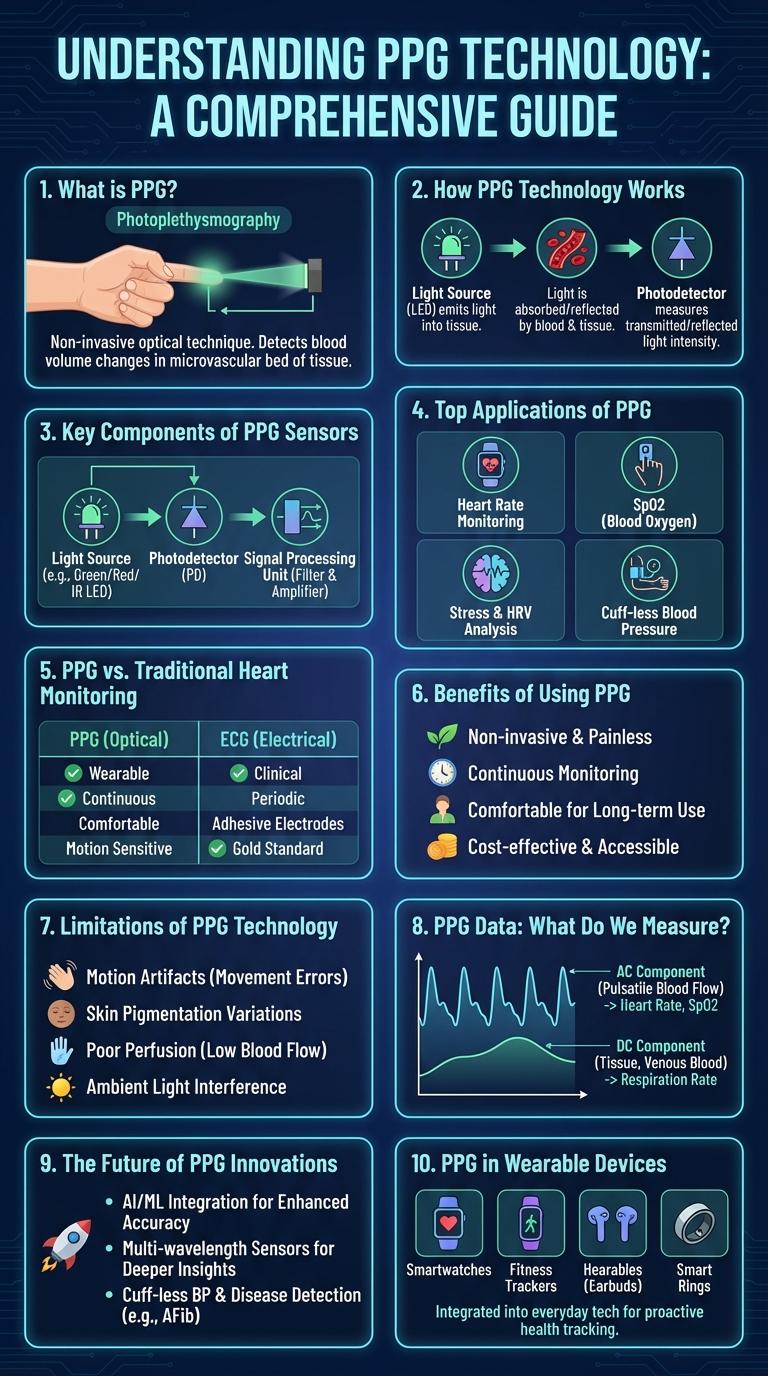
PPG infographics visually present key data and insights about PPG's products, innovations, and market impact. These graphics simplify complex information, making trends and performance metrics easy to understand. Effective infographics enhance communication and support decision-making within the coatings and specialty materials industry.
What is PPG?
PPG stands for Photoplethysmography, a non-invasive optical technique used to detect blood volume changes in the microvascular bed of tissue. It is commonly employed in wearable health devices and clinical monitoring to measure heart rate and oxygen saturation levels.
PPG works by emitting light into the skin and measuring the amount of light either absorbed or reflected by blood vessels. This data provides valuable insights into cardiovascular health and aids in detecting conditions such as arrhythmias and peripheral vascular diseases.
How PPG Technology Works
PPG technology captures data by emitting light pulses and measuring the reflected signals from blood vessels under the skin. These light signals vary with blood volume changes, enabling the detection of heart rate and blood oxygen levels. Advanced sensors and algorithms process this optical data to provide real-time physiological monitoring.
Key Components of PPG Sensors
What are the key components of PPG sensors?
PPG sensors primarily consist of a light source and a photodetector. These components work together to measure blood volume changes in the microvascular bed of tissue.
Top Applications of PPG
Photoplethysmography (PPG) is a non-invasive optical technique used to detect blood volume changes in the microvascular bed of tissue. It is widely applied across healthcare and fitness industries for monitoring cardiovascular health.
Top applications of PPG include heart rate monitoring, oxygen saturation measurement, and blood pressure estimation. This technology is integral in wearable fitness devices, enabling continuous health tracking. PPG also plays a vital role in detecting arrhythmias and sleep apnea, enhancing patient diagnosis and treatment.
PPG vs. Traditional Heart Monitoring
Photoplethysmography (PPG) is a non-invasive optical technique used to detect blood volume changes in the microvascular bed of tissue, offering real-time heart rate monitoring through wearable devices. Traditional heart monitoring relies on electrocardiograms (ECG), which require multiple electrodes and complex setups to measure the electrical activity of the heart. PPG provides a more convenient, cost-effective solution ideal for continuous monitoring, though ECG remains the gold standard for clinical diagnostics due to its detailed cardiac information.
Benefits of Using PPG
PPG stands for Pulse Position Modulation, a digital signaling method used in communication systems and optical devices. It offers precise control over signal timing, which enhances system performance.
Using PPG provides several key benefits in various technological applications.
- Improved Signal Accuracy - PPG enables accurate timing of pulses, reducing errors in data transmission.
- Enhanced Noise Immunity - The modulation technique resists interference, ensuring reliable communication.
- Energy Efficiency - PPG consumes less power by optimizing pulse timing, extending device battery life.
Limitations of PPG Technology
Photoplethysmography (PPG) is widely used for monitoring heart rate and blood oxygen levels, but it has several limitations that affect accuracy and reliability. Understanding these constraints is essential for interpreting PPG data correctly in clinical and wearable device applications.
- Susceptibility to Motion Artifacts - Physical movement can introduce noise and distort PPG signals, reducing measurement precision.
- Skin Tone Variability - Darker skin tones may absorb more light, impacting sensor readings and leading to inaccurate results.
- Poor Perfusion Effects - Low blood flow in peripheral areas can weaken signal strength, challenging the detection of vital parameters.
- Ambient Light Interference - External light sources can penetrate the sensor, causing signal contamination and errors.
- Limited Deep Tissue Measurement - PPG primarily captures superficial blood flow, limiting assessment of deeper cardiovascular functions.
PPG Data: What Do We Measure?
Photoplethysmography (PPG) is a non-invasive optical technique used to detect blood volume changes in the microvascular bed of tissue. It provides valuable data for monitoring cardiovascular and respiratory functions.
- Heart Rate - Measures the number of heartbeats per minute based on blood volume pulses detected by the sensor.
- Blood Oxygen Saturation (SpO2) - Calculates the oxygen level in the blood using light absorption at different wavelengths.
- Respiratory Rate - Derives breaths per minute through analysis of PPG signal variations linked to respiratory cycles.
PPG data enables continuous health monitoring and early detection of physiological changes in real-time.
The Future of PPG Innovations
| PPG Innovation | Future Impact |
|---|---|
| Advanced Coatings Technology | Improves durability and sustainability in automotive and aerospace industries |
| Smart Glass Solutions | Enables energy-efficient buildings with dynamic light control and privacy features |
| Eco-Friendly Materials | Reduces carbon footprint through recyclable and low-VOC paint formulations |
| Digital Color Matching | Enhances precision in automotive and industrial painting processes |
| Automated Manufacturing | Increases production efficiency and consistency with AI-driven automation |