
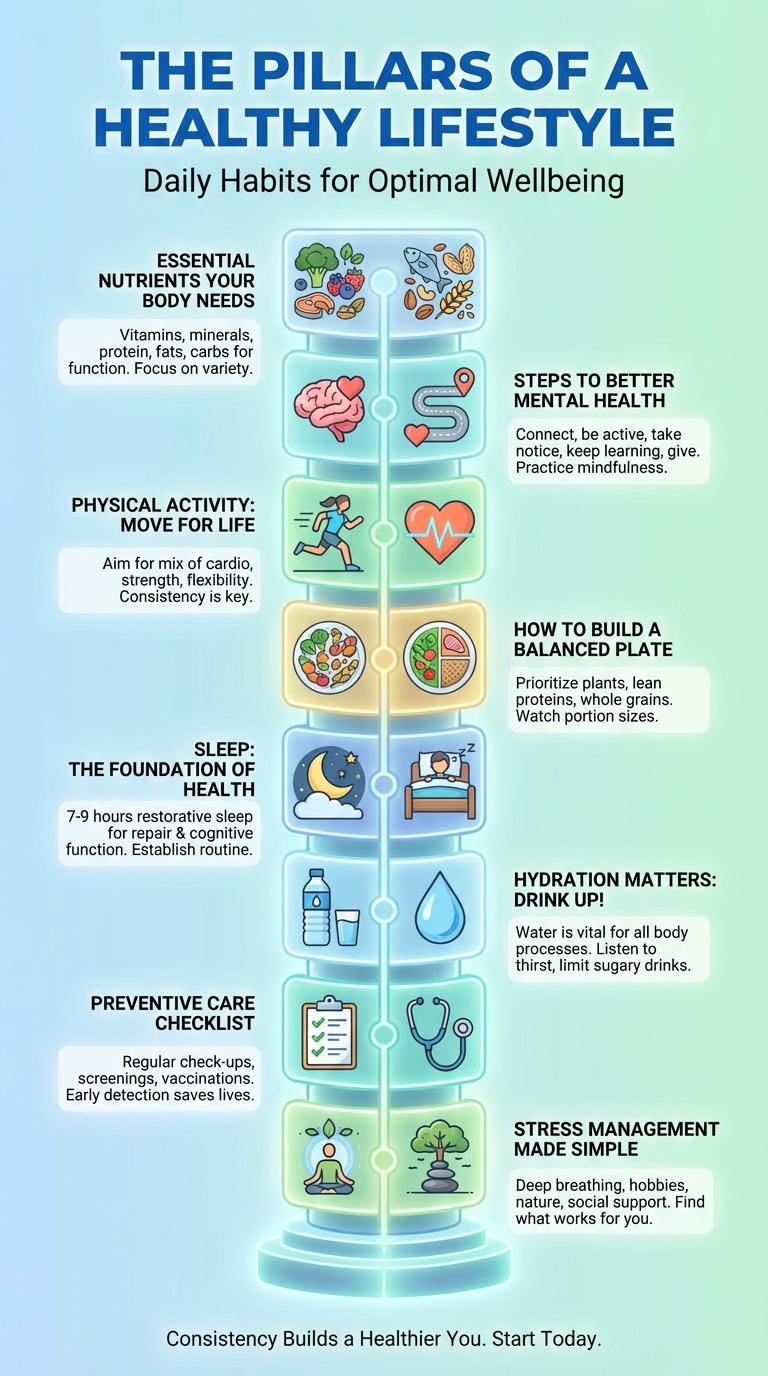
Infographics about health visually simplify complex medical information, making it easier to understand essential topics such as nutrition, exercise, and disease prevention. By combining clear graphics with key data points, these visuals effectively communicate important health tips and promote wellness. This approach enhances engagement and supports better decision-making for maintaining a healthy lifestyle.
The Pillars of a Healthy Lifestyle
Maintaining a healthy lifestyle involves several key pillars that promote overall well-being and longevity. These essential components work together to enhance physical, mental, and emotional health.
Balanced nutrition provides the body with necessary nutrients for energy and repair. Regular physical activity strengthens the heart, muscles, and bones while improving mental health. Adequate sleep supports cognitive function and restores the body each night.
Daily Habits for Optimal Wellbeing
Daily habits play a crucial role in maintaining optimal wellbeing. Simple actions like balanced nutrition and regular exercise strengthen overall health.
Consistency in sleep patterns and hydration supports mental clarity and physical energy. Mindful practices such as meditation reduce stress and improve emotional balance.
Essential Nutrients Your Body Needs
Essential nutrients are vital for maintaining overall health and supporting bodily functions. Consuming a balanced diet rich in these nutrients promotes energy, growth, and repair.
- Proteins - Crucial for muscle repair, enzyme production, and immune function.
- Carbohydrates - Primary source of energy for the brain and muscles.
- Fats - Important for cell structure, hormone production, and nutrient absorption.
- Vitamins - Support metabolic processes and protect against diseases.
- Minerals - Essential for bone health, nerve signaling, and oxygen transport.
Steps to Better Mental Health
Improving mental health involves simple, effective steps that promote emotional well-being and resilience. Regular exercise, balanced nutrition, and sufficient sleep play crucial roles in maintaining mental clarity and stability. Practicing mindfulness, seeking social support, and professional counseling further enhance mental health and reduce stress.
Physical Activity: Move for Life
Regular physical activity is essential for maintaining overall health and preventing chronic diseases. Engaging in at least 150 minutes of moderate-intensity exercise weekly boosts cardiovascular health and improves mental well-being.
Activities such as walking, cycling, and strength training enhance muscle strength and flexibility. Consistent movement supports weight management and reduces the risk of diabetes, heart disease, and certain cancers.
How to Build a Balanced Plate
| Food Group | Portion on Plate |
|---|---|
| Vegetables | Half of the plate - colorful variety for vitamins and minerals |
| Proteins | One-quarter of the plate - lean meats, fish, beans, or nuts for muscle health |
| Whole Grains | One-quarter of the plate - brown rice, quinoa, oats for fiber and energy |
| Fruits | Include a small portion or side - rich in antioxidants and vitamins |
| Healthy Fats & Dairy | Small amounts - olive oil, avocado, low-fat dairy for essential fats and calcium |
Sleep: The Foundation of Health
Why is sleep considered the foundation of health? Sleep plays a crucial role in maintaining physical and mental well-being by supporting immune function, memory consolidation, and emotional regulation. Quality sleep consistently improves overall health outcomes and reduces the risk of chronic diseases.
Hydration Matters: Drink Up!
Proper hydration is essential for maintaining overall health and energy levels. Drinking enough water daily supports bodily functions and improves physical and mental performance.
- Water Regulates Body Temperature - Staying hydrated helps the body maintain a stable temperature during physical activities and in hot environments.
- Hydration Boosts Brain Function - Drinking water enhances concentration, alertness, and cognitive performance.
- Supports Kidney Health - Adequate fluid intake helps kidneys efficiently remove waste and prevent kidney stones.
Preventive Care Checklist
Preventive Care Checklist promotes early detection and maintenance of good health through regular screenings and vaccinations. Key items include annual physical exams, blood pressure monitoring, cholesterol tests, and immunizations such as flu and tetanus shots. Following this checklist reduces the risk of chronic diseases and supports overall well-being.