
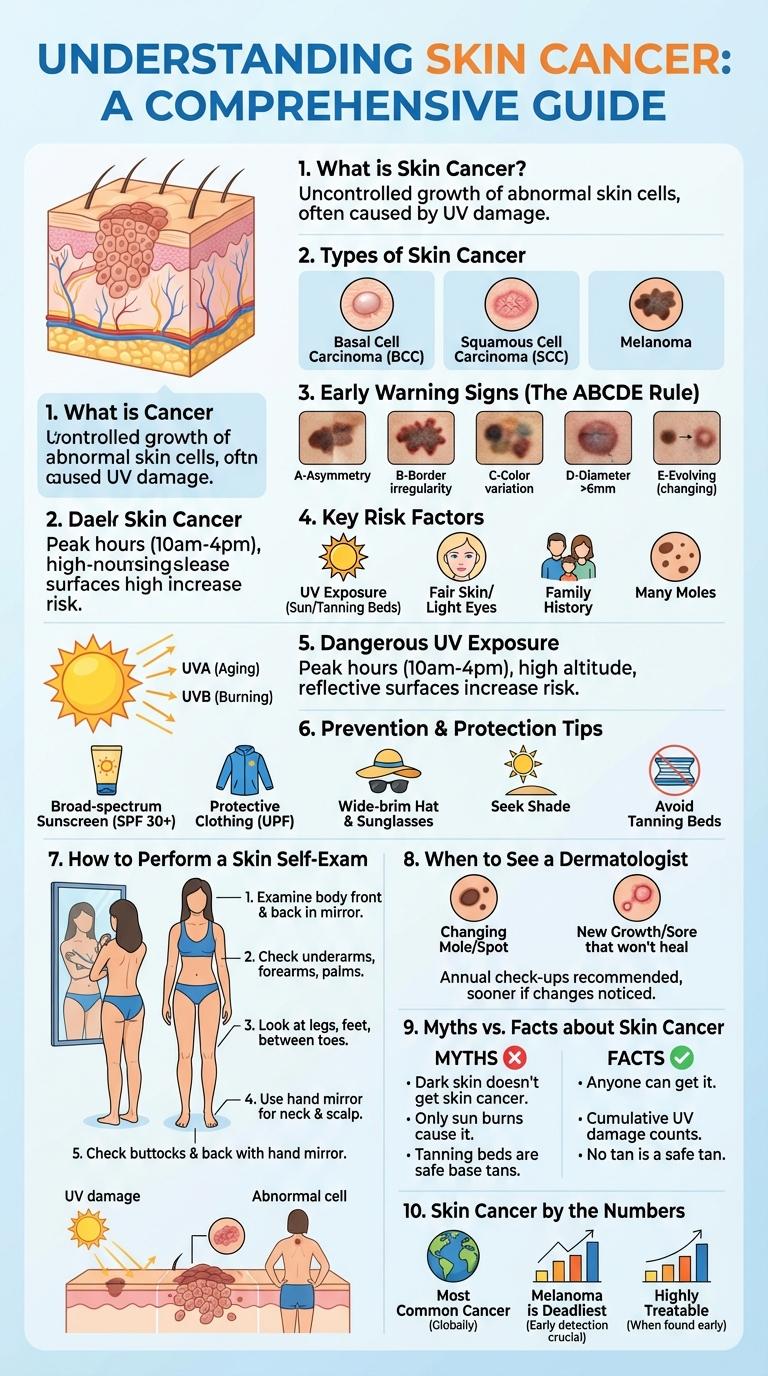
Skin cancer is one of the most common yet preventable forms of cancer, with early detection significantly improving treatment outcomes. Infographics provide a clear and concise way to understand risk factors, symptoms, and protective measures against skin cancer. Visual data helps raise awareness and encourages proactive skin health management.
What is Skin Cancer?
Skin cancer is the uncontrolled growth of abnormal skin cells. It commonly develops on skin exposed to the sun, but it can also occur in unexposed areas. Early detection improves treatment outcomes and survival rates.
Types of Skin Cancer
Skin cancer primarily includes three major types: basal cell carcinoma, squamous cell carcinoma, and melanoma. Basal cell carcinoma is the most common and arises from the basal cells in the epidermis. Melanoma, although less common, is the most dangerous due to its potential to spread rapidly to other organs.
Early Warning Signs
Skin cancer is the most common type of cancer worldwide. Recognizing early warning signs can significantly improve treatment outcomes.
Look for new or changing moles, spots, or lesions on the skin. Beware of asymmetrical shapes, irregular borders, and uneven colors. Persistent itching, bleeding, or soreness on a spot should prompt a medical checkup.
Key Risk Factors
Skin cancer is primarily caused by exposure to ultraviolet (UV) radiation from the sun or tanning beds. Understanding key risk factors can help in early detection and prevention.
- Prolonged UV Exposure - Extended time in sunlight or artificial tanning increases DNA damage in skin cells, leading to higher cancer risk.
- Fair Skin Tone - Individuals with lighter skin have less melanin, which provides less natural protection against harmful UV rays.
- History of Sunburns - Experiencing severe or frequent sunburns, especially in childhood, significantly raises the likelihood of developing skin cancer.
Dangerous UV Exposure
Ultraviolet (UV) radiation from sunlight is a primary cause of skin cancer worldwide. Prolonged exposure to UV rays increases the risk of developing dangerous skin conditions, including melanoma.
- UV Radiation Types - UVB rays primarily cause sunburn and contribute to skin cancer, while UVA rays penetrate deeper and cause skin aging.
- Peak Exposure Hours - UV radiation is strongest between 10 a.m. and 4 p.m., significantly elevating skin cancer risk during these times.
- Protection Measures - Using broad-spectrum sunscreen, wearing protective clothing, and seeking shade reduce harmful UV exposure and lower skin cancer risk.
Prevention & Protection Tips
Skin cancer is one of the most common cancers worldwide, largely caused by excessive exposure to ultraviolet (UV) radiation. Effective prevention and protection can significantly reduce the risk of developing skin cancer.
- Use Sunscreen Daily - Apply broad-spectrum sunscreen with at least SPF 30 to exposed skin every day, even on cloudy days.
- Wear Protective Clothing - Clothing such as long sleeves, wide-brimmed hats, and UV-blocking sunglasses shield skin from harmful UV rays.
- Avoid Peak Sun Hours - Limit outdoor activities between 10 a.m. and 4 p.m. when UV radiation is strongest.
Regular skin checks and early detection are essential for effective treatment and improved outcomes.
How to Perform a Skin Self-Exam
Performing regular skin self-exams helps detect skin cancer early, increasing the chances of successful treatment. This process involves carefully inspecting your entire body for any new or changing moles, spots, or lesions.
Start by examining your face, neck, and scalp using a mirror or by asking for help. Check your arms, hands, torso, legs, and feet thoroughly, including areas like your back and between your fingers and toes.
When to See a Dermatologist
Recognizing early signs of skin cancer significantly improves treatment outcomes. Consult a dermatologist if you notice new, changing, or unusual skin growths.
Persistent sores that do not heal or spots that itch, bleed, or become tender also require professional evaluation. Routine skin checks with a dermatologist are essential for high-risk individuals.
Myths vs. Facts about Skin Cancer
Is skin cancer only a problem for older people? Skin cancer can affect individuals of all ages, including young adults and children. Early detection is crucial for effective treatment regardless of age.
Does having dark skin mean you are immune to skin cancer? People with darker skin tones can still develop skin cancer, although their risk is lower compared to those with lighter skin. Regular skin checks are important for everyone.
Can tanning beds safely give you a "base tan" to prevent skin cancer? Tanning beds emit harmful UV radiation that increases the risk of skin cancer. No tan is safe; avoiding UV exposure is the best prevention.
Is a skin mole always harmless if it looks normal? Some skin cancers can start as moles that change in size, shape, or color. Monitoring moles and consulting a dermatologist for suspicious changes is essential.
Does applying sunscreen once a day provide full protection? Sunscreen needs to be reapplied every two hours, especially after swimming or sweating. Consistent use of broad-spectrum sunscreen helps reduce skin cancer risk.