
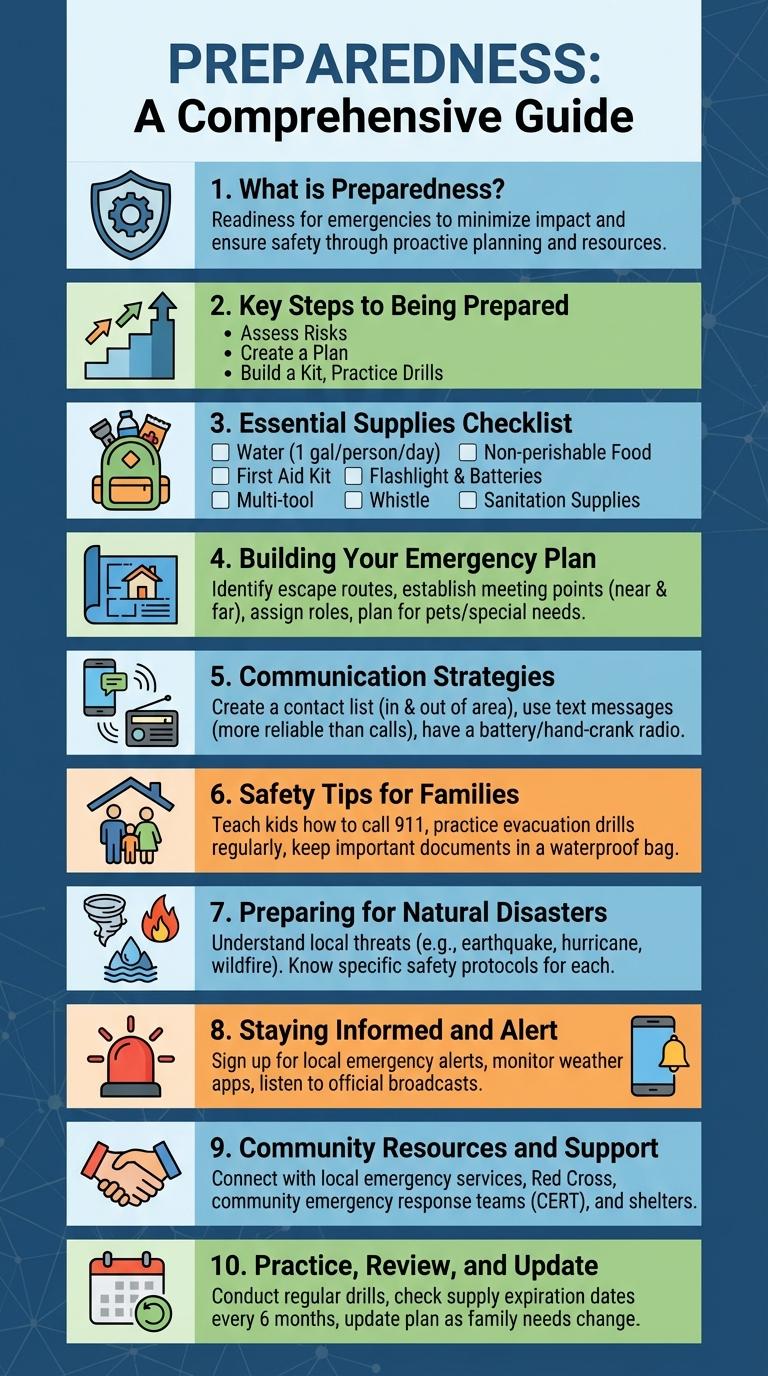
Visual aids like infographics simplify complex information about preparedness by presenting essential steps clearly and engagingly. Highlighting key actions, resources, and safety tips, they enhance understanding and retention for diverse audiences. Infographics serve as effective tools to promote awareness and readiness for emergencies.
What is Preparedness?
Preparedness refers to the proactive measures taken to ensure safety and resilience in the face of emergencies and disasters. It involves planning, training, and resource management to minimize risks and improve response effectiveness.
- Risk Assessment - Identifying potential hazards and evaluating their impact on people and property.
- Emergency Planning - Developing detailed action plans to guide responses during crises.
- Resource Management - Allocating equipment, supplies, and personnel to support emergency operations.
Effective preparedness enhances community resilience and saves lives during unexpected events.
Key Steps to Being Prepared
Preparedness is essential for effectively responding to emergencies and minimizing risks. Knowing the key steps to being prepared can help individuals and families stay safe during unexpected events.
Begin by creating a comprehensive emergency plan that includes communication methods and meeting points. Assemble a disaster supply kit with essentials such as water, food, and medical supplies to ensure readiness for various situations.
Essential Supplies Checklist
Preparedness is crucial for handling emergencies effectively. Having essential supplies ready can significantly improve safety and comfort during unexpected situations.
This infographic highlights a comprehensive Essential Supplies Checklist. It ensures you have all necessary items to sustain yourself and your family for at least 72 hours.
Building Your Emergency Plan
Building your emergency plan ensures you and your family stay safe during unexpected events. Identify potential risks, designate meeting points, and prepare essential emergency supplies. Regularly review and practice your plan to stay ready for any situation.
Communication Strategies
How can effective communication enhance disaster preparedness? Clear communication ensures timely sharing of critical information, reducing confusion and panic. Establishing reliable channels helps coordinate responses among individuals, communities, and emergency services.
What are the key communication strategies in emergency preparedness? Use simple, direct language and multiple platforms like social media, text alerts, and community meetings. Tailoring messages for diverse audiences increases understanding and compliance with safety instructions.
Why is it important to have a communication plan before a disaster occurs? Pre-established plans define roles, responsibilities, and methods to disseminate information quickly under stress. This preparation minimizes delays and improves coordination during emergencies.
| Communication Strategy | Benefits |
|---|---|
| Two-way communication | Facilitates feedback and accurate information flow |
| Use of multiple platforms | Reaches wider audiences effectively |
| Clear, concise messaging | Reduces misunderstandings during crises |
| Regular drills and training | Ensures readiness and familiarity with procedures |
| Accessibility considerations | Supports inclusion of people with disabilities |
Safety Tips for Families
Preparedness is essential for keeping families safe during emergencies. Knowing key safety tips can prevent injuries and save lives.
- Create a Family Emergency Plan - Establish meeting points and communication methods for all family members in case of disaster.
- Assemble an Emergency Kit - Include water, food, first aid supplies, and important documents to sustain your family for at least 72 hours.
- Practice Safety Drills - Regularly conduct fire drills and evacuation exercises to ensure everyone knows how to respond quickly and calmly.
Preparing for Natural Disasters
Preparing for natural disasters involves understanding risks and creating a comprehensive emergency plan. Adequate preparation can save lives and minimize property damage during events like hurricanes, earthquakes, or floods.
Essential steps include assembling an emergency kit with water, food, and first aid supplies. Families should establish communication plans and safe meeting points. Staying informed through local alerts helps ensure timely action when disasters strike.
Staying Informed and Alert
| Key Aspect | Details |
|---|---|
| Reliable Sources | Use official channels like government websites, emergency services, and trusted news outlets to receive accurate updates. |
| Emergency Alerts | Enable notifications for local alerts via mobile apps, text messages, or weather radios to get timely warnings. |
| Community Networks | Join neighborhood groups and social media communities focused on sharing preparedness information and support. |
| Monitor Conditions | Regularly check weather forecasts and hazard updates relevant to your area to anticipate potential emergencies. |
| Alert Plan | Develop a clear family communication strategy to share information quickly during alerts and emergencies. |
Community Resources and Support
Community resources and support enhance preparedness by offering essential services, education, and assistance before, during, and after emergencies. Local organizations, government agencies, and volunteer groups collaborate to ensure access to food, shelter, medical care, and information. Leveraging these networks strengthens resilience and promotes recovery within communities.