
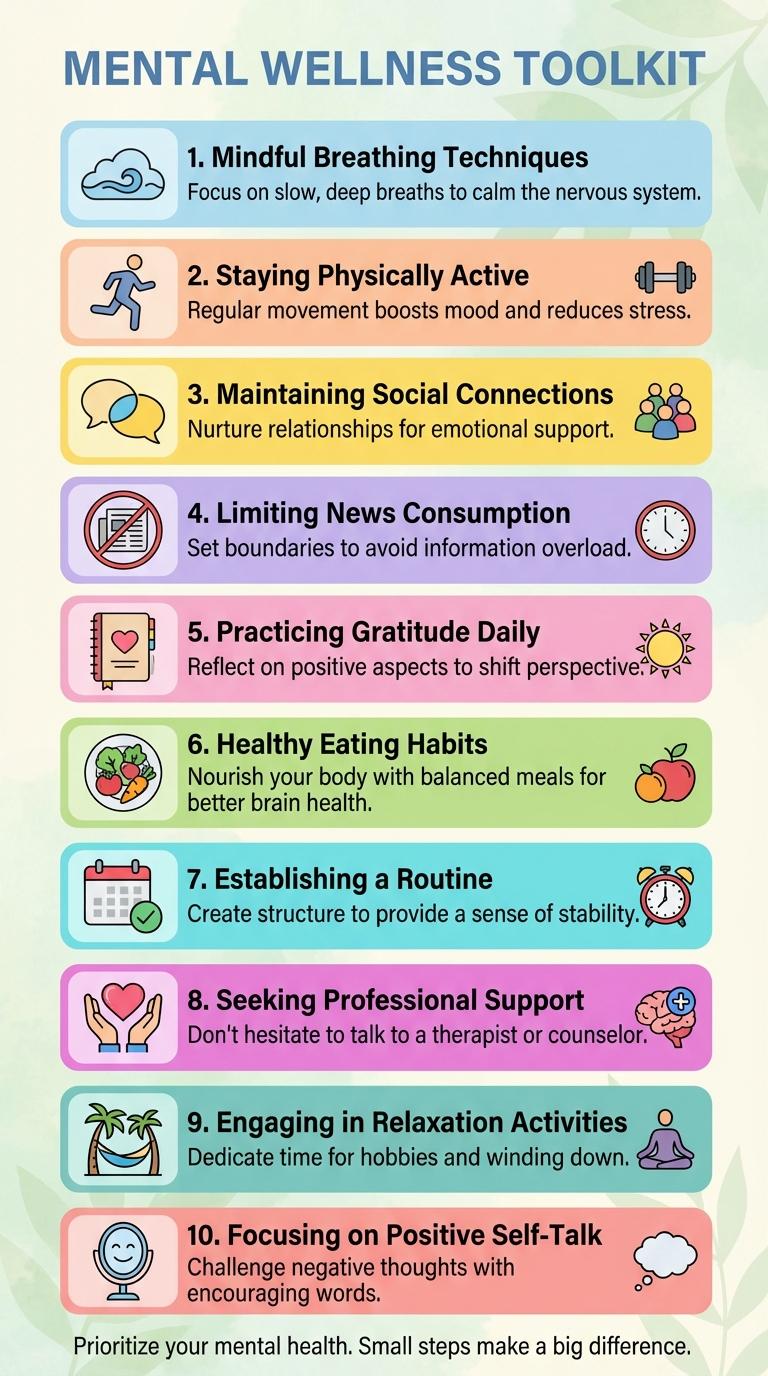
Effective strategies to combat stress during a global health crisis are essential for maintaining mental well-being. Techniques such as mindfulness, regular exercise, and staying connected with loved ones help reduce anxiety and promote resilience. Implementing these practices supports emotional balance and strengthens coping mechanisms in challenging times.
Mindful Breathing Techniques
Mindful breathing techniques are effective tools to reduce stress during a global health crisis. These practices help calm the mind and improve emotional resilience.
- Deep Belly Breathing - Breathe deeply into the abdomen, expanding it slowly to promote relaxation and reduce anxiety.
- Box Breathing - Inhale, hold, exhale, and pause for equal counts to regulate the nervous system and enhance focus.
- 4-7-8 Breathing - Inhale for 4 seconds, hold for 7, and exhale for 8 to slow the heart rate and ease tension.
Staying Physically Active
Staying physically active plays a crucial role in managing stress during a global health crisis. Regular exercise helps release endorphins, which improve mood and reduce anxiety levels.
Incorporating activities like walking, yoga, or home workouts can enhance both physical and mental well-being. Consistent movement also supports immune system function, essential during health emergencies.
Maintaining Social Connections
Maintaining social connections plays a crucial role in managing stress during a global health crisis. Regular communication with friends and family helps reduce feelings of isolation and promotes emotional well-being.
Virtual meetings, phone calls, and social media platforms provide safe alternatives for staying connected. Engaging in shared online activities can strengthen bonds and create a sense of community despite physical distancing.
Limiting News Consumption
Limiting news consumption during a global health crisis reduces anxiety and promotes mental clarity. Setting specific times for updates prevents feeling overwhelmed by constant information. Choosing reliable sources helps maintain accurate understanding without unnecessary stress.
Practicing Gratitude Daily
Practicing gratitude daily is a powerful technique to reduce stress during a global health crisis. It helps shift focus from fear to appreciation, improving mental well-being.
- Enhances emotional resilience - Recognizing positive aspects strengthens the ability to cope with challenges.
- Boosts mood and optimism - Daily gratitude promotes feelings of happiness and hopefulness.
- Improves sleep quality - Reflecting on gratitude reduces anxiety, leading to better rest.
Incorporating gratitude into daily routines supports mental health and fosters a balanced perspective amid uncertainty.
Healthy Eating Habits
How can healthy eating habits help reduce stress during a global health crisis? Proper nutrition supports the immune system and stabilizes mood. Consuming balanced meals rich in vitamins and minerals promotes mental clarity and resilience.
| Healthy Food | Stress-Reducing Benefit |
|---|---|
| Leafy Greens (spinach, kale) | High in magnesium, which helps regulate cortisol levels |
| Fatty Fish (salmon, mackerel) | Rich in omega-3 fatty acids that reduce inflammation and anxiety |
| Nuts and Seeds (almonds, chia seeds) | Provide zinc and vitamin B complex, supporting brain function |
| Fruits (berries, oranges) | High in antioxidants and vitamin C, boosting immune response |
| Whole Grains (quinoa, brown rice) | Stabilize blood sugar, reducing mood swings and irritability |
Establishing a Routine
Establishing a routine provides structure and stability during uncertain times, helping to reduce feelings of anxiety and overwhelm. Consistent daily habits create a sense of normalcy that supports mental well-being.
Start by setting regular wake-up and sleep times to regulate your body's internal clock. Incorporate time for meals, work, exercise, and relaxation throughout the day. A well-defined schedule aids in managing stress and maintaining focus amid a global health crisis.
Seeking Professional Support
Seeking professional support plays a crucial role in managing stress during a global health crisis. Mental health experts provide tailored strategies and therapeutic interventions to help individuals cope effectively. Accessing counseling services, either online or in-person, enhances emotional resilience and promotes overall well-being.
Engaging in Relaxation Activities
Engaging in relaxation activities significantly reduces stress during global health crises by calming the mind and body. These practices improve emotional resilience and promote mental well-being in challenging times.
- Deep Breathing Exercises - Slow, controlled breathing helps lower cortisol levels and induces a state of calmness.
- Mindfulness Meditation - Focusing on the present moment reduces anxiety and fosters a sense of peace.
- Progressive Muscle Relaxation - Systematically tensing and relaxing muscles releases physical tension and eases mental stress.