
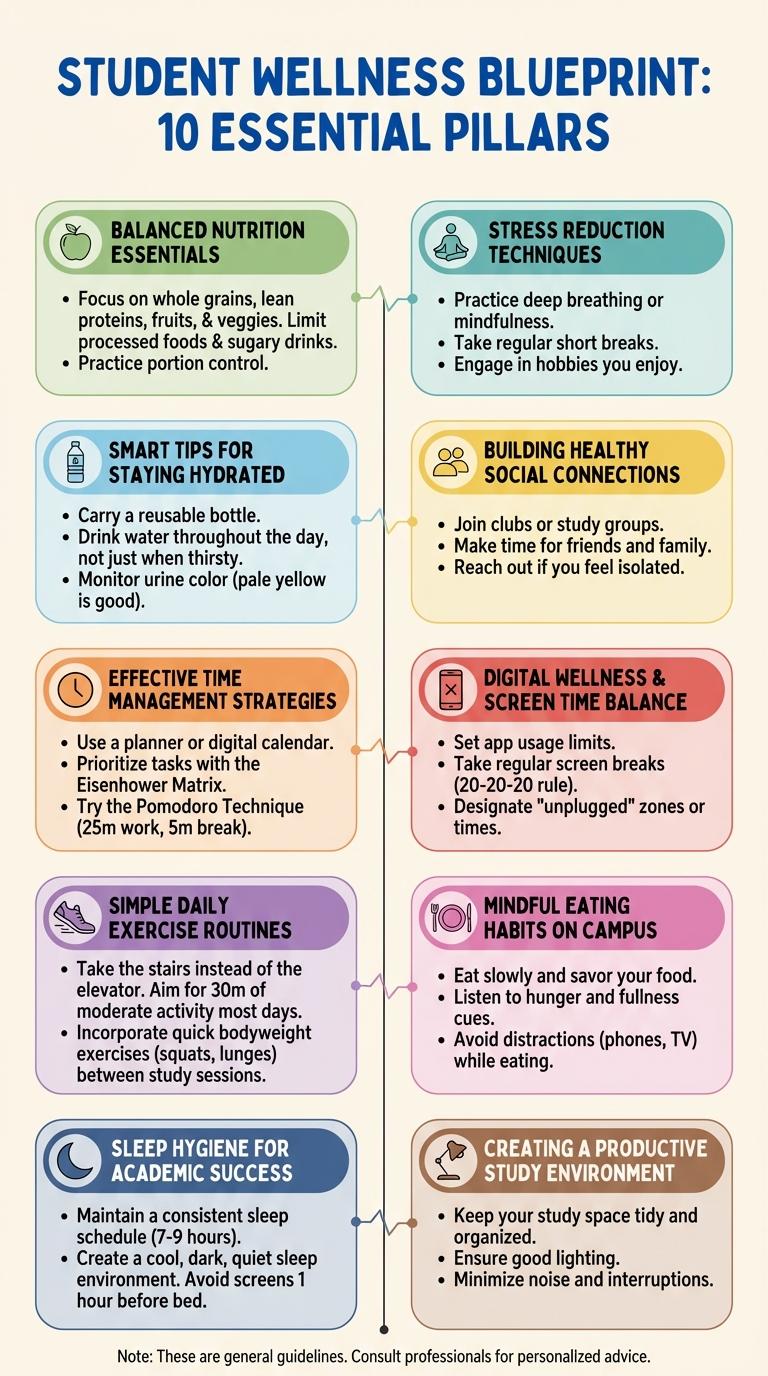
Maintaining a healthy lifestyle is essential for students to perform well academically and stay energized throughout the day. Proper nutrition, regular physical activity, and adequate sleep enhance focus, memory, and overall well-being. This infographic highlights practical tips that help students incorporate healthy habits into their daily routines effectively.
Balanced Nutrition Essentials for Students
Balanced nutrition plays a crucial role in maintaining energy levels and cognitive function for students. Proper meal planning helps support concentration, memory, and overall academic performance.
- Eat a variety of food groups - Incorporate fruits, vegetables, whole grains, lean proteins, and dairy to provide essential nutrients.
- Hydrate adequately - Drinking enough water throughout the day enhances brain function and physical endurance.
- Limit processed sugars and junk food - Reducing intake of sugary snacks and fast food prevents energy crashes and supports long-term health.
Smart Tips for Staying Hydrated
Staying hydrated is essential for students to maintain focus and energy throughout the day. Drinking water regularly helps improve cognitive function and supports overall health.
Carry a reusable water bottle to encourage frequent sipping. Incorporate water-rich foods like fruits and vegetables into your diet for added hydration.
Effective Time Management Strategies
Effective time management is essential for students to balance academic responsibilities and personal well-being. Implementing practical strategies can enhance productivity and reduce stress.
- Prioritize Tasks - Identify and focus on high-impact assignments to maximize efficiency.
- Create a Study Schedule - Allocate specific time blocks for study and breaks to maintain consistent progress.
- Avoid Multitasking - Concentrate on one task at a time to improve focus and quality of work.
Simple Daily Exercise Routines
Incorporating simple daily exercise routines helps students boost energy, improve concentration, and maintain overall health. Activities such as brisk walking, stretching, or jumping jacks can be done in short bursts between study sessions. Consistency in these exercises supports physical fitness and enhances mental clarity for academic success.
Sleep Hygiene for Academic Success
Maintaining good sleep hygiene is essential for students to enhance concentration and memory retention, leading to improved academic performance. Establishing a consistent sleep schedule, avoiding electronic devices before bedtime, and creating a restful environment are key practices. Quality sleep supports cognitive function, emotional well-being, and physical health, all crucial for student success.
Stress Reduction Techniques for Students
Managing stress is crucial for students to maintain both mental and physical health. Effective stress reduction techniques can improve focus, enhance learning, and promote overall well-being.
Regular exercise, such as walking or yoga, helps reduce cortisol levels and boosts mood. Practicing mindfulness meditation for 10 minutes daily improves concentration and decreases anxiety. Time management skills, like prioritizing tasks and taking short breaks, prevent burnout and increase productivity.
Building Healthy Social Connections
How can students build healthy social connections to improve their overall well-being? Healthy social connections provide emotional support and reduce stress, which enhances mental health. Engaging in group activities and communicating openly helps students create strong and positive relationships.
| Tip | Benefit |
| Join clubs or student organizations | Meet like-minded peers and build friendships |
| Practice active listening | Enhances understanding and trust in relationships |
| Schedule regular social meetups | Maintains consistent emotional support |
| Engage in collaborative study sessions | Improves teamwork and shared success |
| Use social media mindfully | Strengthens connections without overwhelming stress |
Digital Wellness and Screen Time Balance
| Aspect | Recommendation |
|---|---|
| Screen Time Limit | Maximum 2 hours of recreational screen use daily |
| Breaks | Take a 5-10 minute break every hour of screen use |
| Digital Detox | Schedule at least one screen-free day per week |
| Blue Light Management | Use blue light filters or glasses during evening hours |
| Physical Activity | Engage in 30 minutes of daily exercise to counteract sedentary behavior |
Mindful Eating Habits on Campus
Maintaining mindful eating habits on campus supports students' physical health and academic performance. Conscious food choices help regulate energy levels and improve concentration throughout the day.
- Choose whole foods - Prioritize fruits, vegetables, whole grains, and lean proteins over processed snacks to enhance nutrient intake.
- Practice portion control - Eating appropriate serving sizes prevents overeating and maintains healthy body weight.
- Limit sugary beverages - Opt for water or herbal teas instead of sodas to reduce empty calorie consumption and support hydration.
Implementing mindful eating strategies fosters better health and sustained energy for successful student life.