
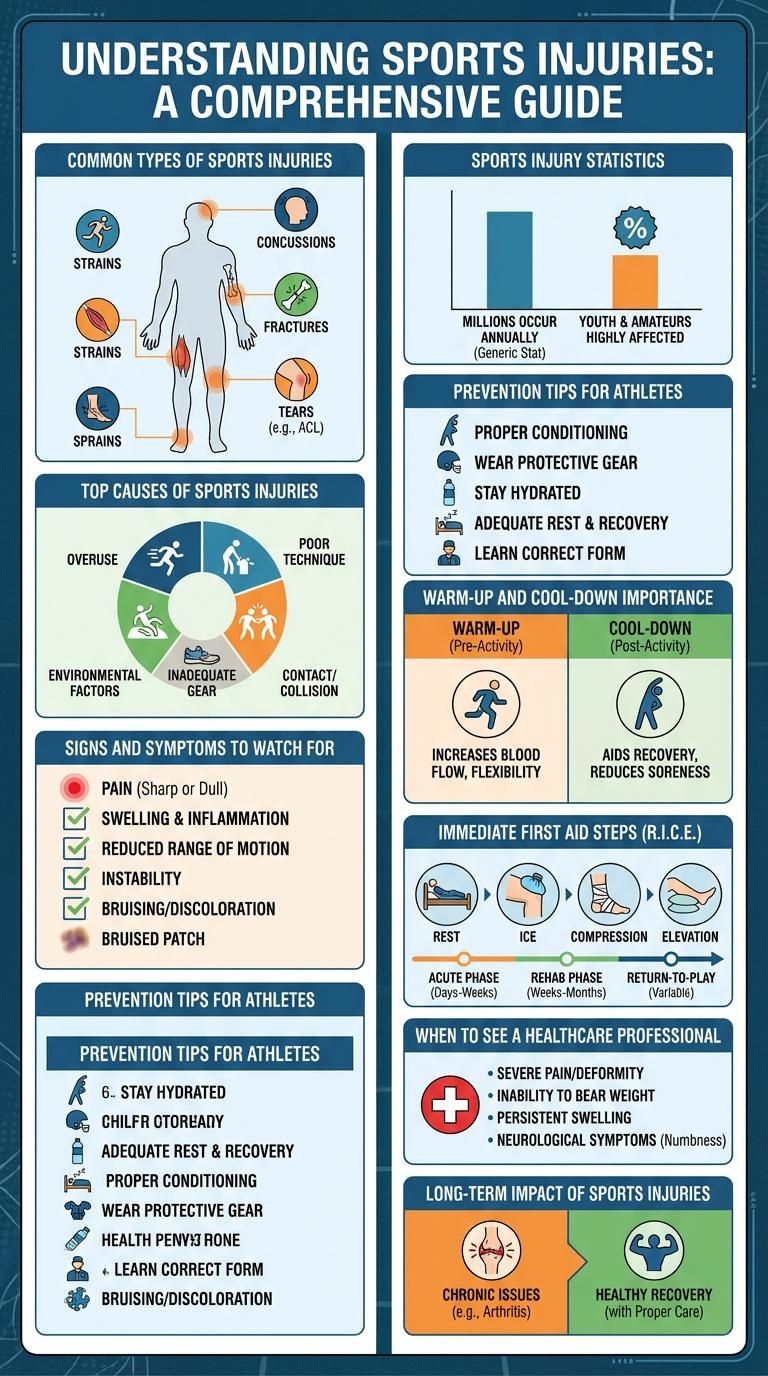
Sports injuries are common challenges athletes face, impacting performance and recovery time. Understanding the types, causes, and prevention methods is crucial for minimizing risks and ensuring effective treatment. Visualizing this information through an infographic helps convey key insights quickly and clearly.
Common Types of Sports Injuries
Sports injuries occur frequently among athletes and can range from minor to severe. Understanding common types of sports injuries helps in prevention and treatment.
- Sprains - Ligament overstretching or tearing often affecting ankles and wrists.
- Strains - Muscle or tendon overstretching or tearing, typically in hamstrings and back muscles.
- Fractures - Breaks or cracks in bones caused by impact or overuse.
- Dislocations - Bones forced out of their normal position in joints like shoulders or fingers.
- Tendonitis - Inflammation of tendons due to repetitive motion or overuse.
Recognizing these injuries early can promote faster recovery and reduce complications.
Top Causes of Sports Injuries
Sports injuries commonly result from overuse, improper technique, and inadequate warm-up routines. Contact sports and high-impact activities increase the risk of acute injuries such as sprains, fractures, and concussions. Understanding these top causes helps athletes and coaches implement effective prevention strategies to reduce injury occurrences.
Signs and Symptoms to Watch For
What are the common signs and symptoms of sports injuries? Sports injuries often manifest through pain, swelling, and limited range of motion in the affected area. Early recognition of these symptoms is crucial for prompt treatment and recovery.
How can you identify a sports injury visually? Look for bruising, redness, or deformity around the injured site. These visual cues often indicate inflammation or tissue damage that requires medical attention.
When should you be concerned about numbness or tingling during sports activity? These sensations may signal nerve involvement or severe injury. Immediate evaluation by a healthcare professional is recommended to prevent long-term complications.
What role does sudden loss of strength play in detecting sports injuries? Sudden weakness in muscles or joints can indicate a strain, sprain, or tear. Monitoring this symptom helps in making timely decisions about rest and treatment.
How important is the onset of persistent pain after a sports event? Persistent or worsening pain after physical activity can suggest a more serious injury. It is essential to seek medical advice if pain does not subside with rest and standard care.
Sports Injury Statistics
Sports injuries affect millions of athletes each year worldwide, with sprains and strains being the most common types. Approximately 3.5 million sports-related injuries are treated annually in emergency rooms across the United States.
The highest injury rates occur in contact sports such as football, basketball, and soccer, accounting for nearly 50% of all reported cases. Young athletes aged 15-24 experience the greatest number of injuries due to high participation levels combined with physical growth. Preventive measures and proper training can reduce the risk of injury by up to 30%.
Prevention Tips for Athletes
Sports injuries are common among athletes, but many can be prevented with proper care and training. Understanding prevention tips can help reduce the risk of sprains, strains, fractures, and other injuries.
Warm-up exercises increase blood flow and prepare muscles for intense activity. Wearing appropriate protective gear and using correct techniques also play crucial roles in injury prevention.
Warm-Up and Cool-Down Importance
Proper warm-up prepares muscles and joints for intense physical activity, reducing the risk of sports injuries. Dynamic stretching increases blood flow, enhances flexibility, and improves performance during exercise.
Cooling down aids muscle recovery by gradually lowering heart rate and preventing stiffness. Static stretching post-exercise helps maintain flexibility and reduces muscle soreness after sports activities.
Immediate First Aid Steps
| Step | Immediate First Aid Action |
|---|---|
| 1. Stop Activity | Cease all physical activity immediately to prevent further injury. |
| 2. Protect the Injury | Support or immobilize the injured area to avoid additional damage. |
| 3. Rest | Stop using the injured part to reduce strain and promote healing. |
| 4. Ice Application | Apply ice or a cold pack for 15-20 minutes every 1-2 hours to reduce swelling and pain. |
| 5. Compression & Elevation | Wrap with an elastic bandage (not too tight) and elevate above heart level to control swelling. |
Recovery and Rehabilitation Timeline
Sports injuries require carefully managed recovery and rehabilitation to ensure full healing and prevent re-injury. Understanding the typical timeline helps athletes and medical professionals set realistic goals and expectations.
- Initial Rest and Protection - The first few days focus on reducing pain and swelling through rest, ice, compression, and elevation (RICE).
- Early Rehabilitation - Gentle range-of-motion and stretching exercises begin within 1-2 weeks to restore mobility without stressing the injury.
- Strengthening and Functional Training - Between 3 to 6 weeks, targeted strength training and sport-specific drills prepare the athlete for safe return to activity.
When to See a Healthcare Professional
Sports injuries can range from minor bruises to severe conditions requiring immediate medical attention. Signs such as intense pain, swelling, difficulty moving the affected area, or joint instability indicate the need to see a healthcare professional without delay. Early diagnosis and treatment enhance recovery outcomes and prevent long-term damage.