
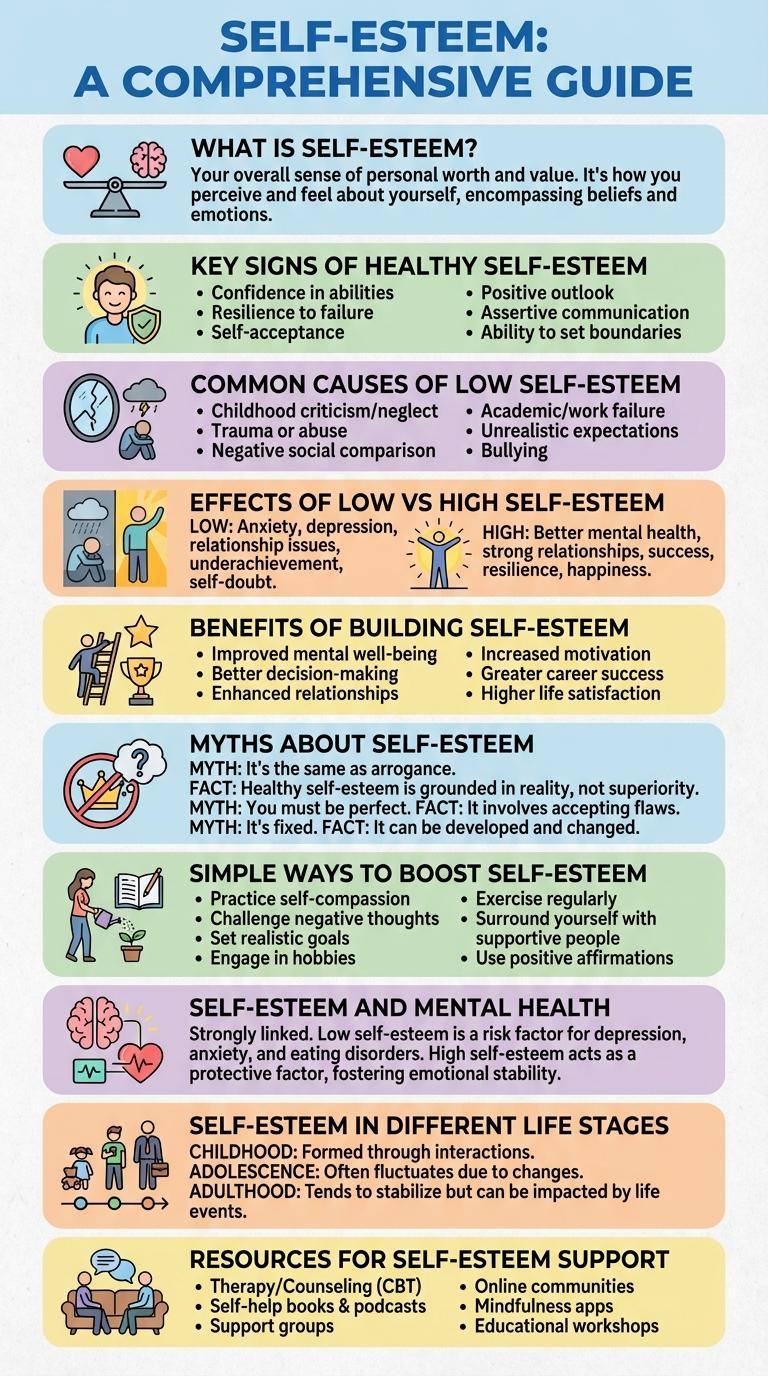
Self-esteem influences how individuals perceive themselves and interact with the world around them. Understanding the components and impact of self-esteem can empower personal growth and resilience. This infographic highlights key aspects, benefits, and strategies to nurture healthy self-esteem effectively.
What is Self-Esteem?
Self-esteem refers to an individual's overall sense of personal worth and value. It encompasses beliefs about oneself as well as emotional states such as triumph, despair, pride, and shame. Healthy self-esteem plays a crucial role in mental well-being and influences behavior, motivation, and relationships.
Key Signs of Healthy Self-Esteem
Healthy self-esteem reflects a balanced and positive self-view, enabling individuals to navigate life's challenges confidently. Recognizing the key signs can help maintain and enhance emotional well-being.
- Positive Self-Acceptance - Embracing strengths and weaknesses without harsh judgment fosters resilience.
- Effective Communication - Expressing thoughts and feelings clearly indicates self-confidence.
- Balanced Optimism - Maintaining hope while realistically assessing situations promotes growth.
Developing these traits supports a strong foundation for mental and emotional health.
Common Causes of Low Self-Esteem
Low self-esteem often stems from negative experiences during childhood, such as criticism or neglect. It can also develop due to unrealistic social comparisons fueled by media and peer pressure.
Frequent exposure to failure or rejection can reinforce feelings of inadequacy. Internalizing negative feedback from family, teachers, or friends reduces confidence. Persistent self-doubt and perfectionism further contribute to diminished self-worth.
Effects of Low vs High Self-Esteem
Self-esteem significantly influences mental health, relationships, and overall life satisfaction. Understanding the contrasting effects of low and high self-esteem can promote better self-awareness and personal growth.
- Low Self-Esteem Leads to Anxiety - Individuals with low self-esteem often experience increased anxiety and self-doubt in social and professional settings.
- High Self-Esteem Boosts Confidence - High self-esteem fosters confidence, enabling individuals to take on challenges and embrace new opportunities.
- Low Self-Esteem Causes Negative Self-Image - People with low self-esteem typically harbor negative perceptions about themselves, affecting motivation and mood.
- High Self-Esteem Enhances Resilience - Resilience against stress and setbacks is stronger among those with high self-esteem, aiding emotional stability.
- Low Self-Esteem Impairs Relationships - Struggles with self-worth can lead to difficulties in forming and maintaining healthy interpersonal relationships.
Benefits of Building Self-Esteem
Why is building self-esteem important for personal growth? High self-esteem fosters resilience and empowers individuals to face challenges confidently. It enhances decision-making and improves overall mental health.
What benefits can improved self-esteem bring to relationships? Strong self-esteem promotes healthier communication and deeper emotional connections. People with positive self-worth tend to create more supportive and lasting relationships.
How does self-esteem impact performance in work or school? Increased self-esteem boosts motivation and persistence in tasks. It contributes to better focus, creativity, and achievement.
Can building self-esteem affect physical health? Positive self-esteem encourages healthier lifestyle choices and stress management. It reduces the risk of anxiety-related illnesses and promotes longevity.
Does self-esteem influence overall happiness and life satisfaction? High self-esteem aligns with greater life satisfaction and optimism. It nurtures a positive self-image that supports long-term emotional well-being.
Myths About Self-Esteem
Self-esteem is often misunderstood, leading to common myths that can hinder personal growth. One prevalent myth claims self-esteem is just about being confident, while it truly encompasses a deep sense of self-worth and acceptance. Another false belief is that high self-esteem means being narcissistic, but healthy self-esteem promotes balanced self-respect and empathy.
Simple Ways to Boost Self-Esteem
Boosting self-esteem is essential for mental well-being and overall happiness. Simple, practical steps can significantly enhance your self-confidence and outlook on life.
Implement these strategies to cultivate a healthier self-image and greater inner strength.
- Practice Positive Self-Talk - Replace negative thoughts with encouraging and supportive affirmations daily.
- Set Achievable Goals - Break tasks into smaller steps to create a sense of accomplishment and progress.
- Engage in Physical Activity - Exercise releases endorphins that improve mood and self-perception.
- Surround Yourself with Supportive People - Build relationships that foster encouragement and constructive feedback.
- Celebrate Your Strengths - Recognize and appreciate your unique talents and achievements regularly.
Self-Esteem and Mental Health
| Self-Esteem & Mental Health | Key Insights |
|---|---|
| Definition of Self-Esteem | Personal evaluation of one's own worth and value. |
| Impact on Depression | Low self-esteem is linked to higher risk of depression symptoms. |
| Anxiety Correlation | Individuals with low self-esteem experience increased anxiety levels. |
| Resilience & Coping | High self-esteem improves emotional resilience and stress coping ability. |
| Improvement Strategies | Practicing self-compassion, positive affirmations, and therapy enhances self-esteem. |
Self-Esteem in Different Life Stages
Self-esteem evolves through different life stages, influenced by experiences and social interactions. Early childhood self-esteem often depends on parental support and validation.
During adolescence, peer relationships and academic performance significantly impact self-esteem levels. In adulthood, self-esteem is shaped by career achievements, relationships, and personal growth.