
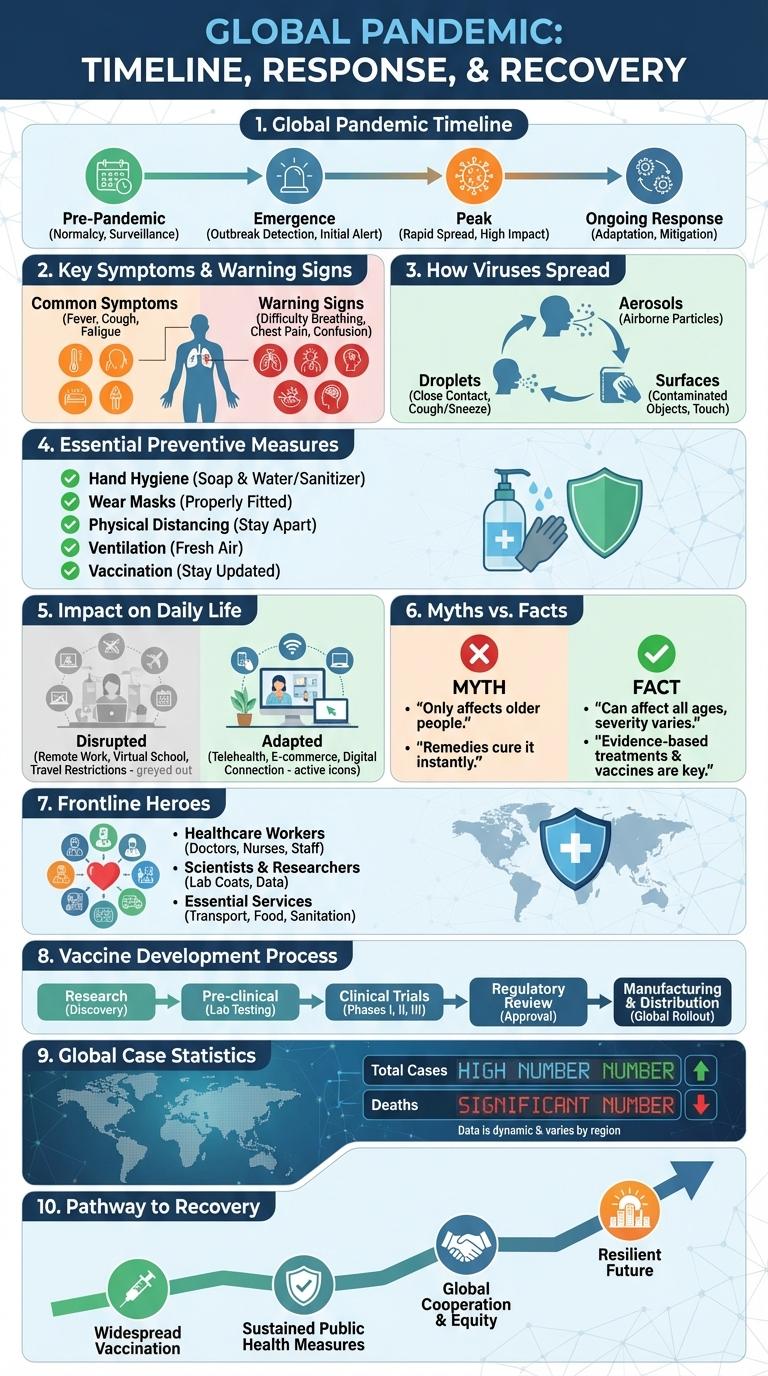
The infographic vividly illustrates the global impact of the pandemic, highlighting key statistics on infection rates, mortality, and vaccination progress. It uses clear visuals to demonstrate how different regions responded and adapted to the evolving health crisis. The data-driven design offers an insightful overview of pandemic trends and public health measures worldwide.
Global Pandemic Timeline
A global pandemic timeline highlights key events from outbreak detection to widespread vaccination efforts. It tracks virus mutations, transmission rates, and public health responses worldwide. This infographic provides a clear overview of significant milestones and their impact on societies.
Key Symptoms and Warning Signs
Pandemics often present a range of key symptoms that signal infection. Recognizing these early signs can help prevent widespread transmission.
Common symptoms include fever, cough, and fatigue, which indicate the body's response to a virus. Warning signs like difficulty breathing or chest pain require immediate medical attention.
How Viruses Spread
Viruses spread through various modes such as airborne droplets, direct contact, and contaminated surfaces. Understanding these transmission methods is crucial for effective prevention.
When an infected person coughs or sneezes, tiny droplets containing the virus can enter the air and infect others nearby. Touching surfaces contaminated with the virus and then touching the face can also lead to infection. Practicing good hygiene and maintaining physical distance reduces the risk of virus transmission significantly.
Essential Preventive Measures
| Essential Preventive Measures | Description |
|---|---|
| Hand Hygiene | Regularly wash hands with soap and water for at least 20 seconds or use alcohol-based hand sanitizer. |
| Wear Masks | Use face masks in public spaces to reduce airborne virus transmission. |
| Physical Distancing | Maintain at least 6 feet distance from others to minimize close contact spread. |
| Vaccination | Receive approved vaccines to build immunity against the virus. |
| Avoid Touching Face | Refrain from touching eyes, nose, and mouth to prevent virus entry into the body. |
Impact on Daily Life
The pandemic drastically altered daily routines worldwide, affecting work, education, and social interactions. Remote work and online learning became essential for millions, reshaping traditional lifestyles.
Public health measures, such as mask-wearing and social distancing, became the new norm to reduce virus transmission. Many people experienced changes in mental health due to isolation and uncertainty during lockdowns.
Myths vs. Facts
Pandemic myths often spread misinformation that can hinder public health efforts. Separating myths from facts helps people make informed decisions during health crises.
- Myth: Vaccines cause the disease - Vaccines are designed to prevent infection, not cause it.
- Myth: Only older adults are at risk - People of all ages can contract and spread the virus.
- Myth: Masks are ineffective - Masks reduce virus transmission by blocking respiratory droplets.
Accurate information empowers communities to protect themselves and reduce the impact of pandemics.
Frontline Heroes
Frontline heroes played a crucial role during the pandemic, risking their lives to save others. Their dedication and resilience were essential in managing the crisis and providing care.
- Healthcare Workers - Doctors, nurses, and support staff worked tirelessly to treat COVID-19 patients and maintain hospital operations.
- Essential Service Providers - Delivery personnel, grocery store employees, and sanitation workers ensured communities had access to necessary supplies.
- Emergency Responders - Paramedics and firefighters provided urgent medical care and safety services under challenging conditions.
Vaccine Development Process
How is a vaccine developed during a pandemic?
The vaccine development process begins with research to identify the virus and design potential vaccine candidates. After preclinical testing, promising candidates enter several phases of clinical trials to assess safety and effectiveness before regulatory approval.
Global Case Statistics
Global pandemic case statistics reveal over 700 million confirmed infections worldwide, with a significant impact on public health systems. The highest case numbers are reported in densely populated regions, highlighting the challenges of containment and vaccination efforts. Mortality rates vary by country, influenced by healthcare infrastructure, vaccination coverage, and virus variants.