
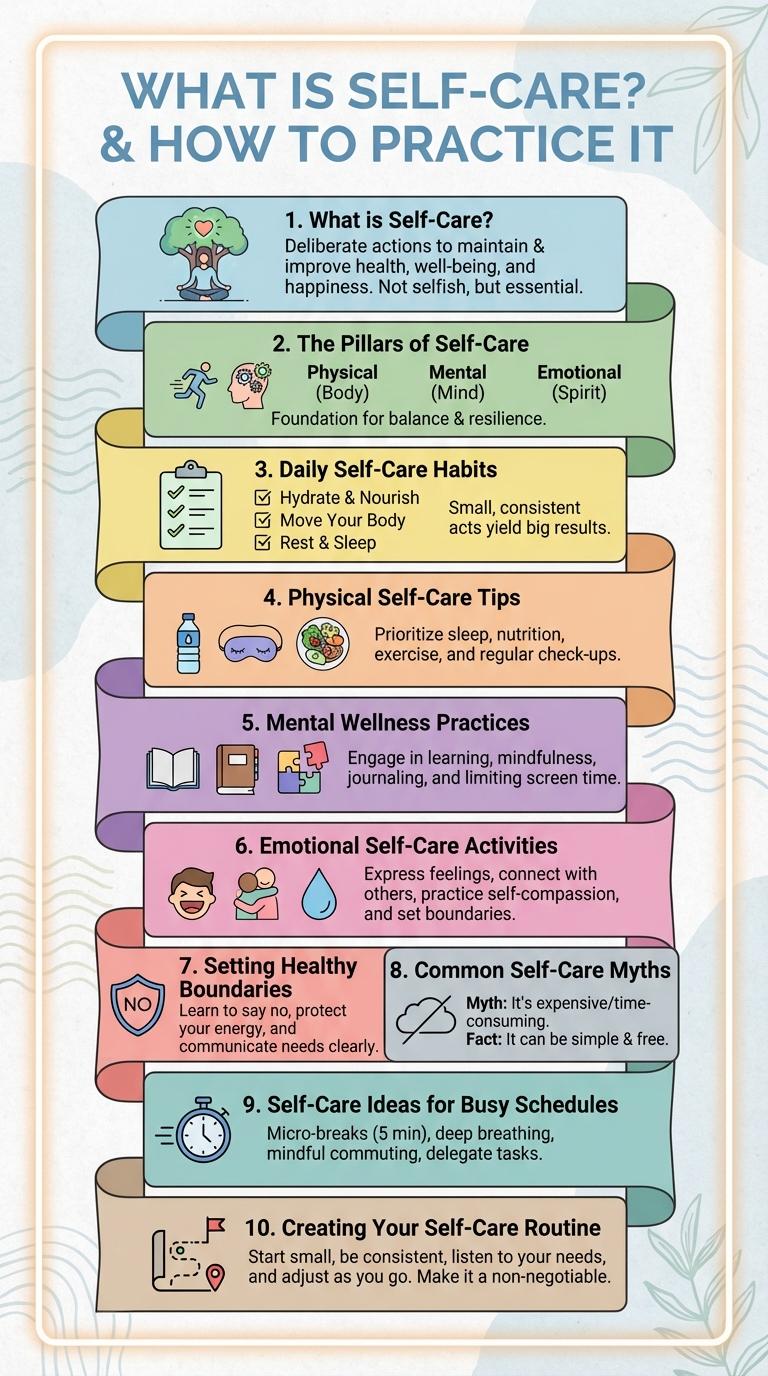
Self-care empowers individuals to prioritize their mental, emotional, and physical well-being by adopting healthy habits and mindsets. Infographics serve as visually engaging tools that simplify complex concepts, making self-care strategies easy to understand and apply. By incorporating practical tips and evidence-based practices, this infographic highlights essential steps to enhance overall wellness and reduce stress effectively.
What is Self-Care?
| Aspect | Description |
|---|---|
| Definition | Self-care refers to the practice of taking deliberate actions to maintain or improve one's physical, mental, and emotional health. |
| Purpose | Enhance well-being, reduce stress, prevent illness, and promote a balanced lifestyle. |
| Types | Physical (exercise, nutrition), Emotional (mindfulness, therapy), Social (relationships, support systems), and Spiritual (meditation, reflection). |
| Benefits | Improved mood, increased energy, better focus, stronger resilience, and enhanced overall quality of life. |
| Examples | Regular exercise, balanced diet, adequate sleep, practicing gratitude, setting boundaries, and scheduling downtime. |
The Pillars of Self-Care
Self-care is essential for maintaining mental, emotional, and physical well-being. The Pillars of Self-Care include Nutrition, Exercise, Sleep, Hydration, and Mindfulness, each contributing to overall health. Prioritizing these pillars creates a balanced lifestyle and enhances resilience against stress.
Daily Self-Care Habits
Daily self-care habits nurture physical, mental, and emotional well-being. Establishing consistent routines supports long-term health and happiness.
- Hydration - Drinking adequate water maintains energy levels and supports bodily functions.
- Mindfulness - Practicing mindfulness reduces stress and enhances emotional resilience.
- Sleep Hygiene - Getting 7-9 hours of quality sleep restores cognitive function and overall health.
- Physical Activity - Engaging in daily exercise boosts mood and strengthens the cardiovascular system.
- Balanced Nutrition - Consuming a nutrient-rich diet fuels the body and supports immune function.
Physical Self-Care Tips
Physical self-care is essential for maintaining overall health and well-being. Simple daily habits can significantly improve energy levels and reduce stress.
Regular exercise, balanced nutrition, and adequate sleep form the foundation of effective physical self-care. Staying hydrated and scheduling routine medical check-ups further support a healthy lifestyle.
Mental Wellness Practices
Mental wellness practices are essential for maintaining emotional balance and reducing stress. Incorporating simple habits into daily life can significantly enhance overall mental health.
Engage in mindfulness meditation to increase awareness and reduce anxiety. Regular physical exercise releases endorphins, which improve mood and energy levels. Prioritize quality sleep to support cognitive function and emotional resilience.
Emotional Self-Care Activities
Emotional self-care involves activities that help maintain and improve emotional well-being. It focuses on recognizing, expressing, and managing emotions effectively.
- Journaling - Writing thoughts and feelings daily supports emotional clarity and stress relief.
- Meditation - Practicing mindfulness meditation promotes emotional balance and reduces anxiety.
- Setting Boundaries - Clearly defining personal limits protects emotional energy and fosters healthy relationships.
Incorporating emotional self-care activities regularly enhances mental resilience and overall happiness.
Setting Healthy Boundaries
Setting healthy boundaries is essential for maintaining emotional well-being and preventing burnout. Clearly communicating your limits helps others understand and respect your needs. Practicing self-care through boundary setting fosters healthier relationships and personal growth.
Self-Care Ideas for Busy Schedules
Self-care is essential for maintaining mental and physical well-being, especially when managing a busy schedule. Incorporating small, manageable self-care practices can significantly improve overall health and productivity.
Simple self-care ideas include short meditation sessions, quick stretching exercises, and staying hydrated throughout the day. Prioritizing these habits helps reduce stress and boosts energy levels even during the busiest times.
Common Self-Care Myths
Self-care is essential for mental and physical well-being, yet many misconceptions surround its practice. Understanding common myths helps promote effective self-care habits.
- Self-care is selfish - Taking time for yourself improves overall health, benefiting both you and others.
- Self-care requires a lot of time - Simple, quick activities like deep breathing or stretching count as effective self-care.
- Self-care is expensive - Many self-care practices, such as journaling or walking, cost little to nothing.