
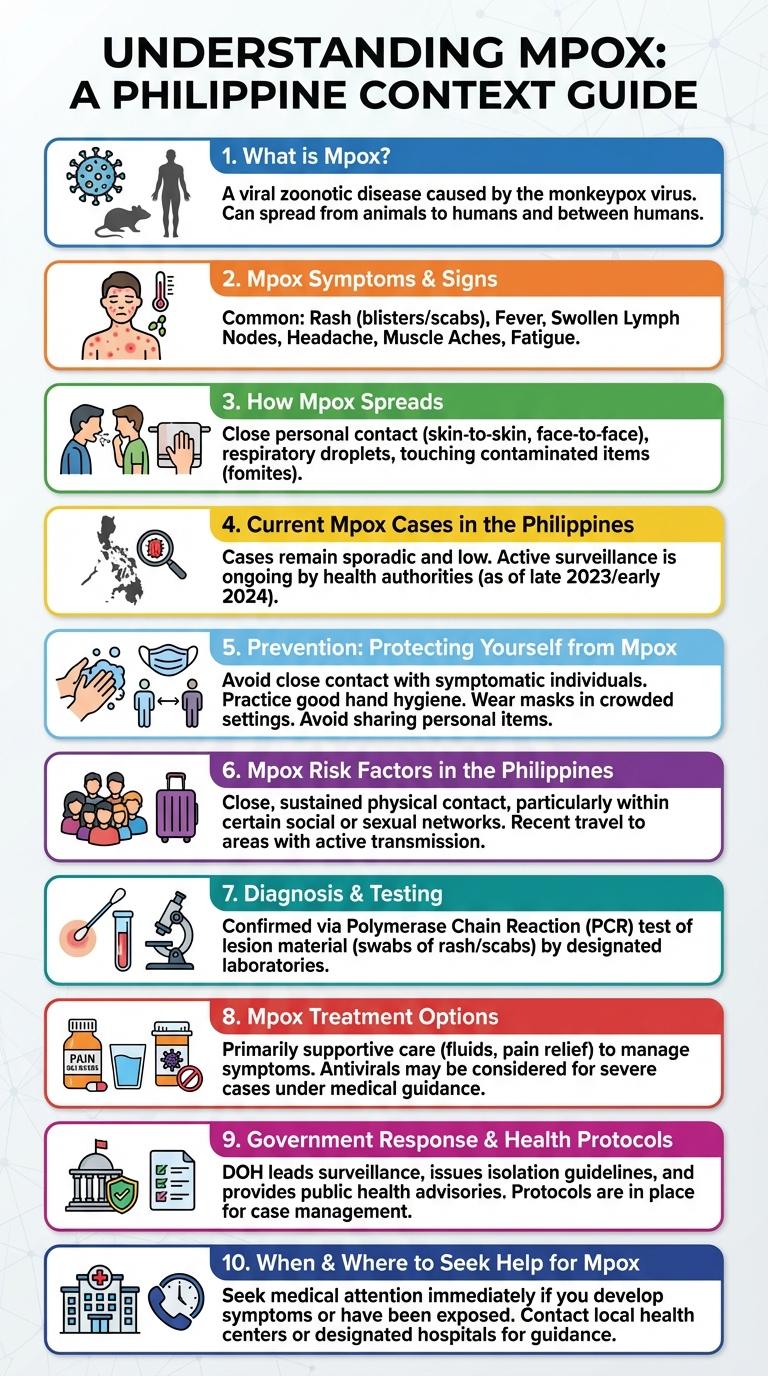
Mpox in the Philippines presents unique public health challenges due to its recent emergence and local transmission patterns. Understanding key statistics, prevention measures, and government response is essential for effective awareness and control. This infographic highlights critical data and actionable insights to inform the public and healthcare providers.
What is Mpox?
Mpox is a viral disease caused by the monkeypox virus, primarily affecting humans and some animals. It presents with symptoms similar to smallpox but generally causes milder illness.
- Transmission - Mpox spreads through close contact with infected animals, humans, or contaminated materials.
- Symptoms - Common signs include fever, rash, swollen lymph nodes, and muscle aches.
- Prevention - Avoiding contact with infected individuals and practicing good hygiene can reduce the risk of infection.
Understanding Mpox's features and transmission helps in controlling its spread in the Philippines.
Mpox Symptoms & Signs
Mpox is a viral infection reported in the Philippines with distinct symptoms and signs. Early recognition of these symptoms helps in prompt diagnosis and management.
Mpox symptoms include rash, fever, and swollen lymph nodes, mimicking other viral illnesses but with unique characteristics.
- Fever and Chills - High fever and chills often appear before the rash develops, indicating initial viral infection.
- Characteristic Rash - A rash that progresses from macules to papules, vesicles, pustules, and finally crusts, primarily on the face, hands, and feet.
- Swollen Lymph Nodes - Enlarged lymph nodes in the neck, armpits, or groin are a distinctive sign differentiating mpox from similar diseases.
How Mpox Spreads
Mpox spreads primarily through close physical contact with an infected person, including skin-to-skin contact and exposure to respiratory droplets. Transmission can also occur through contact with contaminated objects such as bedding or clothing.
In the Philippines, mpox cases have been linked to travel and close social interactions. Preventive measures focus on avoiding direct contact with infected individuals and practicing good hygiene to reduce spread.
Current Mpox Cases in the Philippines
Mpox, also known as monkeypox, has been reported in the Philippines with a growing number of cases. Monitoring and response efforts are ongoing to contain the spread of the virus.
The Department of Health (DOH) has confirmed multiple Mpox cases across the country, primarily in Metro Manila. Most cases involve individuals aged 20 to 45, with symptoms including fever, rash, and swollen lymph nodes. Public health authorities emphasize early detection and isolation to prevent community transmission.
Prevention: Protecting Yourself from Mpox
How can you protect yourself from mpox in the Philippines?
Mpox, also known as monkeypox, spreads primarily through close contact with infected individuals or contaminated materials. Practicing good hygiene and avoiding direct contact with skin lesions significantly reduces the risk of transmission.
What hygiene measures are effective against mpox?
Regular handwashing with soap and water is crucial to prevent mpox infection. Using alcohol-based hand sanitizers also helps eliminate the virus from hands after potential exposure.
Why is avoiding contact with infected persons important?
Mpox transmits through physical contact, including touching rashes, body fluids, or contaminated items. Avoiding such contact limits the chance of catching or spreading the virus within communities.
How does vaccination contribute to mpox prevention?
The smallpox vaccine provides cross-protection against mpox and is recommended for high-risk groups. Vaccination campaigns in the Philippines help control outbreaks by building immunity among vulnerable populations.
What role does public awareness play in mpox prevention?
Educating individuals about mpox symptoms and transmission modes empowers people to take timely preventive actions. Community outreach programs in the Philippines enhance early detection and reduce stigma associated with the disease.
Mpox Risk Factors in the Philippines
| Mpox Risk Factors | Context in the Philippines |
|---|---|
| Close Contact with Infected Individuals | Mpox spreads through direct skin-to-skin or respiratory contact, especially in crowded urban areas like Metro Manila. |
| Travel and Cross-border Movement | High volume of international travelers increases potential for virus introduction and spread. |
| Limited Awareness and Health Education | Low public knowledge in remote and rural communities hinders early detection and prevention. |
| Healthcare Access Disparities | Rural and underserved areas face challenges in accessing timely diagnosis and treatment. |
| Stigma and Social Barriers | Stigma around infectious diseases may cause delays in seeking medical help or reporting symptoms. |
Diagnosis & Testing
Mpox diagnosis in the Philippines involves clinical evaluation and laboratory testing to confirm the presence of the virus. Specimens such as skin lesion swabs or fluid are collected and sent to designated government laboratories for PCR testing. Early detection through accurate testing ensures timely isolation and treatment, reducing the risk of transmission.
Mpox Treatment Options
Mpox, also known as monkeypox, is a viral disease with symptoms resembling smallpox. Treatment primarily focuses on relieving symptoms and preventing complications.
Antiviral medications such as Tecovirimat have been approved for treating mpox infection. Supportive care includes hydration, pain management, and secondary infection prevention.
Government Response & Health Protocols
The Philippine government has initiated proactive measures to manage and control mpox outbreaks. Health protocols focus on public awareness, early detection, and vaccination efforts.
- Surveillance and Reporting - The Department of Health (DOH) mandates immediate reporting of suspected mpox cases to ensure timely response and containment.
- Vaccination Campaigns - Targeted vaccination programs prioritize high-risk groups, including healthcare workers and close contacts of confirmed cases.
- Public Health Guidelines - Strict hygiene practices, use of personal protective equipment, and isolation protocols are enforced to prevent transmission.