
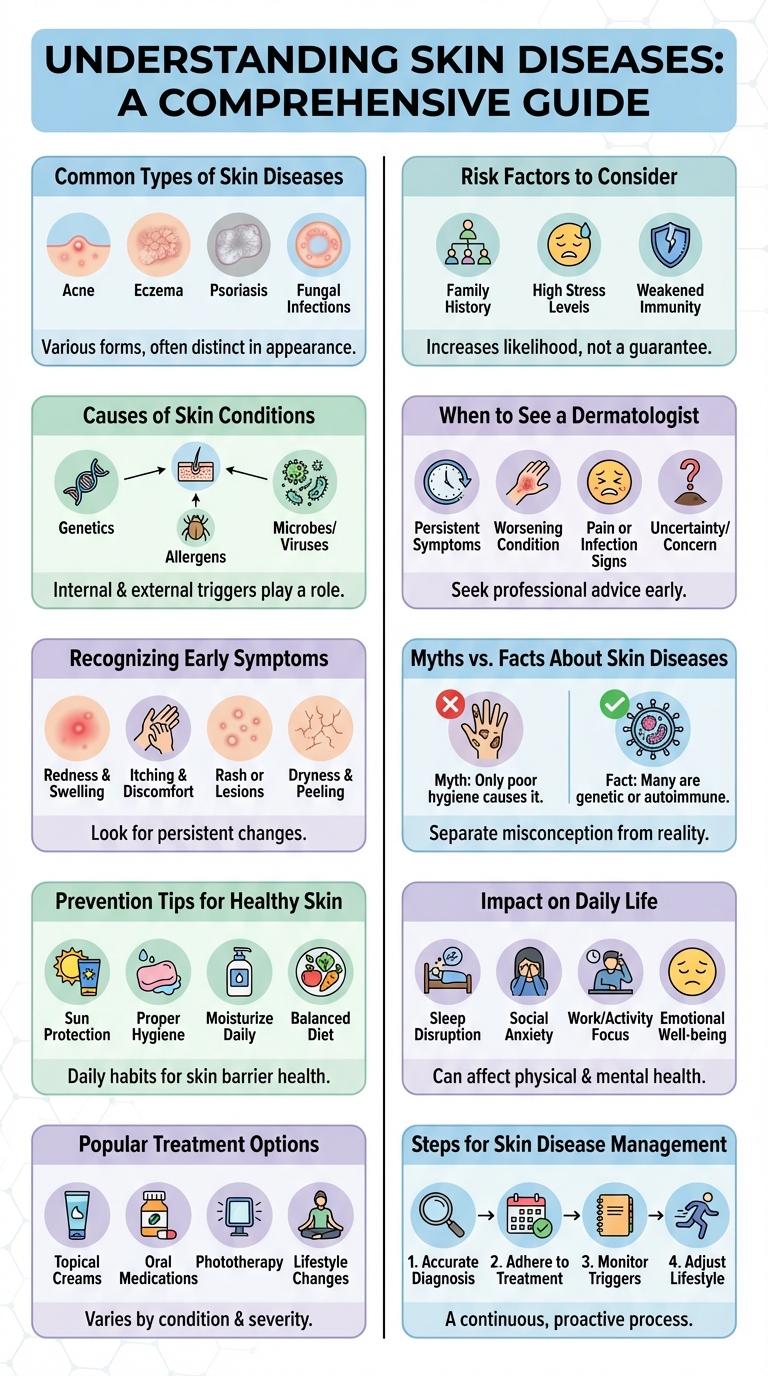
Skin diseases affect millions worldwide, impacting both physical health and emotional well-being. Visual representations like infographics simplify complex data, enhancing understanding of symptoms, causes, and treatments. This infographic provides a clear overview, aiding early detection and effective management of common dermatological conditions.
Common Types of Skin Diseases
Skin diseases affect millions globally, with common types including eczema, psoriasis, and acne. These conditions vary in severity and impact skin health and appearance.
Early diagnosis and treatment are crucial for managing symptoms and preventing complications. Understanding each disease type helps in selecting effective skincare and medical interventions.
Causes of Skin Conditions
| Cause | Description |
|---|---|
| Allergens | Substances like pollen, pet dander, and certain foods trigger immune reactions resulting in rashes or eczema. |
| Infections | Bacterial, viral, and fungal infections such as impetigo, herpes, and ringworm cause various skin conditions. |
| Genetics | Inherited traits influence susceptibility to diseases like psoriasis and atopic dermatitis. |
| Environmental Factors | Exposure to UV radiation, pollution, and harsh chemicals leads to skin damage and conditions like dermatitis. |
| Autoimmune Disorders | The immune system mistakenly attacks healthy skin cells causing conditions such as lupus and vitiligo. |
Recognizing Early Symptoms
Early recognition of skin disease symptoms is crucial for effective treatment and prevention of complications. Understanding these indicators helps individuals seek timely medical advice.
- Persistent Redness - Continuous redness on the skin may signal inflammation or infection requiring attention.
- Unusual Bumps or Lumps - Sudden appearance of bumps or lumps can indicate cysts, warts, or early skin cancer.
- Changes in Skin Texture - Rough, scaly, or peeling patches often signify eczema or psoriasis development.
Identifying these early symptoms supports better skin health outcomes and prompt medical intervention.
Prevention Tips for Healthy Skin
Maintaining healthy skin requires consistent care and preventive measures to avoid common skin diseases. Simple lifestyle changes can significantly reduce the risk of developing skin conditions.
- Regular Sunscreen Use - Applying broad-spectrum sunscreen protects against harmful UV rays that cause skin damage and increase the risk of skin cancer.
- Hydration - Drinking plenty of water keeps skin moisturized and supports the skin's natural barrier function.
- Proper Hygiene - Regular cleansing removes dirt and bacteria, preventing infections and acne breakouts.
Popular Treatment Options
Skin diseases affect millions worldwide, with treatment options varying based on the condition's severity and type. Common treatments include topical medications, oral antibiotics, and phototherapy, each targeting specific symptoms and causes. Emerging therapies such as biologics and laser treatments offer promising results for chronic or resistant cases.
Risk Factors to Consider
Skin diseases affect millions worldwide, with various risk factors influencing their development. Understanding these factors aids in prevention and effective management.
Key risk factors include prolonged sun exposure, which increases the likelihood of conditions like melanoma and sunburn. Genetic predisposition also plays a significant role, making some individuals more susceptible to disorders such as psoriasis and eczema. Environmental irritants, such as pollution and harsh chemicals, can trigger or worsen skin diseases by damaging the skin's protective barrier.
When to See a Dermatologist
Skin diseases can vary from mild irritations to serious conditions requiring professional care. Recognizing when to consult a dermatologist is crucial for effective treatment and prevention of complications.
- Persistent or Unusual Rashes - Seek a dermatologist if rashes last longer than two weeks or have an unusual appearance that does not improve with OTC treatments.
- Changes in Moles or Skin Growths - Immediate consultation is advised if moles change in size, color, shape, or if new growths appear.
- Severe Itching or Pain - Intense itching, pain, or discomfort that disrupts daily activities warrants professional evaluation.
Myths vs. Facts About Skin Diseases
Skin diseases affect millions of people worldwide, yet many misconceptions persist. Understanding the facts helps in managing symptoms and reducing stigma.
Myth: Skin diseases are always contagious and caused by poor hygiene.
Fact: Many skin conditions, such as eczema and psoriasis, are not contagious and are related to genetics or immune responses.
Myth: Only teenagers get acne.
Fact: Acne can affect individuals of all ages due to hormonal changes, stress, or other factors.
Impact on Daily Life
Skin diseases affect millions worldwide, significantly impacting daily life by causing discomfort, itching, and visible symptoms. These conditions can lead to reduced self-esteem, social anxiety, and difficulty performing routine tasks. Effective management and treatment improve quality of life and minimize the physical and emotional burden associated with skin disorders.