
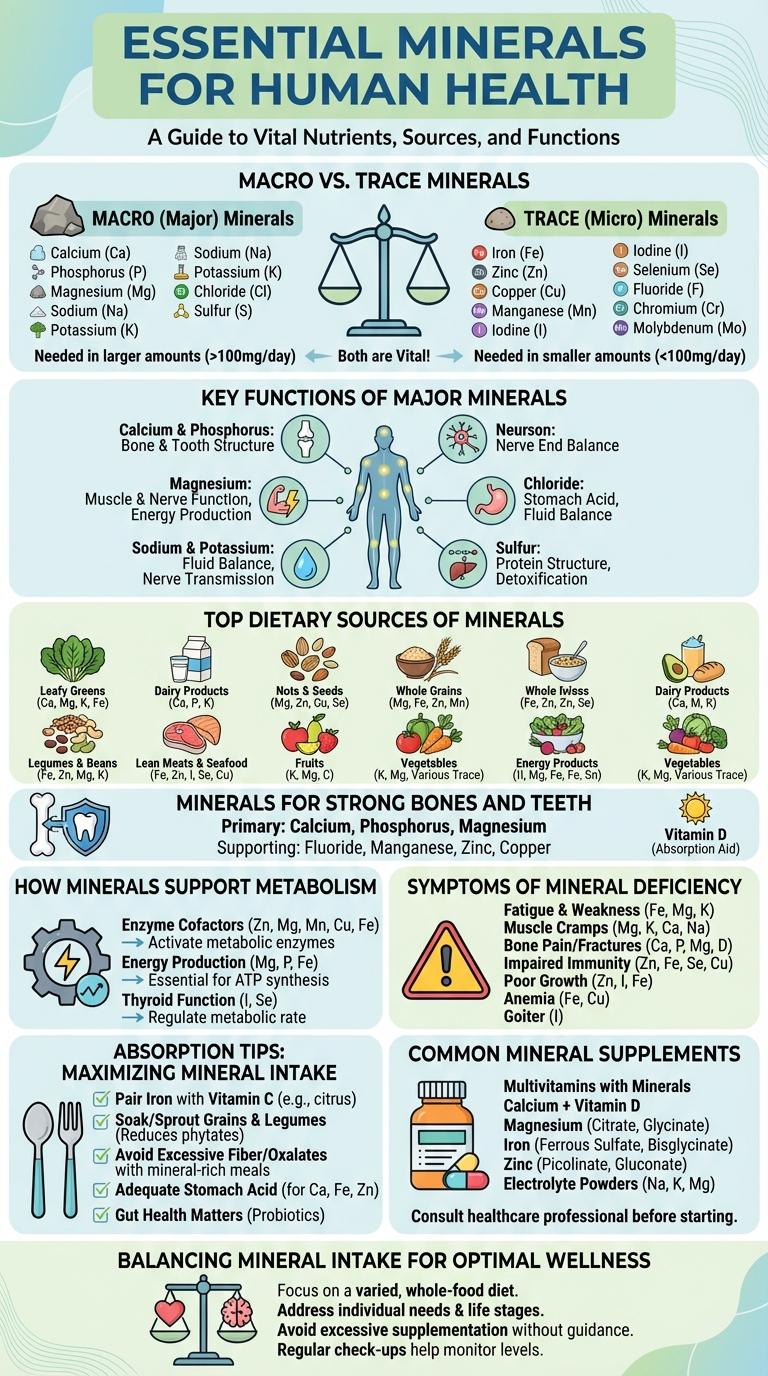
Minerals are essential nutrients that support vital bodily functions, including bone health, energy production, and immune defense. This infographic highlights key minerals, their sources, and their health benefits to help you make informed dietary choices. Understanding these elements promotes balanced nutrition and overall well-being.
Essential Minerals for Human Health
Essential minerals are vital nutrients that support various bodily functions and maintain overall health. These minerals must be obtained through diet as the body cannot produce them.
- Calcium - Crucial for strong bones and teeth, calcium also supports nerve function and muscle contraction.
- Iron - Integral for oxygen transport in the blood, iron prevents anemia and boosts energy levels.
- Magnesium - Supports muscle and nerve function, energy production, and regulates blood pressure.
- Potassium - Maintains fluid balance, promotes healthy heart function, and supports muscle contractions.
- Zinc - Enhances immune response, promotes wound healing, and supports normal growth and development.
Incorporating a variety of mineral-rich foods ensures optimal health and proper physiological function.
Top Dietary Sources of Minerals
Minerals are essential nutrients that support various bodily functions including bone health, nerve transmission, and muscle function. Key dietary sources of minerals include dairy products rich in calcium, leafy green vegetables abundant in magnesium, and nuts and seeds offering ample amounts of zinc. Incorporating a variety of these mineral-rich foods into daily meals ensures optimal mineral intake for overall health.
Macro vs. Trace Minerals
Minerals are essential nutrients required by the body for various functions, categorized into macro and trace minerals based on the required amounts. Macro minerals like calcium and potassium are needed in larger quantities to maintain bone health and fluid balance.
Trace minerals such as iron and zinc are vital in small amounts for processes like oxygen transport and immune function. Both types play crucial roles in overall health and must be obtained through a balanced diet.
Key Functions of Major Minerals
Minerals are essential nutrients that support various bodily functions, including bone health, nerve transmission, and muscle contraction. Major minerals such as calcium, magnesium, and potassium play critical roles in maintaining overall health and metabolic processes.
Calcium strengthens bones and teeth while regulating heartbeat and muscle function. Magnesium aids energy production and supports a healthy immune system, while potassium helps balance fluids and maintain normal blood pressure.
Symptoms of Mineral Deficiency
What are the common symptoms of mineral deficiency? Mineral deficiency often causes fatigue, muscle cramps, and brittle nails. These signs indicate the body's need for essential minerals like iron, magnesium, or calcium.
Minerals for Strong Bones and Teeth
Minerals play a vital role in maintaining strong bones and healthy teeth. Essential minerals support bone density and enamel strength to prevent fractures and decay.
- Calcium - The primary mineral found in bones and teeth, calcium strengthens bone structure and prevents osteoporosis.
- Phosphorus - Works alongside calcium to form hydroxyapatite, the mineral matrix that provides rigidity to bones and teeth.
- Magnesium - Regulates calcium absorption and contributes to bone mineral density, enhancing overall skeletal health.
How Minerals Support Metabolism
| Mineral | Role in Metabolism |
|---|---|
| Magnesium | Acts as a cofactor for over 300 enzymes, including those involved in energy production and ATP synthesis. |
| Iron | Essential for oxygen transport in blood as part of hemoglobin, supports cellular respiration and energy metabolism. |
| Zinc | Supports enzymatic reactions in protein and carbohydrate metabolism, and promotes immune function. |
| Calcium | Activates enzymes involved in energy metabolism and plays a key role in muscle contraction and nerve function. |
| Phosphorus | Integral component of ATP, essential for energy storage and transfer within cells. |
Absorption Tips: Maximizing Mineral Intake
Minerals are essential nutrients that play a crucial role in maintaining overall health and bodily functions. Proper absorption is key to maximizing their benefits and preventing deficiencies.
- Pair minerals with vitamin C - Vitamin C enhances the absorption of iron from plant-based sources, boosting its bioavailability.
- Avoid excessive caffeine and calcium together - High caffeine intake can reduce calcium absorption, weakening bone health.
- Consume minerals with healthy fats - Fat-soluble minerals like magnesium absorb better when eaten with dietary fats.
Common Mineral Supplements
Mineral supplements play a crucial role in supporting overall health by filling nutritional gaps. Common mineral supplements include calcium, magnesium, iron, zinc, and potassium.
Calcium supports strong bones and teeth, while magnesium aids muscle function and energy production. Iron is essential for oxygen transport in the blood. Zinc helps with immune system function, and potassium maintains proper heart and muscle activity.