
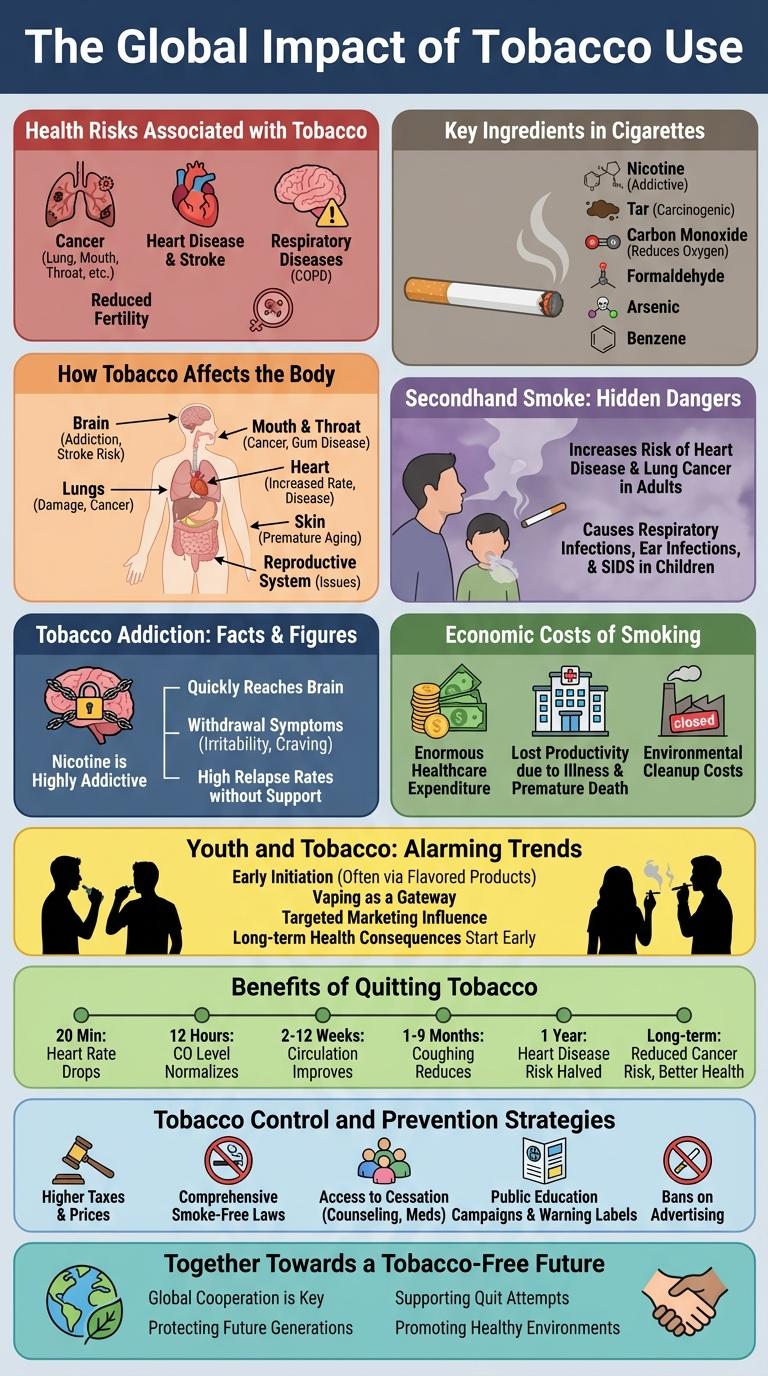
Tobacco use remains a leading cause of preventable diseases and premature deaths worldwide. This infographic highlights key statistics, health risks, and the economic impact associated with tobacco consumption. Understanding these facts is crucial for promoting awareness and encouraging healthier choices.
The Global Impact of Tobacco Use
Tobacco use remains a leading cause of preventable death worldwide, responsible for over 8 million deaths annually. The economic cost of tobacco-related illnesses surpasses $1 trillion each year due to healthcare expenses and lost productivity. Efforts to reduce tobacco consumption include public smoking bans, taxation, and awareness campaigns targeting youth and vulnerable populations.
Health Risks Associated with Tobacco
Tobacco use remains a leading cause of preventable diseases globally. Understanding the health risks associated with tobacco is crucial for promoting public health and encouraging cessation.
Health risks linked to tobacco use affect multiple organs and significantly increase mortality rates.
- Respiratory Diseases - Tobacco smoke damages lung tissue, leading to chronic obstructive pulmonary disease (COPD) and emphysema.
- Cardiovascular Problems - Nicotine and other chemicals in tobacco increase heart rate and blood pressure, raising the risk of heart attacks and stroke.
- Cancer Development - Tobacco is a major cause of lung, throat, mouth, and esophageal cancers, accounting for nearly 30% of cancer deaths.
Key Ingredients in Cigarettes
| Ingredient | Description |
|---|---|
| Nicotine | A highly addictive stimulant that affects the brain, leading to dependence. |
| Tar | A collection of toxic chemicals that cause respiratory damage and cancer. |
| Carbon Monoxide | A poisonous gas that reduces oxygen delivery in the blood. |
| Ammonia | Enhances nicotine absorption; commonly used as a cleaning agent. |
| Formaldehyde | A carcinogenic preservative found in embalming fluids, causes tissue damage. |
How Tobacco Affects the Body
How does tobacco affect the lungs? Tobacco smoke contains harmful chemicals that damage lung tissue, reducing lung function and causing chronic respiratory issues. This damage increases the risk of lung infections, chronic bronchitis, and emphysema.
What impact does tobacco have on the heart? Chemicals in tobacco cause blood vessels to narrow and thicken, raising blood pressure and heart rate. These changes significantly increase the risk of heart attack, stroke, and other cardiovascular diseases.
How does tobacco influence cancer risk? Tobacco contains carcinogens that alter DNA and promote the uncontrolled growth of abnormal cells. Smoking is a leading cause of cancers such as lung, throat, mouth, and bladder cancer.
In what way does tobacco affect the immune system? Smoking weakens the immune response by impairing the function of white blood cells and reducing antibody production. This impairment leads to increased vulnerability to infections and slower healing processes.
What are the effects of tobacco on the skin? Tobacco accelerates skin aging by reducing oxygen and nutrient flow to skin cells and breaking down collagen. This results in wrinkles, dryness, and a dull complexion.
Secondhand Smoke: Hidden Dangers
Secondhand smoke contains over 7,000 chemicals, including hundreds that are toxic and about 70 that can cause cancer. Non-smokers exposed to secondhand smoke inhale these harmful substances, increasing their risk of serious health problems.
Children and pregnant women are especially vulnerable to secondhand smoke, facing higher chances of respiratory infections, sudden infant death syndrome (SIDS), and low birth weight. Smoke-free environments significantly reduce these health risks for everyone.
Tobacco Addiction: Facts & Figures
Tobacco addiction remains a leading cause of preventable death worldwide. Understanding key facts and figures can help in addressing this public health crisis.
- Over 1.3 billion tobacco users globally - The majority of these users are concentrated in low- and middle-income countries.
- Tobacco causes more than 8 million deaths annually - This includes about 1.2 million non-smokers exposed to secondhand smoke.
- Nicotine is highly addictive - It alters brain chemistry, making quitting tobacco challenging for many users.
Economic Costs of Smoking
Smoking causes significant economic burdens worldwide, affecting healthcare systems and productivity. Governments and societies bear high costs due to tobacco-related illnesses and lost workdays.
- Healthcare Expenses - Treating smoking-related diseases incurs billions in medical costs annually, straining national health budgets.
- Lost Productivity - Smoking leads to increased absenteeism and reduced work efficiency, decreasing overall economic output.
- Fire Damage Costs - Tobacco use contributes to residential and commercial fire incidents, resulting in property damage expenses.
Efforts to reduce smoking prevalence can significantly alleviate these economic pressures globally.
Youth and Tobacco: Alarming Trends
Youth tobacco use remains a critical public health issue worldwide. Increasing trends in e-cigarette and traditional cigarette consumption among teenagers raise alarms.
Recent studies show that over 20% of adolescents aged 13-18 have tried tobacco products in the past year. E-cigarettes appeal to youth due to flavored options and aggressive marketing. Early tobacco use significantly increases the risk of long-term addiction and serious health problems.
Benefits of Quitting Tobacco
Quitting tobacco significantly improves lung function and reduces the risk of heart disease. Former smokers experience better circulation and increased oxygen levels within weeks of quitting.
Stopping tobacco use decreases the chance of developing cancers related to smoking, such as lung and throat cancer. It also enhances overall life expectancy and quality of life by promoting better physical health.