
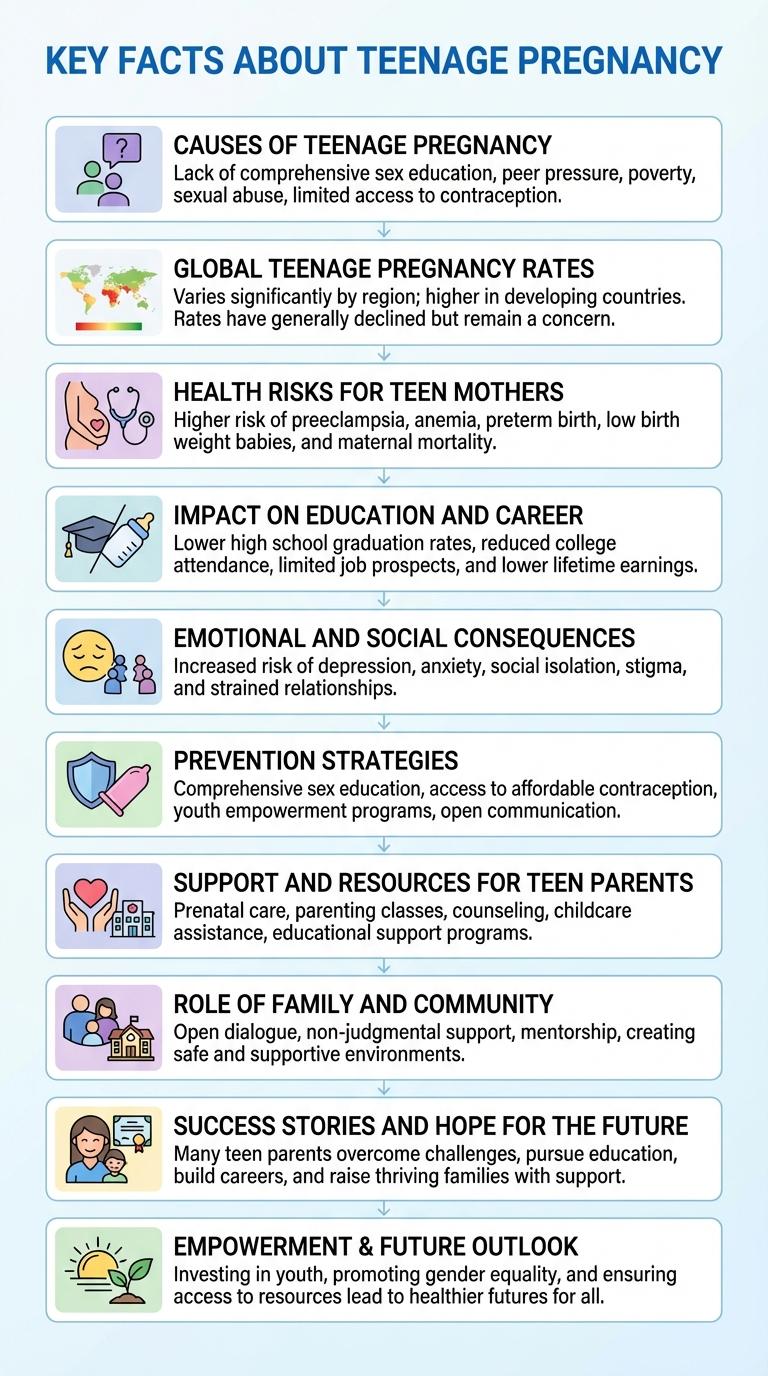
Teenage pregnancy remains a significant public health concern, impacting education, economic stability, and well-being for young parents and their children. Visualizing data through an infographic highlights key statistics, risk factors, and prevention strategies, making complex information accessible and engaging. Understanding these elements helps communities develop targeted support and effective interventions to reduce rates and improve outcomes.
Key Facts About Teenage Pregnancy
Teenage pregnancy continues to impact communities worldwide, affecting health, education, and economic outcomes for young mothers. Understanding key facts offers insight into challenges and preventive measures.
Teenage pregnancy rates vary significantly by region and socioeconomic status.
- Global Prevalence - Approximately 16 million girls aged 15-19 give birth each year globally.
- Health Risks - Teen mothers face higher risks of complications such as anemia, preterm birth, and low birth weight infants.
- Education Impact - Pregnancy often leads to school dropout, reducing future employment opportunities for young mothers.
Causes of Teenage Pregnancy
What are the primary causes of teenage pregnancy? Teenage pregnancy often results from lack of comprehensive sex education and limited access to contraception. Social factors such as peer pressure and family instability also contribute significantly to the risk.
Global Teenage Pregnancy Rates
Global teenage pregnancy rates highlight significant disparities between regions, with the highest occurrences in sub-Saharan Africa and the lowest in East Asia. Teenage pregnancy poses challenges to education, health, and economic opportunities for young mothers worldwide.
In sub-Saharan Africa, teenage pregnancy rates exceed 100 births per 1,000 girls aged 15-19, compared to less than 10 per 1,000 in East Asia. Latin America and the Caribbean have moderate rates, ranging from 50 to 70 births per 1,000 teens. Factors influencing these rates include access to education, contraceptive availability, and cultural norms.
Health Risks for Teen Mothers
Teenage pregnancy poses significant health risks for young mothers, including higher rates of preterm birth and low birth weight infants. These mothers are more susceptible to complications such as anemia, high blood pressure, and postpartum depression. Access to proper prenatal care is crucial to mitigate these health challenges and improve outcomes for both mother and child.
Impact on Education and Career
Teenage pregnancy significantly disrupts educational attainment and career progress. Young mothers often face challenges that hinder their academic and professional growth.
- Increased Dropout Rates - Approximately 30% of teenage mothers do not complete high school, leading to limited job opportunities.
- Lower College Enrollment - Teenage pregnancy reduces the likelihood of pursuing higher education by nearly 50%, impacting long-term career prospects.
- Restricted Career Advancement - Early motherhood often confines young women to lower-paying jobs due to interrupted education and limited skills.
Emotional and Social Consequences
Teenage pregnancy often leads to significant emotional challenges such as anxiety, depression, and low self-esteem in young mothers. These emotional struggles can impact their mental health and overall well-being.
Social consequences include stigmatization and isolation from peers, which can hinder a teenager's social development and support networks. Limited educational and career opportunities are common, affecting long-term socioeconomic status.
Prevention Strategies
| Prevention Strategy | Description |
|---|---|
| Comprehensive Sex Education | Provides accurate information on contraception, reproductive health, and decision-making skills to reduce unintended pregnancies. |
| Access to Contraceptives | Ensures availability of condoms, birth control pills, and long-acting reversible contraceptives to teenagers. |
| Parental Communication | Encourages open and honest discussions about sexual health between parents and teens to promote responsible choices. |
| Community Support Programs | Engages youth in activities and counseling aimed at delaying sexual initiation and promoting healthy behaviors. |
| Health Services Access | Provides confidential medical services and counseling for teenagers to support prevention and early intervention. |
Support and Resources for Teen Parents
Teen parents benefit greatly from access to comprehensive support and resources that address their unique challenges. Programs offering prenatal care, parenting education, and mental health services contribute to healthier outcomes for both teens and their children. Community organizations and schools often provide guidance, financial assistance, and peer support to empower young parents on their journey.
Role of Family and Community
Teenage pregnancy significantly impacts not only the young mother but her family and community as well. Support from family and community plays a crucial role in reducing teen pregnancy rates and promoting healthy outcomes.
Families provide emotional support, guidance, and education about reproductive health, influencing teenagers' decisions. Community programs focus on awareness, access to healthcare, and creating a safe environment for open communication.