
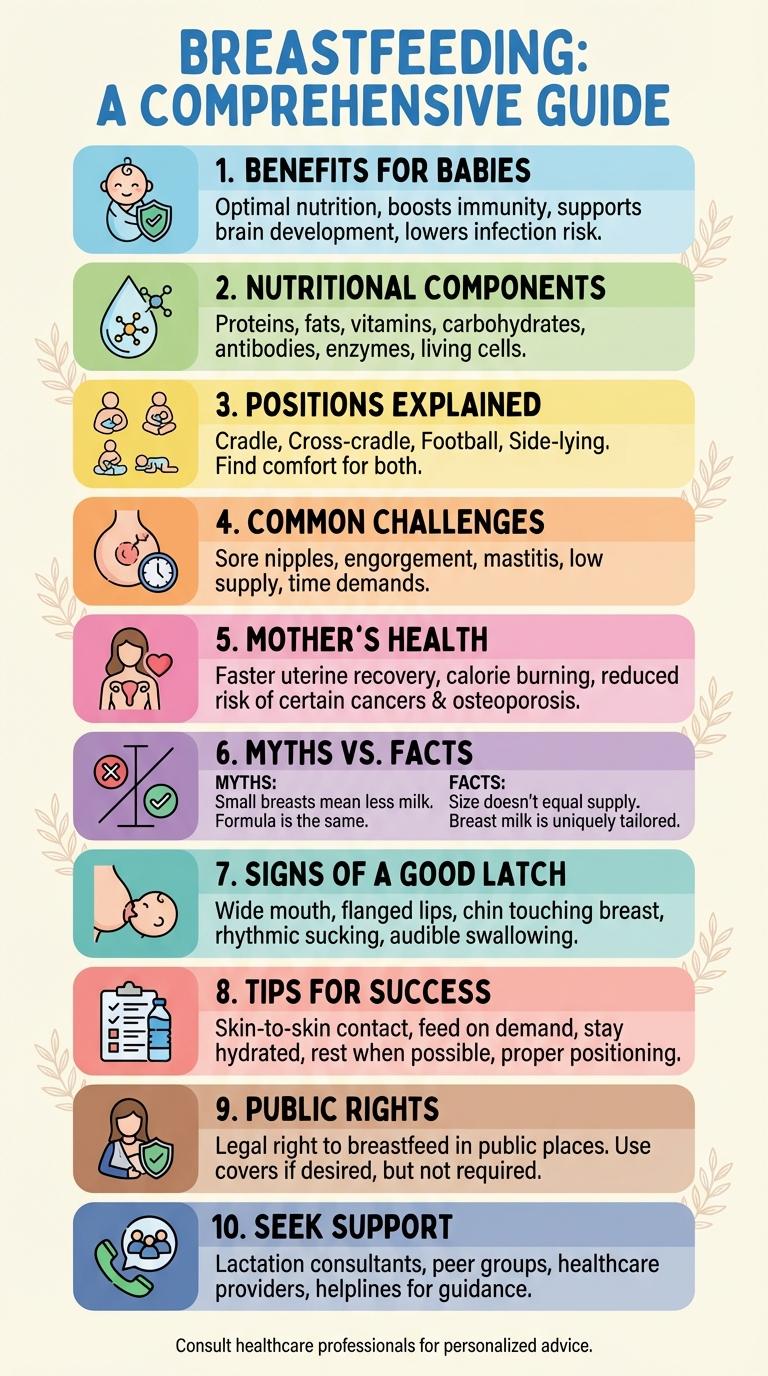
Breastfeeding provides essential nutrients and antibodies that support infant growth and immune health. This infographic highlights key benefits, practical tips, and common challenges to help new parents navigate the breastfeeding journey. Visual insights aim to empower caregivers with evidence-based information for successful breastfeeding practices.
Benefits of Breastfeeding for Babies
Breastfeeding provides essential nutrients tailored to a baby's developmental needs, supporting optimal growth and brain development. It contains antibodies that help protect infants from infections and illnesses.
Breastfed babies have a lower risk of asthma, allergies, and respiratory infections. Breastfeeding also promotes a strong immune system and supports healthy digestion during the first crucial months.
Nutritional Components in Breast Milk
Breast milk contains essential nutrients such as proteins, fats, carbohydrates, vitamins, and minerals that support an infant's growth and development. It provides antibodies and immune factors that protect newborns from infections and diseases. The nutritional composition of breast milk adapts over time to meet the changing needs of the baby.
Breastfeeding Positions Explained
| Breastfeeding Position | Description |
|---|---|
| Cradle Hold | Classic position where baby is held with head in crook of mother's arm, facing the breast directly. |
| Cross-Cradle Hold | Baby is supported with the arm opposite the breast being used, allowing better control of the head and latch. |
| Football Hold | Baby is tucked under the arm like a football, ideal for mothers recovering from cesarean or with larger breasts. |
| Side-Lying Position | Both mother and baby lie on their sides facing each other, promoting rest during nighttime feeding. |
| Laid-Back (Biological Nurturing) | Mother reclines comfortably with baby lying on their stomach, utilizing reflexes to encourage natural feeding. |
Common Breastfeeding Challenges
Breastfeeding presents unique challenges that many mothers encounter, including latch difficulties and nipple pain. These issues can impact milk supply and overall breastfeeding success.
Other common challenges involve engorgement, mastitis, and concerns about infant weight gain. Early identification and support play a crucial role in overcoming these obstacles for a positive breastfeeding experience.
Breastfeeding and Mother's Health
Breastfeeding offers significant health benefits for mothers beyond infant nutrition. It plays a crucial role in reducing the risk of various postpartum health issues.
- Reduced Breast Cancer Risk - Breastfeeding lowers the mother's risk of developing breast cancer by decreasing lifetime exposure to hormones.
- Lowered Ovarian Cancer Risk - Extended breastfeeding is linked to a decreased chance of ovarian cancer due to hormonal changes during lactation.
- Improved Postpartum Recovery - Breastfeeding releases oxytocin, which helps the uterus return to its pre-pregnancy size and reduces postpartum bleeding.
Exclusive breastfeeding supports maternal health by promoting hormonal balance and long-term disease prevention.
Myths vs. Facts About Breastfeeding
Breastfeeding myths often discourage new mothers from providing optimal nutrition to their babies. Common misconceptions include beliefs that formula is always better or that breast milk production is insufficient. Understanding evidence-based facts helps promote healthy breastfeeding practices and supports infant development.
| Myths | Facts |
|---|---|
| Breast milk is not enough for newborns. | Breast milk provides all necessary nutrients for the first six months. |
| Formula-fed babies grow better than breastfed babies. | Breastfed babies have lower risks of infections and allergies. |
| Breastfeeding is painful and always difficult. | Proper technique and support can make breastfeeding comfortable. |
| Mothers with small breasts produce less milk. | Milk supply depends on demand, not breast size. |
| Breastfeeding mothers must avoid all medications. | Many medications are safe during breastfeeding with medical advice. |
Signs of a Good Breastfeeding Latch
How can you tell if your baby has a good breastfeeding latch? A proper latch ensures effective milk transfer and comfort for both mother and baby. Look for signs such as the baby's mouth covering most of the areola and rhythmic sucking with occasional pauses.
Tips for Successful Breastfeeding
Breastfeeding provides essential nutrients and antibodies that support a baby's growth and immune system. Successful breastfeeding depends on proper techniques, comfort, and consistent feeding routines.
Following simple, effective tips can enhance the breastfeeding experience for both mother and child.
- Maintain a Comfortable Position - Ensure both mother and baby are relaxed to facilitate proper latch and reduce strain during feeding.
- Feed on Demand - Respond to the baby's hunger cues promptly to establish a healthy feeding rhythm and stimulate milk production.
- Stay Hydrated and Nourished - Drink plenty of water and eat a balanced diet to support milk supply and overall maternal health.
Breastfeeding in Public: Your Rights
Breastfeeding in public is a natural and protected right in many countries. Laws often support mothers to nurse their babies anywhere without facing discrimination.
Understanding your legal rights can empower you to breastfeed confidently in public spaces. Many regions prohibit harassment or denial of service due to breastfeeding. Public awareness helps normalize breastfeeding and supports maternal and child health.