
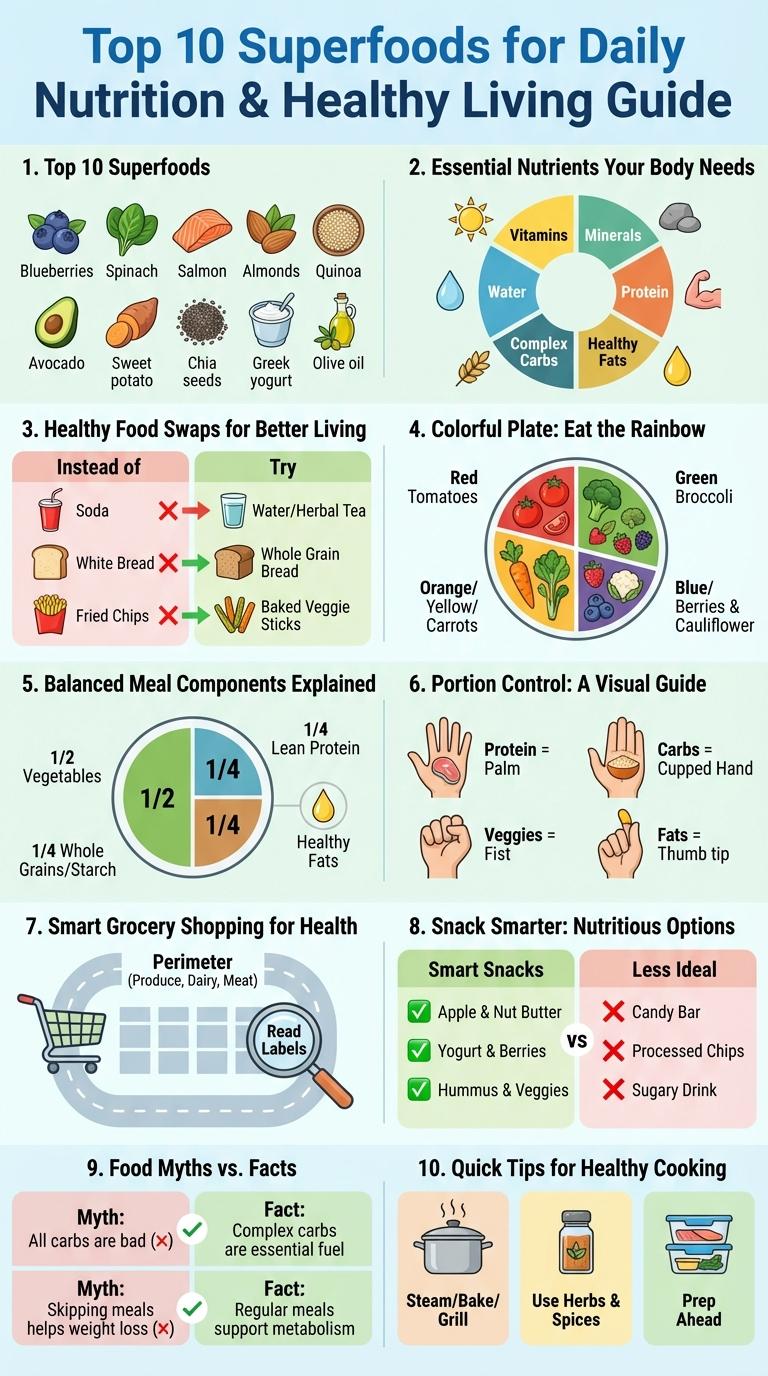
Eating nutritious meals supports overall well-being by providing essential vitamins, minerals, and antioxidants that boost energy and strengthen the immune system. Choosing a variety of fruits, vegetables, whole grains, and lean proteins promotes balanced nutrition and reduces the risk of chronic diseases. Visual aids like infographics make it easier to understand and incorporate healthy food choices into daily routines.
Top 10 Superfoods for Daily Nutrition
| Superfood | Key Nutrients |
|---|---|
| Blueberries | Antioxidants, Vitamin C, Fiber |
| Spinach | Iron, Calcium, Vitamins A & K |
| Quinoa | Complete Protein, Magnesium, Fiber |
| Almonds | Healthy Fats, Vitamin E, Magnesium |
| Salmon | Omega-3 Fatty Acids, Protein, Vitamin D |
| Avocado | Monounsaturated Fats, Potassium, Fiber |
| Chia Seeds | Omega-3, Fiber, Protein |
| Sweet Potatoes | Beta-Carotene, Fiber, Vitamin C |
| Broccoli | Vitamin C, Vitamin K, Fiber |
| Greek Yogurt | Protein, Probiotics, Calcium |
Essential Nutrients Your Body Needs
Eating a balanced diet is crucial for maintaining overall health. Essential nutrients support vital bodily functions and promote well-being.
- Proteins - Build and repair tissues while supporting immune health.
- Carbohydrates - Provide the primary source of energy for the body.
- Fats - Support brain function and help absorb fat-soluble vitamins.
- Vitamins - Regulate various biochemical processes essential for health.
- Minerals - Maintain bone strength and support nerve function.
Incorporating a variety of nutrient-rich foods ensures your body receives all essential elements for optimal performance.
Healthy Food Swaps for Better Living
Healthy food swaps can significantly improve overall well-being by providing essential nutrients while reducing harmful fats and sugars. Replacing processed snacks with fresh fruits or nuts enhances energy levels and supports weight management. Simple adjustments like choosing whole grains over refined ones promote heart health and better digestion.
| Unhealthy Option | Healthy Swap |
|---|---|
| White Bread | Whole Grain Bread |
| Regular Soda | Infused Water or Herbal Tea |
| Fried Potato Chips | Baked Sweet Potato Chips |
| Ice Cream | Greek Yogurt with Fresh Fruit |
| Butter | Avocado or Olive Oil |
Colorful Plate: Eat the Rainbow
Eating a colorful plate ensures a variety of nutrients essential for overall health. Incorporating fruits and vegetables of different colors maximizes vitamin, mineral, and antioxidant intake.
Red foods like tomatoes and strawberries provide lycopene, supporting heart health. Green vegetables such as spinach and broccoli are rich in iron and calcium, promoting strong bones and blood health.
Balanced Meal Components Explained
What are the essential components of a balanced meal? A balanced meal includes a variety of food groups that provide necessary nutrients for optimal health. Combining proteins, carbohydrates, fats, vitamins, and minerals helps support body functions and maintain energy.
| Component | Role in a Balanced Meal |
|---|---|
| Proteins | Supports muscle repair and growth |
| Carbohydrates | Provides energy for daily activities |
| Fats | Supports brain function and hormone production |
| Vitamins & Minerals | Boosts immune system and overall health |
| Fiber | Improves digestion and prevents constipation |
Portion Control: A Visual Guide
Portion control is essential for maintaining a balanced diet and preventing overeating. Visual guides help individuals understand appropriate serving sizes for various food groups.
- Protein - A portion size is about the size of a deck of cards, roughly 3-4 ounces.
- Vegetables - Aim for half your plate filled with vegetables, approximately 1-2 cups per meal.
- Grains - One serving equals about 1/2 cup cooked grains or one slice of bread.
Smart Grocery Shopping for Health
Smart grocery shopping empowers you to make healthier food choices that support your well-being. Prioritizing nutrient-dense foods helps maintain energy levels and boosts overall health.
Focus on whole foods like fresh fruits, vegetables, lean proteins, and whole grains to maximize nutrition. Reading labels carefully allows you to avoid added sugars, unhealthy fats, and excessive sodium.
Snack Smarter: Nutritious Options
Choosing nutritious snacks supports sustained energy and overall health. Opt for options rich in fiber, protein, and healthy fats like nuts, yogurt, and fresh fruits. Avoid processed snacks high in sugar, salt, and unhealthy fats to maintain balanced nutrition.
Food Myths vs. Facts
Healthy eating is often surrounded by various myths that can mislead people. Understanding the facts about food helps make better nutritional choices.
One common myth is that all fats are bad, but healthy fats like those found in avocados and nuts are essential for the body. Another misconception is that skipping meals aids weight loss, while it can actually slow metabolism. Whole foods such as fruits, vegetables, and lean proteins provide the necessary nutrients for overall well-being.