
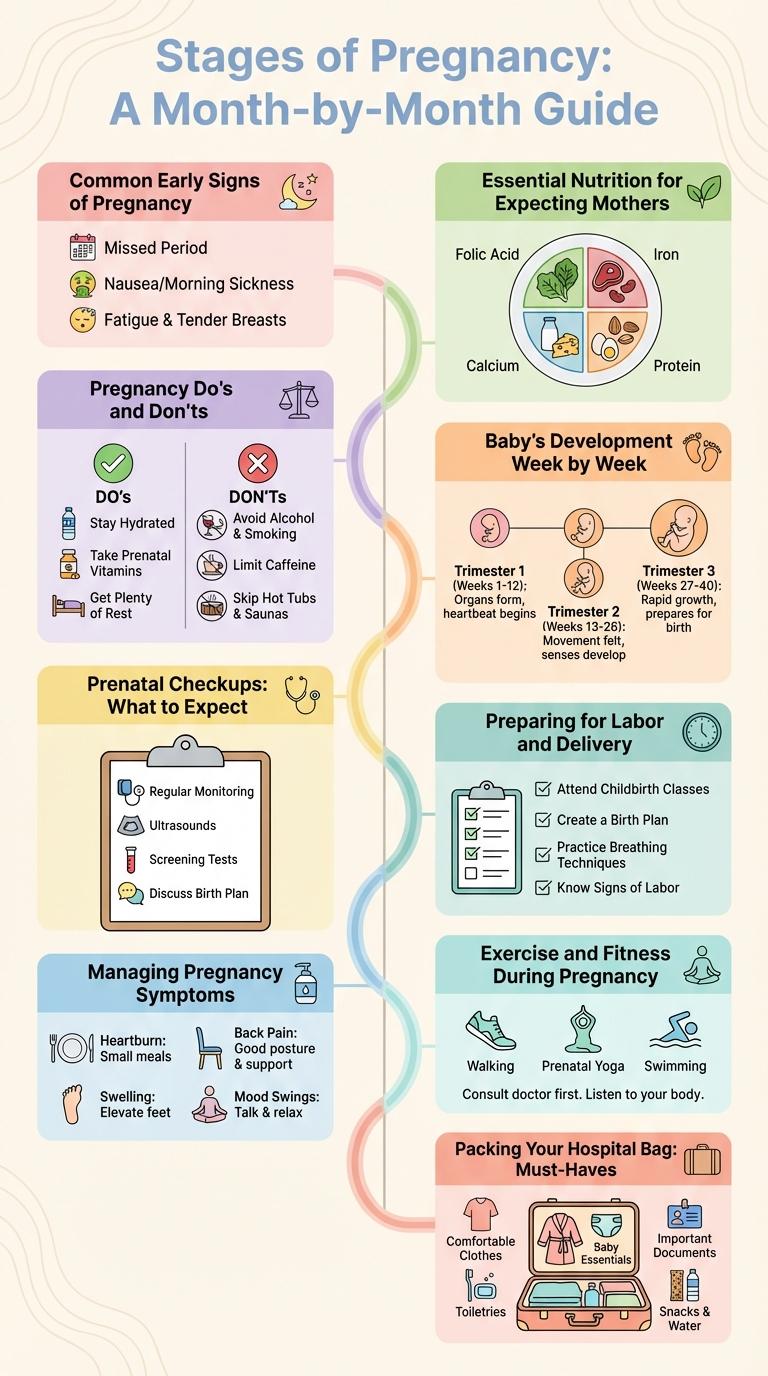
Pregnancy infographics provide essential insights into fetal development, maternal health, and key milestones throughout the trimesters. Visualizing data on nutrition, symptoms, and prenatal care helps expectant mothers make informed decisions for a healthy pregnancy. Clear and concise graphics enhance understanding of complex information, supporting better preparation and well-being.
Stages of Pregnancy: A Month-by-Month Guide
Pregnancy progresses through three trimesters, each marked by unique developmental milestones. Understanding the month-by-month changes supports informed prenatal care and healthy outcomes.
- Month 1: Conception and Implantation - The fertilized egg implants in the uterus, beginning embryonic development and hormone production.
- Month 2: Organ Formation - Major organs such as the heart and brain start forming rapidly during this critical period.
- Month 3: Fetal Features - Facial features become distinct, and limb buds develop into fingers and toes.
- Months 4-6: Growth and Movement - The fetus grows significantly, with active movements detectable by the mother.
- Months 7-9: Maturation and Preparation - The fetus gains weight, organs mature, and the body prepares for birth.
Common Early Signs of Pregnancy
Common early signs of pregnancy include missed periods, nausea or morning sickness, and breast tenderness. Many women also experience fatigue, frequent urination, and mood swings during the initial weeks. Recognizing these symptoms can help in early detection and prompt confirmation through a pregnancy test.
Essential Nutrition for Expecting Mothers
Proper nutrition during pregnancy is vital for the health of both mother and baby. Expecting mothers require increased intake of key nutrients to support fetal development.
Essential nutrients include folic acid, iron, calcium, protein, and omega-3 fatty acids. A balanced diet rich in these supports a healthy pregnancy and reduces the risk of complications.
Pregnancy Do's and Don'ts
Pregnancy requires careful attention to health and lifestyle choices to support both mother and baby. Knowing the essential do's and don'ts can promote a safe and comfortable pregnancy journey.
- Do Eat Balanced Meals - Consuming a variety of nutrients supports fetal development and maternal well-being.
- Do Stay Hydrated - Drinking enough water helps maintain healthy amniotic fluid levels and reduces fatigue.
- Don't Smoke or Use Alcohol - Avoiding these substances prevents risks like birth defects and developmental issues.
- Don't Skip Prenatal Appointments - Regular check-ups monitor the progress of pregnancy and identify potential complications early.
- Do Engage in Safe Exercise - Gentle physical activity improves circulation, mood, and helps manage weight gain.
Following these pregnancy do's and don'ts can significantly contribute to a healthy and successful pregnancy outcome.
Baby's Development Week by Week
How does a baby develop week by week during pregnancy? Each week brings significant changes in the baby's growth, from a single cell to a fully formed infant ready for birth. Understanding these stages helps expectant parents track development and anticipate milestones.
| Week | Baby's Development |
|---|---|
| 1-2 | Fertilization occurs and the zygote forms, beginning cell division. |
| 3-4 | Embryo implants in the uterus; major organs start to develop. |
| 5-8 | Heartbeat begins and limb buds form, facial features start to appear. |
| 9-12 | Fetus grows rapidly, reflexes begin, and external genitalia become distinguishable. |
| 13-16 | Baby can make movements; bones harden and vocal cords develop. |
Prenatal Checkups: What to Expect
Prenatal checkups are essential for monitoring the health of both mother and baby throughout pregnancy. These visits help detect potential issues early and provide important guidance for a healthy pregnancy.
Regular checkups include various tests and assessments to ensure proper fetal development and maternal well-being.
- Initial Visit - The first prenatal checkup includes a full medical history, physical exam, and blood tests to establish a baseline.
- Ultrasound Scans - Ultrasound exams are performed to monitor fetal growth and detect abnormalities, typically around weeks 8-12 and 18-22.
- Routine Screenings - Regular screenings assess blood pressure, weight gain, and urine to check for conditions like gestational diabetes and preeclampsia.
Preparing for Labor and Delivery
Preparing for labor and delivery involves understanding the stages of childbirth and creating a birth plan tailored to your preferences. Gathering information about pain management options and hospital procedures helps reduce anxiety and fosters confidence.
Packing a hospital bag with essentials like comfortable clothing, important documents, and baby items ensures readiness for the big day. Communicating with your healthcare provider about signs of labor and emergency contacts is crucial for a smooth delivery experience.
Managing Pregnancy Symptoms
| Pregnancy Symptom | Management Tips |
|---|---|
| Nausea and Vomiting | Eat small, frequent meals; avoid strong odors; stay hydrated; try ginger or vitamin B6 supplements after consulting a healthcare provider. |
| Fatigue | Ensure adequate rest; prioritize sleep hygiene; engage in light exercise like walking; maintain balanced nutrition. |
| Back Pain | Practice good posture; use pregnancy pillows; perform prenatal yoga or stretching; apply warm compresses; avoid heavy lifting. |
| Heartburn | Eat smaller meals; avoid spicy and fatty foods; stay upright after eating; avoid carbonated drinks; consult a doctor about antacids. |
| Swelling (Edema) | Elevate feet; wear compression stockings; avoid standing for long periods; reduce salt intake; stay hydrated. |
Exercise and Fitness During Pregnancy
Exercise during pregnancy promotes overall health for both mother and baby. It helps reduce common discomforts and prepares the body for labor.
Engaging in prenatal exercises like walking, swimming, and prenatal yoga improves cardiovascular health and muscle tone. Maintaining fitness can reduce the risk of gestational diabetes and excessive weight gain. Always consult healthcare providers before starting any exercise routine during pregnancy.