
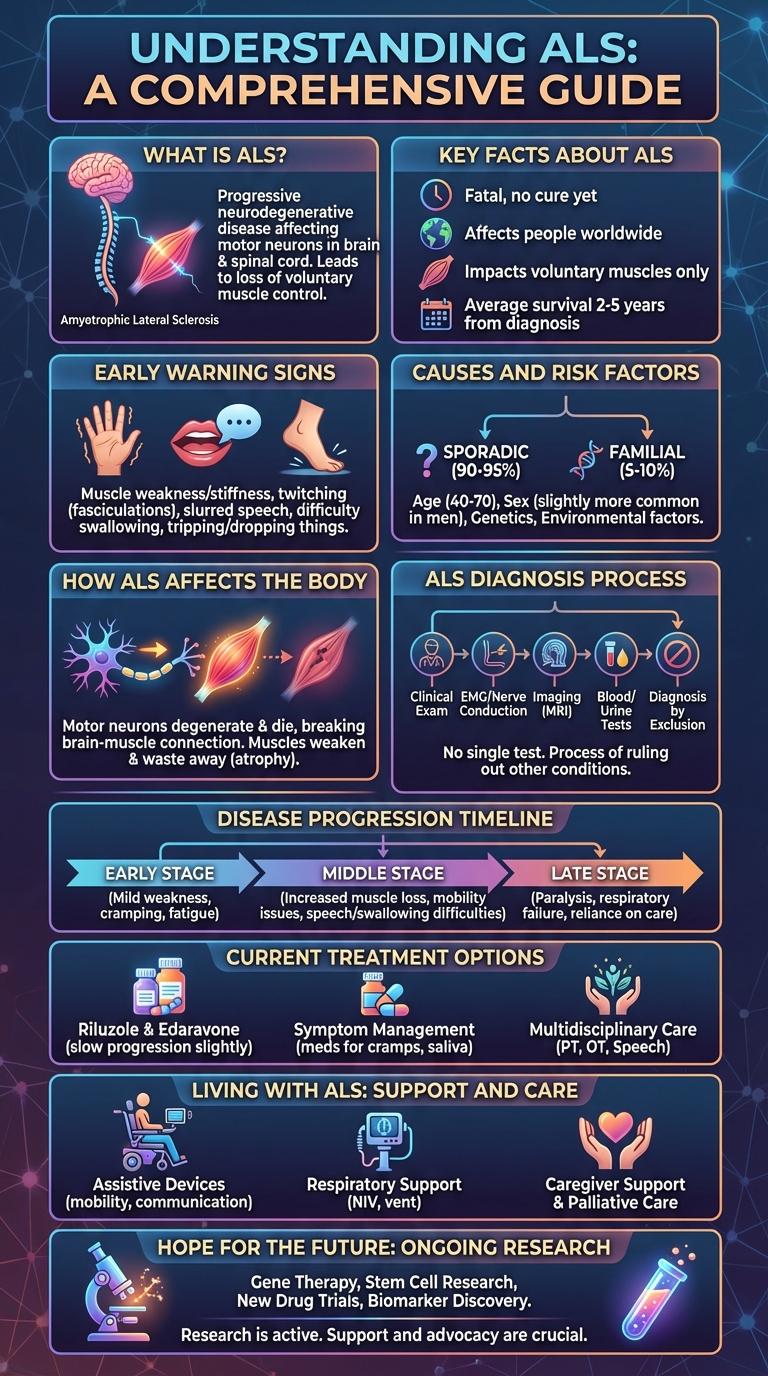
Amyotrophic lateral sclerosis (ALS) is a progressive neurodegenerative disease that affects nerve cells in the brain and spinal cord, leading to muscle weakness and loss of motor function. Understanding the symptoms, risk factors, and available treatments is crucial for early diagnosis and care management. This infographic provides a clear overview of the key aspects of ALS to raise awareness and support for those impacted.
What is ALS?
What is ALS?
ALS, or Amyotrophic Lateral Sclerosis, is a progressive neurodegenerative disease affecting nerve cells in the brain and spinal cord. It leads to muscle weakness, loss of motor function, and eventually paralysis.
Key Facts About ALS
Amyotrophic Lateral Sclerosis (ALS) is a progressive neurodegenerative disease that affects nerve cells in the brain and spinal cord. It leads to the loss of muscle control, eventually causing paralysis.
ALS affects approximately 5 out of every 100,000 people worldwide. Symptoms usually begin between the ages of 40 and 70. The average life expectancy after diagnosis is 2 to 5 years, though some patients live longer with proper care.
Early Warning Signs
Amyotrophic Lateral Sclerosis (ALS) is a progressive neurodegenerative disease affecting nerve cells in the brain and spinal cord. Early warning signs of ALS include muscle weakness, twitching, and difficulty speaking or swallowing. Recognizing these symptoms promptly can lead to timely diagnosis and better management of the disease.
Causes and Risk Factors
Amyotrophic Lateral Sclerosis (ALS) is a progressive neurodegenerative disease that affects nerve cells in the brain and spinal cord. The exact causes of ALS remain largely unknown, but both genetic and environmental factors play a role.
Genetic mutations, such as those in the SOD1 and C9orf72 genes, are significant risk factors for familial ALS cases. Environmental exposures like smoking, military service, and toxin exposure may increase the risk of developing sporadic ALS.
How ALS Affects the Body
Amyotrophic Lateral Sclerosis (ALS) is a progressive neurodegenerative disease that affects nerve cells in the brain and spinal cord. It primarily impacts voluntary muscle movement, leading to significant physical impairments.
- Motor Neuron Degeneration - ALS causes the gradual breakdown and death of motor neurons that control muscle movement.
- Muscle Weakness - Loss of motor neurons results in muscle weakness and decreased coordination.
- Respiratory Failure - As the disease progresses, respiratory muscles weaken, impairing breathing and oxygen intake.
ALS ultimately disrupts communication between the nervous system and muscles, causing widespread loss of motor function.
ALS Diagnosis Process
ALS diagnosis involves a thorough clinical evaluation, including detailed patient history and neurological examination. Electromyography (EMG) and nerve conduction studies help assess nerve and muscle function, supporting diagnosis. Blood tests, MRI scans, and ruling out other conditions are essential steps in confirming ALS.
Disease Progression Timeline
Amyotrophic lateral sclerosis (ALS) is a progressive neurodegenerative disease that affects nerve cells in the brain and spinal cord. The disease leads to muscle weakness, paralysis, and eventually respiratory failure over time.
- Early Symptoms - Initial signs include muscle twitching, cramps, and weakness in a limb or speech difficulties.
- Moderate Progression - Muscle wasting becomes more pronounced, affecting mobility, speech, swallowing, and breathing.
- Advanced Stage - Complete paralysis occurs, with patients requiring respiratory support and full-time care.
Current Treatment Options
| Treatment Option | Description |
|---|---|
| Riluzole | FDA-approved drug shown to modestly slow ALS progression by reducing glutamate levels. |
| Edaravone | Antioxidant medication that may slow functional decline in certain ALS patients. |
| Physical Therapy | Supports muscle strength and mobility, helps manage symptoms and maintain quality of life. |
| Respiratory Support | Non-invasive ventilation assists breathing in advanced disease stages. |
| Speech Therapy | Improves communication ability with techniques and assistive devices as speech deteriorates. |
Living with ALS: Support and Care
Living with ALS requires comprehensive support and specialized care to enhance quality of life. Proper management involves multidisciplinary approaches tailored to individual needs.
- Multidisciplinary Care - Involves neurologists, physical therapists, speech therapists, and nutritionists collaborating for holistic patient support.
- Respiratory Support - Non-invasive ventilation and other respiratory aids prolong breathing function and comfort.
- Nutrition Management - Customized diets and feeding tubes ensure adequate nutrition despite swallowing difficulties.
- Emotional Support - Counseling and support groups provide mental health benefits for patients and caregivers.
- Adaptive Equipment - Mobility aids and communication devices increase independence and daily functioning.