
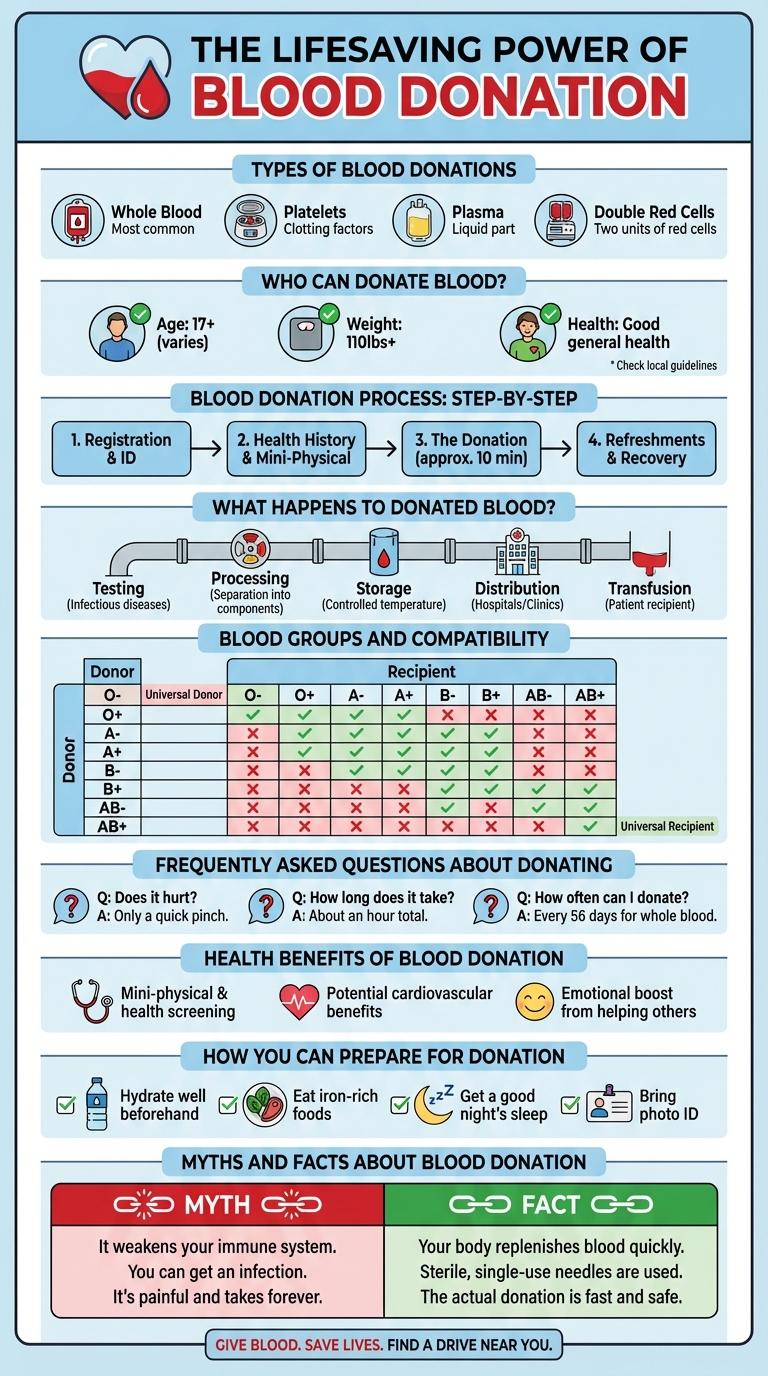
Blood donation saves lives by providing essential blood components needed for surgeries, trauma care, and chronic illnesses. Understanding the donation process, eligibility criteria, and benefits encourages more people to participate. Infographics visually simplify key facts, debunk myths, and highlight the critical impact of donating blood.
The Lifesaving Power of Blood Donation
Blood donation is a vital act that saves millions of lives annually by providing essential blood products for surgeries, trauma care, and chronic illnesses. Donated blood helps maintain a stable blood supply in hospitals, ensuring patients receive timely transfusions. Every donation can save up to three lives, highlighting the lifesaving power of giving blood regularly.
Types of Blood Donations
Blood donation is a vital process where donors give blood to help save lives. There are several types of blood donations, including whole blood, platelet, plasma, and double red cell donations. Each type targets different components of blood to treat various medical conditions.
| Type | Description |
|---|---|
| Whole Blood | Standard donation; collects all components of blood for broad use. |
| Platelet | Collects platelets to assist patients with clotting disorders. |
| Plasma | Extracts plasma used for trauma, burns, and immune therapies. |
| Double Red Cell | Removes two units of red cells, increasing oxygen delivery efficiency. |
Who Can Donate Blood?
Blood donation saves lives by providing essential blood for patients in need. Understanding who can donate blood helps ensure a safe and effective blood supply.
Eligible donors must be in good health, at least 17 years old (16 with parental consent in some areas), and weigh at least 110 pounds. People with certain medical conditions or recent travel history may be temporarily deferred. Regular donors are encouraged to donate every 8 weeks to maintain blood availability.
Blood Donation Process: Step-by-Step
Blood donation is a simple and lifesaving process that helps hospitals maintain a stable blood supply. Knowing each step can make donors feel more comfortable and prepared.
- Registration - Donors provide identification and complete a brief health questionnaire to ensure eligibility.
- Health Screening - A quick check of vital signs like blood pressure and hemoglobin levels ensures donor safety.
- Donation - Blood is drawn, typically about one pint, through a sterile needle into a collection bag.
- Rest and Refreshment - Donors relax for 10-15 minutes and enjoy light snacks to help recovery.
- Post-Donation Care - Donors receive guidelines on hydration and activity to maintain health after giving blood.
What Happens to Donated Blood?
Donated blood undergoes a meticulous process to ensure it is safe and effective for patients in need. Each step transforms the blood into life-saving components tailored for specific medical treatments.
Understanding what happens to donated blood highlights its vital role in healthcare and the importance of blood donation.
- Testing and Screening - Donated blood is rigorously tested for infectious diseases and typed for compatibility before processing.
- Component Separation - Blood is separated into red cells, plasma, and platelets through centrifugation to address varying patient needs.
- Storage and Distribution - Processed blood components are stored under controlled conditions and distributed to hospitals for transfusion.
Blood Groups and Compatibility
What are the main blood groups and how do they affect compatibility? Blood groups are classified into A, B, AB, and O, each with a positive or negative Rh factor. Compatible blood transfusions depend on matching these groups and Rh factors to prevent adverse reactions.
| Blood Group | Compatible Recipients |
|---|---|
| O- | Universal donor, compatible with all groups |
| O+ | A+, B+, AB+, O+ |
| A- | A-, A+, AB-, AB+ |
| B- | B-, B+, AB-, AB+ |
| AB+ | Universal recipient |
Why is Rh factor important in blood transfusion? The Rh factor determines positive or negative blood type status and must match between donor and recipient to avoid immune reactions. Rh incompatibility can cause serious complications during transfusions or pregnancy.
Frequently Asked Questions About Donating
Blood donation is a vital process that helps save millions of lives annually. Understanding common questions can encourage more people to donate safely and confidently.
Who can donate blood? Most healthy adults aged 17 to 65 are eligible to donate, with weight and health conditions considered. How often can you donate? Whole blood donors can give every 8 weeks, while platelet donation may occur more frequently.
Health Benefits of Blood Donation
Donating blood offers significant health benefits to the donor while saving lives. Regular blood donation contributes to improved cardiovascular health and reduced risk of certain diseases.
- Improves Heart Health - Donating blood reduces blood viscosity, which helps lower the risk of heart attacks and strokes.
- Balances Iron Levels - Blood donation helps maintain healthy iron levels, preventing iron overload that can damage organs.
- Stimulates Blood Cell Production - The body replenishes donated blood by producing new red blood cells, promoting overall health.
Regular blood donation supports both personal health and community well-being.
How You Can Prepare for Donation
Preparing for blood donation ensures a smooth and successful experience. Proper preparation helps maintain your health and benefits the recipients.
Hydrate well by drinking plenty of water before your appointment. Eat a nutritious meal rich in iron and avoid fatty foods to improve blood quality.
Wear comfortable clothing with sleeves that can be easily rolled up. Bring a valid ID and any necessary medical information for a quick check-in process.