
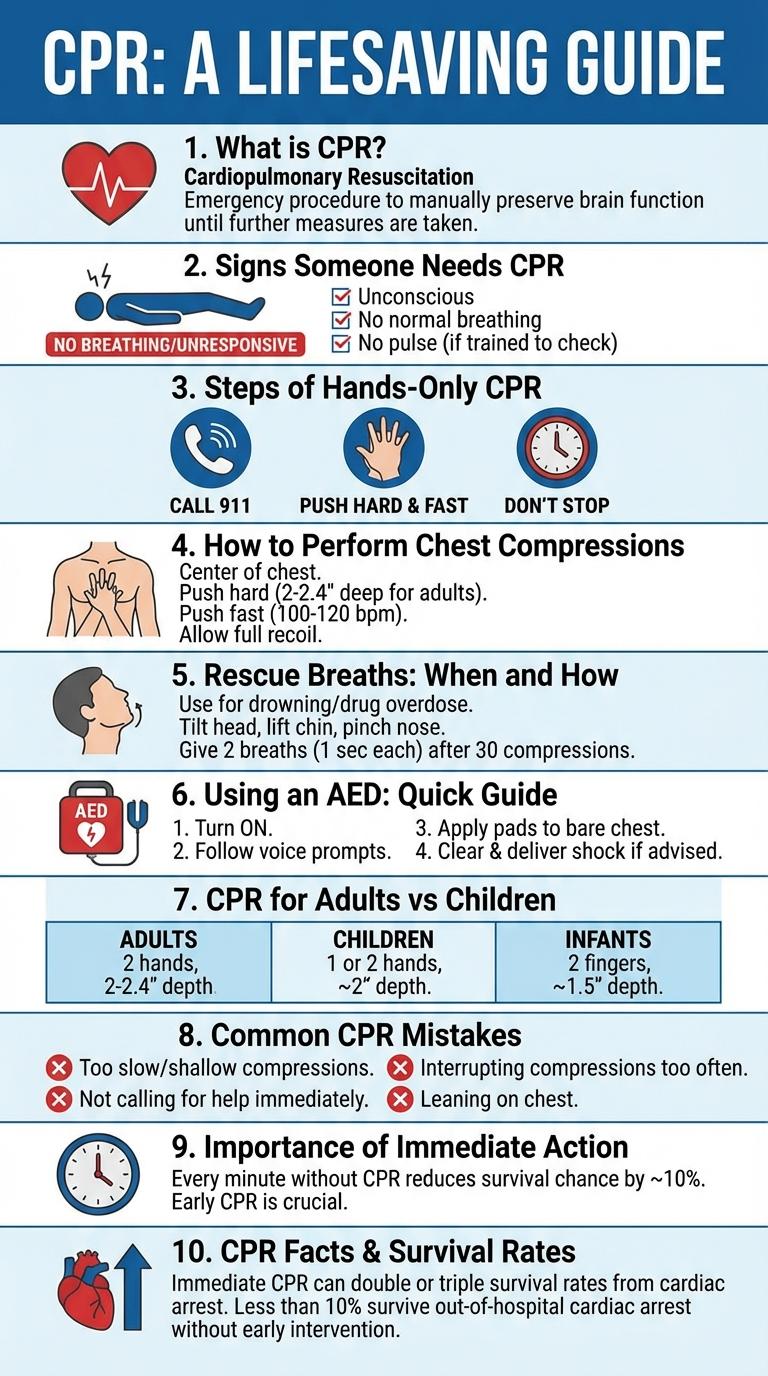
CPR infographics provide clear, visual guidance on performing cardiopulmonary resuscitation effectively during emergencies. They highlight critical steps like chest compressions, rescue breaths, and the importance of early defibrillation. Understanding these elements enhances preparedness and increases the chances of saving lives.
What is CPR?
Cardiopulmonary Resuscitation (CPR) is an emergency life-saving technique used during cardiac arrest. It helps maintain blood flow to vital organs until professional medical help arrives.
- Purpose of CPR - CPR restores partial flow of oxygenated blood to the brain and heart.
- Key Components - It involves chest compressions and rescue breaths to support circulation and breathing.
- Critical Timing - Immediate CPR increases the chance of survival and reduces brain damage risk.
Signs Someone Needs CPR
Recognizing the signs that someone needs CPR can save lives. Immediate action is critical during cardiac emergencies.
- No Pulse - The person has no detectable heartbeat, indicating cardiac arrest.
- Unresponsive - The individual does not respond to shaking or loud verbal prompts.
- Not Breathing or Gasping - The person is either completely unresponsive to breathing or showing abnormal gasping breaths.
Perform CPR promptly when these signs are present to improve the chance of survival.
Steps of Hands-Only CPR
What are the essential steps of Hands-Only CPR? Hands-Only CPR involves two critical actions to save a life during cardiac arrest. Learning these steps can increase the chance of survival.
How do you begin Hands-Only CPR? First, ensure the scene is safe and check if the person is responsive. If unresponsive and not breathing normally, call emergency services immediately.
What is the key action in Hands-Only CPR? Place your hands, one on top of the other, in the center of the chest. Use your body weight to compress hard and fast at a rate of 100-120 compressions per minute.
Why is the compression depth important in Hands-Only CPR? Push down at least 2 inches (5 cm) to effectively circulate blood to vital organs. Allow the chest to fully recoil between compressions for maximum benefit.
How long should you continue Hands-Only CPR? Continue performing chest compressions until professional help arrives or the person shows signs of life. Consistent compressions increase the likelihood of survival.
How to Perform Chest Compressions
Performing chest compressions correctly is critical for maintaining blood flow during cardiac arrest. Place the heel of one hand on the center of the chest, then place your other hand on top, interlocking your fingers. Press down hard and fast, compressing the chest at least 2 inches deep at a rate of 100 to 120 compressions per minute.
Rescue Breaths: When and How
Rescue breaths are a crucial component of CPR, providing oxygen directly to the lungs when a person is not breathing. They help maintain oxygen flow to vital organs during cardiac arrest or respiratory failure.
Perform rescue breaths by tilting the victim's head back, lifting the chin, and pinching the nose closed. Breathe steadily into their mouth for about one second, watching for chest rise, and repeat twice after every 30 chest compressions.
Using an AED: Quick Guide
| Step | Action |
|---|---|
| 1. Turn On AED | Power on the device immediately upon arrival at the scene. |
| 2. Attach Pads | Place the adhesive electrode pads on the victim's bare chest as shown in the AED diagrams. |
| 3. Analyze Rhythm | Allow the AED to analyze the heart rhythm; do not touch the patient during this phase. |
| 4. Deliver Shock | If prompted, press the shock button to deliver an electrical shock to the heart. |
| 5. Continue CPR | Resume CPR immediately after the shock and follow AED prompts until medical help arrives. |
CPR for Adults vs Children
CPR (Cardiopulmonary Resuscitation) techniques vary significantly between adults and children due to differences in anatomy and physiology. Understanding these differences is crucial for effective life-saving intervention in emergency situations.
For adults, chest compressions should be performed with two hands at a depth of about 2 inches (5 cm) and at a rate of 100 to 120 compressions per minute. For children aged 1 to puberty, use one hand for chest compressions at a depth of approximately 2 inches (5 cm), maintaining the same compression rate.
Common CPR Mistakes
Performing CPR incorrectly can reduce its effectiveness and increase risks. Common CPR mistakes include improper hand placement, inadequate compression depth, and incorrect compression rate. Avoiding these errors ensures higher survival chances during cardiac emergencies.
Importance of Immediate Action
Performing CPR immediately after cardiac arrest can double or triple a victim's chance of survival. Time is critical; every second without CPR reduces the likelihood of recovery.
- Early CPR Increases Survival - Immediate chest compressions maintain blood flow to vital organs until professional help arrives.
- Brain Damage Prevention - Starting CPR quickly helps supply oxygen to the brain, reducing the risk of permanent damage.
- Bridges Time to Defibrillation - CPR keeps blood circulating, buying crucial time for defibrillators to restore a normal heart rhythm.