
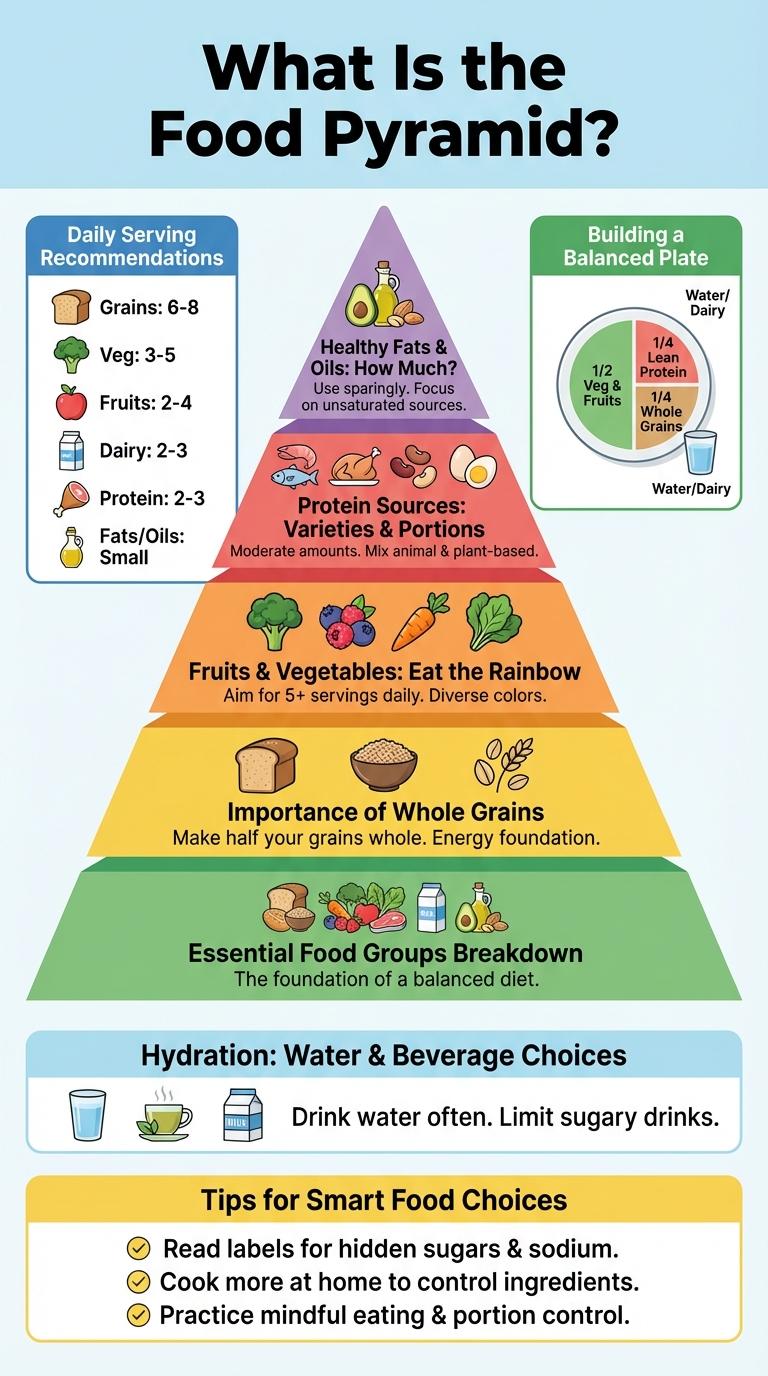
The food pyramid visually represents a balanced diet by categorizing essential food groups and their recommended daily portions. It guides healthier eating habits by emphasizing whole grains, fruits, vegetables, proteins, and dairy while limiting fats and sugars. Understanding this nutritional framework helps individuals make informed food choices to support overall well-being.
What Is the Food Pyramid?
The food pyramid is a visual guide representing the ideal quantity of different food groups to consume daily. It organizes foods into layers, promoting a balanced and healthy diet.
The base of the pyramid consists of grains like bread, rice, and pasta, suggesting the highest intake. Above grains are fruits and vegetables, emphasizing their importance for vitamins and minerals. The top layers include proteins, dairy, and fats, which should be consumed in smaller amounts for overall health.
Essential Food Groups Breakdown
The food pyramid is a visual guide illustrating the essential food groups needed for a balanced diet. It divides foods into categories based on nutritional value and recommended daily intake.
Grains form the base, providing carbohydrates for energy. Vegetables and fruits supply vitamins, minerals, and fiber.
Daily Serving Recommendations
The food pyramid illustrates daily serving recommendations for a balanced diet. It emphasizes consuming 6-8 servings of grains, 3-5 servings of vegetables, and 2-4 servings of fruits each day. Protein and dairy intake should range from 2-3 servings for optimal health.
Building a Balanced Plate
The food pyramid guides creating balanced meals by illustrating ideal portions of different food groups. Building a balanced plate ensures nutritional diversity and supports overall health.
The base of the pyramid emphasizes whole grains and vegetables to provide essential nutrients and fiber.
- Fruits and Vegetables - Make up half your plate to supply vitamins, minerals, and antioxidants.
- Whole Grains - Choose whole grains like brown rice and oats for sustained energy and fiber intake.
- Protein Sources - Include lean meats, beans, or nuts to support muscle and tissue repair.
Healthy Fats & Oils: How Much?
Healthy fats and oils are essential components of a balanced diet, providing energy and supporting cell function. Understanding the appropriate daily intake helps maintain heart health and overall well-being.
- Recommended Amount - Adults should consume about 20-35% of total daily calories from fats, focusing on unsaturated fats.
- Sources of Healthy Fats - Olive oil, avocados, nuts, and fatty fish are rich sources of beneficial fats.
- Limit Saturated and Trans Fats - Saturated fats should be less than 10% of daily calories, while trans fats intake should be minimized to reduce heart disease risk.
Importance of Whole Grains
Why are whole grains essential in a balanced diet? Whole grains provide vital nutrients like fiber, vitamins, and minerals that support overall health. Incorporating whole grains into daily meals helps maintain digestive health and reduce the risk of chronic diseases.
Protein Sources: Varieties & Portions
The food pyramid highlights diverse protein sources essential for a balanced diet, including lean meats, dairy, legumes, nuts, and seeds. Recommended daily portions vary, typically suggesting 5-6 ounces of protein-rich foods for adults. Incorporating a variety of protein types ensures adequate nutrient intake and supports overall health.
Fruits & Vegetables: Eat the Rainbow
| Category | Key Information |
|---|---|
| Fruits & Vegetables | Essential for vitamins, minerals, and fiber. Supports immune health and digestion. |
| Eat the Rainbow | Consume a variety of colors daily to maximize nutrient intake: red, orange, yellow, green, blue, purple, and white. |
| Serving Recommendation | At least 5 servings per day, including fresh, frozen, or canned options without added sugars or salts. |
| Benefits | Reduces risk of chronic diseases, supports eye health, improves skin quality, and boosts energy. |
| Examples of Color Groups | Red: Tomatoes, strawberries Orange: Carrots, pumpkins Green: Spinach, broccoli Blue/Purple: Blueberries, eggplant White: Cauliflower, garlic |
Hydration: Water & Beverage Choices
Hydration plays a crucial role in maintaining overall health and supporting bodily functions. Water is the primary beverage recommended for optimal hydration, constituting about 60% of the human body.
Choosing water over sugary drinks helps reduce calorie intake and prevent dehydration. Herbal teas and unsweetened beverages also contribute to fluid balance without added sugars or artificial ingredients.