
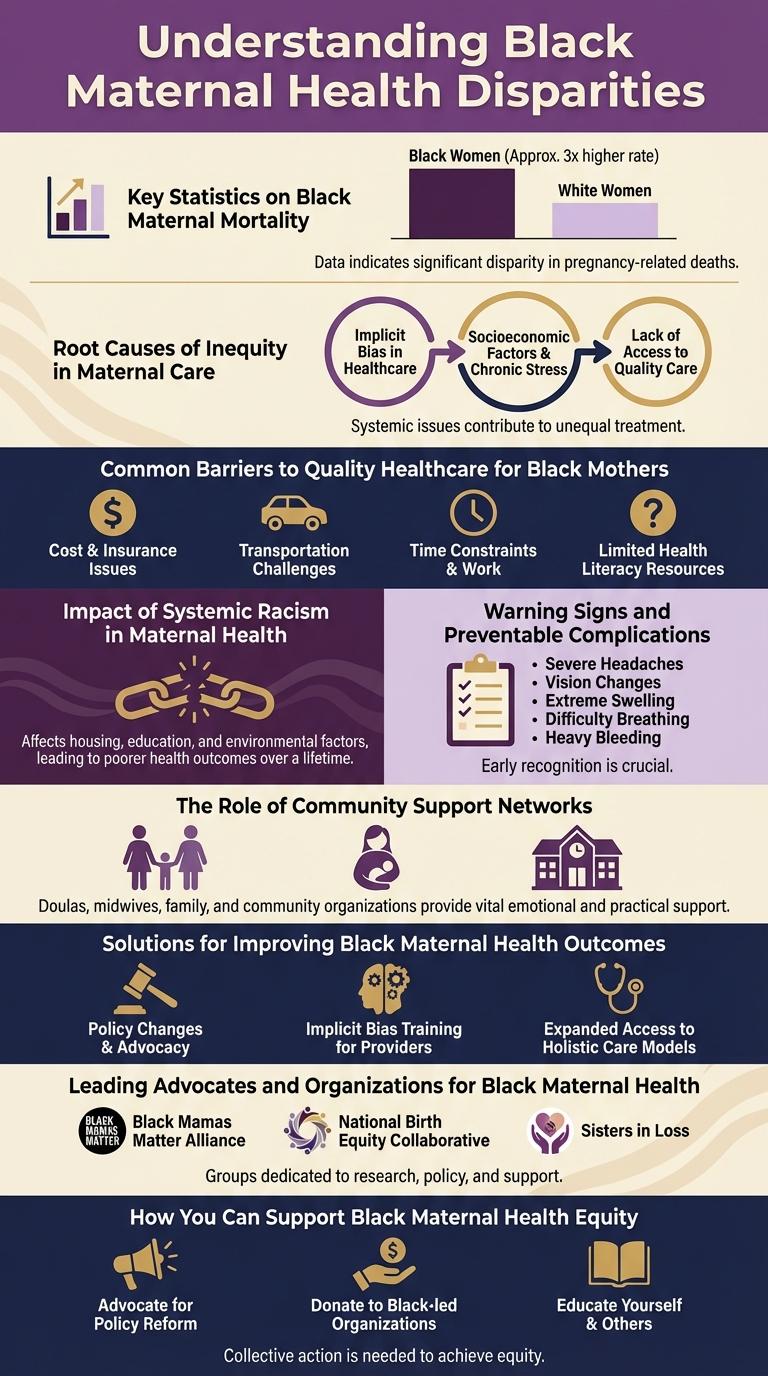
Black maternal health faces significant challenges due to disparities in healthcare access and systemic biases. Infographics visually highlight critical statistics, such as higher rates of maternal mortality and complications among Black women compared to other groups. These visuals serve as powerful tools to raise awareness and promote equitable healthcare solutions.
Understanding Black Maternal Health Disparities
Black maternal health disparities reflect significant differences in pregnancy outcomes between Black women and other racial groups. Factors such as systemic racism, limited access to quality healthcare, and higher rates of chronic conditions contribute to these disparities. Addressing these issues requires targeted interventions and policy changes to ensure equitable maternal care.
Key Statistics on Black Maternal Mortality
Black women in the United States face a maternal mortality rate three to four times higher than white women. Complications from pregnancy and childbirth cause approximately 40 deaths per 100,000 live births among Black mothers. Addressing social determinants and healthcare disparities is essential to reducing these alarming statistics.
Root Causes of Inequity in Maternal Care
Black maternal health faces significant inequities driven by complex social and systemic factors. Understanding the root causes of disparities is essential to improving care and outcomes.
- Structural Racism - Systemic policies and practices create barriers to quality maternal healthcare for Black women.
- Healthcare Access - Limited access to prenatal and postnatal care worsens health outcomes among Black mothers.
- Implicit Bias - Healthcare providers' unconscious biases contribute to differential treatment during pregnancy and childbirth.
Common Barriers to Quality Healthcare for Black Mothers
Black mothers face significant challenges in accessing quality healthcare, contributing to disparities in maternal outcomes. Addressing these barriers is critical to improving health equity and reducing maternal mortality rates.
Common barriers include systemic racism, implicit bias from healthcare providers, and limited access to culturally competent care. Economic factors such as lack of insurance and transportation difficulties further hinder timely medical attention. These obstacles result in delayed prenatal care and higher rates of complications during pregnancy and childbirth for Black mothers.
Impact of Systemic Racism in Maternal Health
| Impact of Systemic Racism on Black Maternal Health | |
|---|---|
| Systemic Factor | Effect on Black Maternal Health |
| Access to Quality Healthcare | Black women face barriers to prenatal care, resulting in delayed treatment and undiagnosed complications. |
| Implicit Bias in Medical Settings | Racial bias leads to underestimation of pain and symptoms among Black mothers, increasing risk of poor outcomes. |
| Socioeconomic Inequities | Higher rates of poverty and lower insurance coverage limit Black women's access to essential maternal health services. |
| Environmental Stressors | Chronic stress from systemic racism contributes to preterm births and higher maternal mortality rates. |
Warning Signs and Preventable Complications
Black maternal health faces significant challenges, with higher rates of complications and mortality compared to other groups. Early recognition of warning signs is crucial to preventing severe outcomes in pregnancy and childbirth.
Common warning signs include severe headaches, vision changes, and sudden swelling, which may indicate preeclampsia or other serious conditions. Timely medical intervention can prevent complications such as hemorrhage, infection, and hypertensive disorders.
The Role of Community Support Networks
Black maternal health faces significant challenges that are deeply influenced by social determinants and access to care. Community support networks play a critical role in improving outcomes for Black mothers by providing essential resources and emotional support.
- Trusted Information Sources - Community networks offer culturally relevant education and awareness about prenatal and postpartum care.
- Emotional Support - Peer groups and community organizations reduce isolation and stress during pregnancy and after childbirth.
- Resource Navigation - Networks assist Black mothers in accessing healthcare services, nutrition programs, and mental health support.
Strengthening community support networks enhances Black maternal health equity and reduces disparities in maternal mortality and morbidity rates.
Solutions for Improving Black Maternal Health Outcomes
Black maternal health faces significant challenges, with higher rates of complications and mortality compared to other groups. Addressing these disparities requires targeted, culturally sensitive healthcare solutions.
Expanding access to comprehensive prenatal and postpartum care improves outcomes by providing continuous support. Community-based programs and increased representation of Black healthcare providers foster trust and better patient communication.
Leading Advocates and Organizations for Black Maternal Health
Who are the leading advocates and organizations championing black maternal health?
Black maternal health advocates work tirelessly to reduce disparities and improve outcomes for Black mothers. Key organizations focus on policy change, community support, and comprehensive healthcare access.
| Advocate/Organization | Focus Area |
|---|---|
| Black Mamas Matter Alliance | Policy advocacy, research, and training |
| National Birth Equity Collaborative | Community engagement and health equity |
| March of Dimes - Black Maternal Health Program | Education, resources, and support |
| Postpartum Support International | Mental health and postpartum support |
| Our Bodies Ourselves | Reproductive justice and empowerment |