
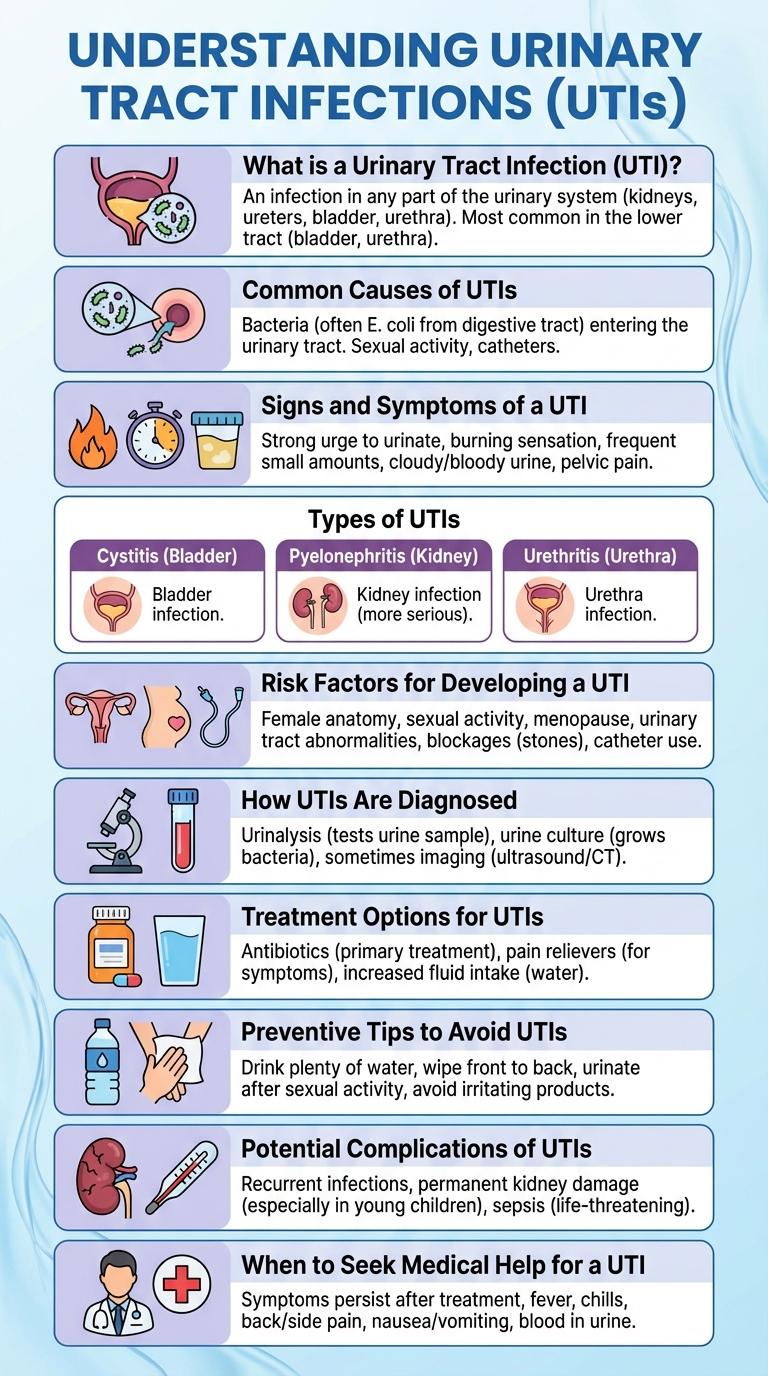
Urinary tract infections (UTIs) affect millions of people each year, causing discomfort and potential complications if untreated. This infographic highlights key symptoms, risk factors, and effective prevention strategies to help you recognize and manage UTIs promptly. Understanding these vital details empowers individuals to seek timely medical care and maintain urinary health.
What is a Urinary Tract Infection (UTI)?
A Urinary Tract Infection (UTI) is an infection that affects any part of the urinary system, including the kidneys, bladder, ureters, and urethra. UTIs are commonly caused by bacteria entering the urinary tract and can lead to painful urination and other symptoms.
- Common Causes - Most UTIs occur due to bacterial infections, primarily by Escherichia coli (E. coli) from the digestive tract.
- Symptoms - Typical symptoms include a strong urge to urinate, burning sensation during urination, cloudy urine, and lower abdominal pain.
- Risk Factors - Women, individuals with urinary catheters, and those with weakened immune systems have higher susceptibility to UTIs.
Common Causes of UTIs
Urinary tract infections (UTIs) are caused by bacteria entering the urinary system, commonly affecting the bladder and urethra. Escherichia coli (E. coli) is the most frequent bacterial culprit responsible for nearly 80% of UTI cases.
Other causes include sexual activity, poor hygiene, and catheter use, which facilitate bacterial invasion. Certain risk factors such as female anatomy, urinary retention, and weakened immune system increase susceptibility to UTIs.
Signs and Symptoms of a UTI
Urinary tract infections (UTIs) commonly present with a burning sensation during urination and frequent urges to urinate. Other signs include cloudy or strong-smelling urine and pelvic pain, especially in women. Early recognition of these symptoms is crucial for prompt treatment and prevention of complications.
Types of UTIs
What are the main types of urinary tract infections (UTIs)? UTIs commonly affect different parts of the urinary system, including the bladder and kidneys. Recognizing the specific type helps in accurate diagnosis and effective treatment.
| Type of UTI | Description |
|---|---|
| Cystitis (Bladder Infection) | Causes inflammation in the bladder, often leading to pain during urination and frequent urges to urinate. |
| Urethritis | Occurs when the urethra becomes inflamed, causing discomfort and burning sensations. |
| Pyelonephritis (Kidney Infection) | A serious infection of the kidneys that may cause fever, back pain, and nausea. |
| Asymptomatic Bacteriuria | Presence of bacteria in the urine without symptoms, often requiring specific clinical management. |
Risk Factors for Developing a UTI
Urinary tract infections (UTIs) commonly affect individuals with compromised immune systems and those with urinary tract abnormalities. Women are at higher risk due to shorter urethras, which facilitate bacterial entry. Other risk factors include sexual activity, catheter use, and certain medical conditions like diabetes.
How UTIs Are Diagnosed
Urinary tract infections (UTIs) are diagnosed through specific laboratory tests and clinical evaluation. Proper identification is crucial to determine the appropriate treatment and prevent complications.
- Urinalysis - A basic test analyzing urine for the presence of bacteria, white blood cells, or blood.
- Urine Culture - A more detailed test that identifies the exact bacteria causing the infection and its antibiotic sensitivity.
- Physical Exam - A healthcare provider assesses symptoms and may check for pain or tenderness in the abdomen or back.
- Imaging Tests - Ultrasound or CT scans may be used to detect abnormalities in the urinary tract when infections are recurrent or complicated.
- Dipstick Test - A quick office method to screen for infection indicators like nitrites and leukocyte esterase.
Early diagnosis enables effective treatment and reduces the risk of kidney damage or recurrent infections.
Treatment Options for UTIs
Treatment options for urinary tract infections (UTIs) vary depending on the infection's severity and location. Most UTIs respond well to antibiotic therapy, which targets the bacteria causing the infection.
Common antibiotics include trimethoprim-sulfamethoxazole, nitrofurantoin, and fosfomycin. Drinking plenty of fluids helps flush out bacteria, supporting faster recovery. In recurrent cases, doctors may recommend preventive antibiotics or lifestyle changes to reduce risk.
Preventive Tips to Avoid UTIs
| Preventive Tip | Description |
|---|---|
| Stay Hydrated | Drink at least 8 glasses of water daily to flush bacteria from the urinary tract. |
| Practice Proper Hygiene | Wipe from front to back after using the toilet to reduce bacterial spread. |
| Urinate Regularly | Avoid holding urine for long periods to prevent bacterial growth in the bladder. |
| Wear Breathable Clothing | Choose cotton underwear and loose-fitting clothes to prevent moisture buildup. |
| Urinate After Sexual Activity | Helps flush out bacteria introduced during intercourse, lowering infection risk. |
Potential Complications of UTIs
Urinary Tract Infections (UTIs) can lead to serious health complications if left untreated. These infections may spread to the kidneys, causing pyelonephritis, a severe kidney infection that requires immediate medical attention.
Other potential complications include recurrent infections, which can damage the urinary tract over time. In rare cases, untreated UTIs can lead to sepsis, a life-threatening response to infection.