
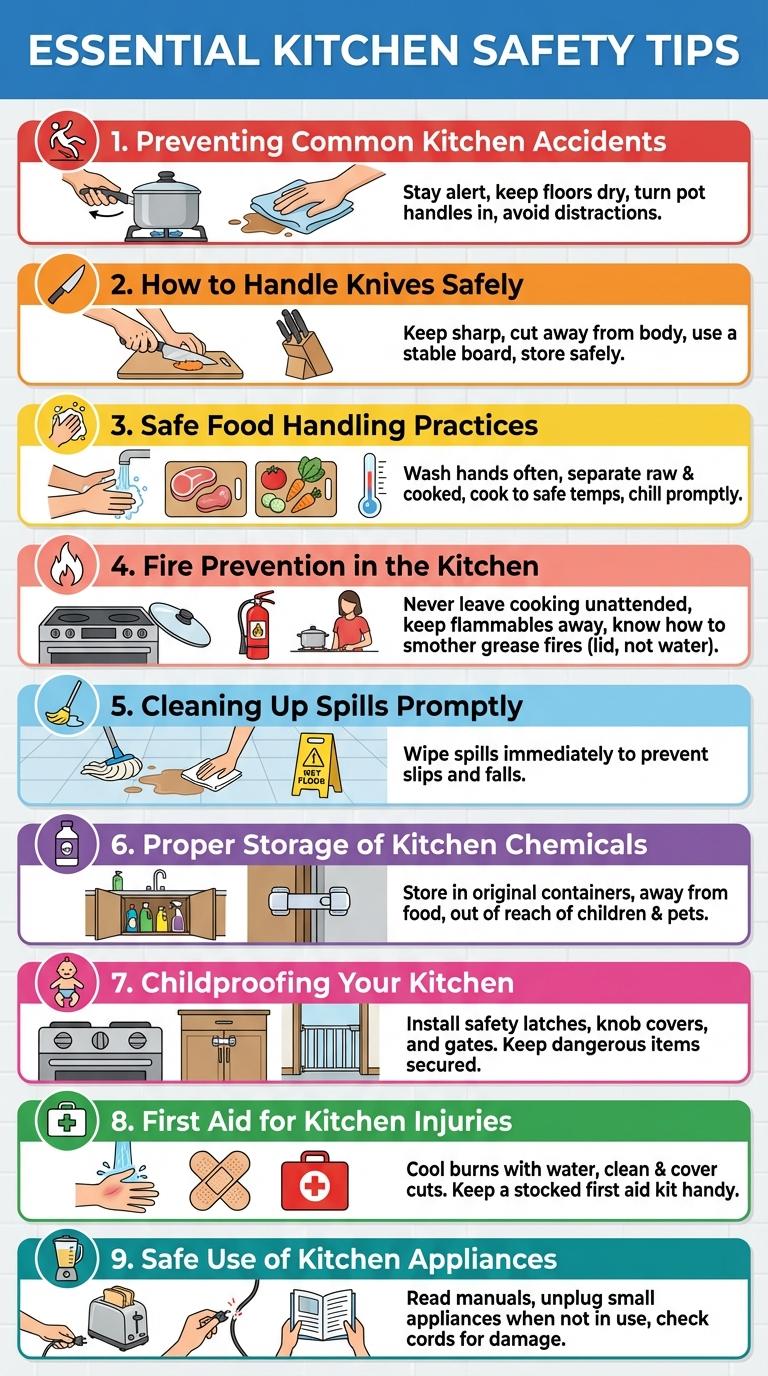
Proper kitchen safety is essential to prevent accidents and ensure a secure cooking environment. Implementing basic precautions, such as handling knives carefully and keeping flammable materials away from heat sources, significantly reduces risks. Clear, visual guides like infographics make understanding and practicing kitchen safety easier for everyone.
Essential Kitchen Safety Tips
Kitchen safety is crucial to prevent accidents and ensure a healthy cooking environment. Following essential safety tips helps minimize risks of burns, cuts, and foodborne illnesses.
- Keep knives sharp - Sharp knives reduce the risk of slipping and causing accidental cuts.
- Use oven mitts - Always handle hot cookware with oven mitts to avoid burns.
- Clean spills immediately - Promptly wiping spills prevents slips and falls in the kitchen.
Preventing Common Kitchen Accidents
| Common Kitchen Accident | Prevention Tips |
|---|---|
| Slips and Falls | Keep floors dry and free of clutter |
| Burns | Use oven mitts and handle hot items carefully |
| Knife Injuries | Use sharp knives and cut away from the body |
| Fire Hazards | Never leave cooking unattended and keep flammable items away |
| Food Poisoning | Store food properly and cook at safe temperatures |
How to Handle Knives Safely
Proper knife handling is essential to prevent kitchen injuries. Always grip the knife firmly and cut away from your body to maintain control and reduce the risk of accidents.
Keep knives sharp, as dull blades require more force and are more likely to slip. Store knives securely in a knife block or magnetic strip to avoid accidental cuts when reaching for them.
Safe Food Handling Practices
Safe food handling practices are essential to prevent foodborne illnesses in the kitchen. Proper techniques reduce the risk of contamination and ensure food safety for everyone.
- Wash Hands Thoroughly - Use soap and warm water for at least 20 seconds before handling food to eliminate harmful bacteria.
- Separate Raw and Cooked Foods - Prevent cross-contamination by using different cutting boards and utensils for raw meats and ready-to-eat items.
- Cook Foods to Proper Temperatures - Use a food thermometer to ensure meats reach safe internal temperatures, killing any pathogens.
Following these food handling practices protects health and promotes safe cooking environments.
Fire Prevention in the Kitchen
How can you prevent fire hazards while cooking in the kitchen? Keeping flammable items away from heat sources reduces the risk of fire outbreaks. Regularly cleaning grease buildup from stove areas is essential for fire prevention.
What should you do if a grease fire starts on your stove? Never use water to extinguish a grease fire as it can cause the fire to spread. Use a metal lid to cover the flames or a fire extinguisher rated for grease fires.
Why is it important to monitor cooking at all times? Unattended cooking is a leading cause of kitchen fires and can quickly escalate into dangerous situations. Staying near the stove allows quick response to any flare-ups or accidents.
How can electrical appliances contribute to kitchen fires? Faulty or damaged cords and overloaded outlets increase the risk of electrical fires. Regularly inspect appliances for damage and avoid plugging too many devices into one outlet.
What role does a fire extinguisher play in kitchen safety? Having a Class K fire extinguisher within reach allows for quick action during fire emergencies. It provides a safe and effective way to extinguish kitchen fires before they spread.
Cleaning Up Spills Promptly
Cleaning up spills promptly in the kitchen prevents slips and falls, reducing the risk of injury. Wet or greasy floors are common hazards that can be easily avoided by immediate action.
Use absorbent materials like paper towels or cloths to soak up liquids quickly. Ensure the floor is completely dry before resuming kitchen activities. Regularly inspect high-traffic areas to maintain a safe cooking environment.
Proper Storage of Kitchen Chemicals
Proper storage of kitchen chemicals is essential to prevent contamination and accidental poisoning. Store all cleaning agents and chemicals in clearly labeled, tightly sealed containers, away from food items and out of reach of children. Designate a specific cabinet or shelf exclusively for kitchen chemicals to maintain safety and organization.
Childproofing Your Kitchen
Childproofing your kitchen is essential to prevent accidents and injuries. Use safety locks on cabinets and drawers to keep hazardous items like knives and cleaning products out of children's reach. Secure appliances and keep hot surfaces and sharp objects inaccessible to ensure a safe cooking environment for your family.
First Aid for Kitchen Injuries
Kitchen injuries can range from minor cuts to severe burns. Immediate and appropriate first aid is crucial to prevent infections and promote faster healing.
- Stop the bleeding - Apply gentle pressure with a clean cloth to control bleeding from cuts.
- Cool burns quickly - Rinse burns under cool running water for 10-20 minutes to reduce pain and damage.
- Clean wounds properly - Wash cuts or scrapes with mild soap and water to prevent infection.