
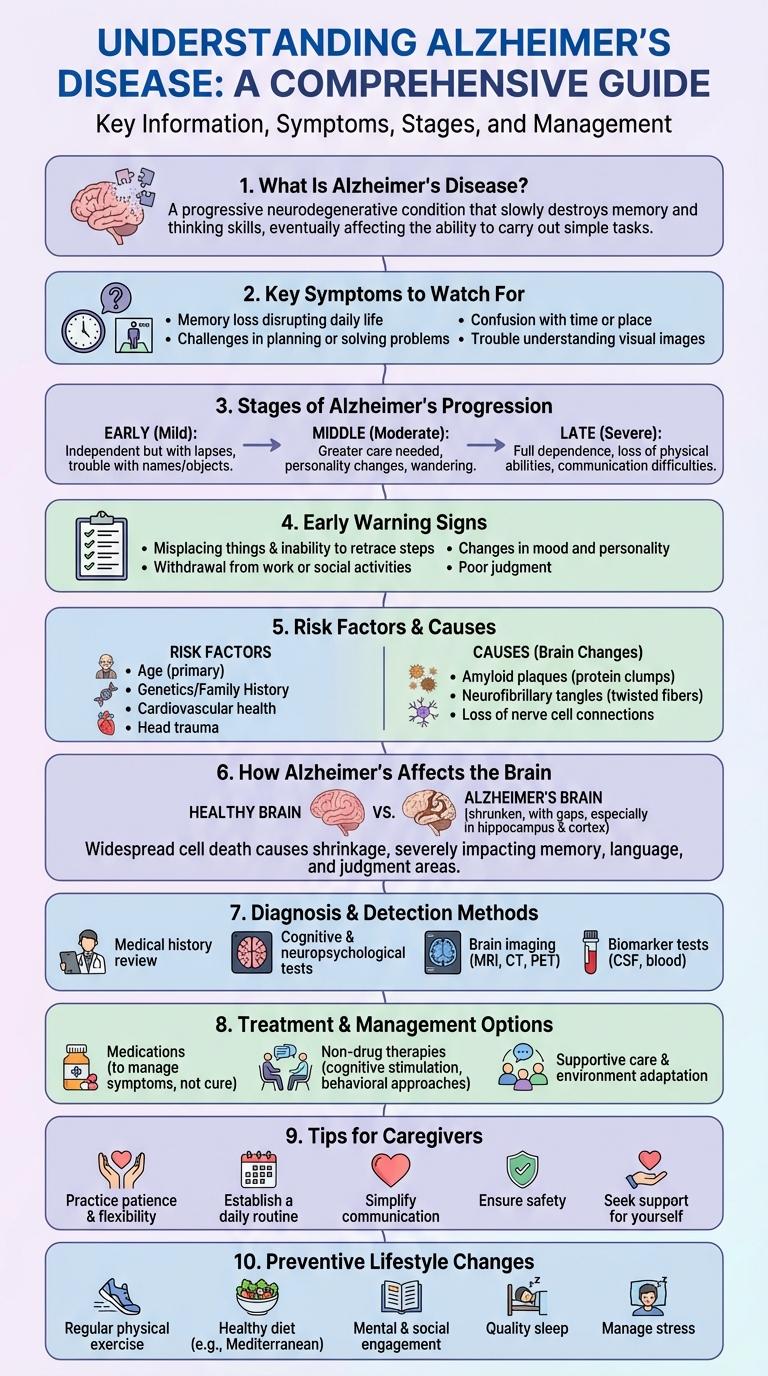
Alzheimer's disease is a progressive neurological disorder that affects memory, thinking, and behavior. This infographic presents key facts, symptoms, risk factors, and prevention strategies to increase awareness and understanding. Visualizing these elements helps highlight the importance of early detection and ongoing research.
What Is Alzheimer's Disease?
Alzheimer's disease is a progressive neurological disorder that causes brain cells to degenerate and die. This decline leads to memory loss, cognitive impairment, and behavioral issues.
- Definition - Alzheimer's disease is the most common cause of dementia, affecting millions worldwide.
- Brain Impact - It primarily damages areas responsible for memory, thinking, and decision-making.
- Progression - Symptoms worsen over time, eventually interfering with daily life and independence.
Key Symptoms to Watch For
Alzheimer's disease primarily affects memory, causing difficulty in recalling recent events or important dates. Noticeable changes in problem-solving abilities and challenges in completing familiar tasks can indicate early stages. Confusion with time or place and withdrawal from social activities are critical symptoms to monitor for timely diagnosis.
Stages of Alzheimer's Progression
Alzheimer's disease progresses through three main stages: mild (early), moderate (middle), and severe (late). Each stage presents unique symptoms, ranging from memory loss and confusion to severe cognitive and physical impairments. Understanding these stages helps caregivers and medical professionals provide targeted support and interventions.
Early Warning Signs
Alzheimer's disease is a progressive neurological disorder that affects memory, thinking, and behavior. Recognizing early warning signs can lead to timely diagnosis and improved management.
Common early symptoms include memory loss that disrupts daily life and difficulty solving simple problems. Changes in mood, confusion about time or place, and trouble completing familiar tasks are also indicators.
Risk Factors & Causes
Alzheimer's disease is a progressive neurological disorder characterized by memory loss and cognitive decline. Understanding the risk factors and causes is essential for early detection and prevention.
- Age - The risk of Alzheimer's increases significantly after age 65 due to brain changes over time.
- Genetics - Certain genes, such as APOE-e4, are associated with a higher risk of developing Alzheimer's disease.
- Lifestyle Factors - Poor diet, lack of exercise, and smoking contribute to the risk by affecting brain health.
Identifying and managing these risk factors can help reduce the likelihood of developing Alzheimer's disease.
How Alzheimer's Affects the Brain
Alzheimer's disease causes progressive damage to the brain, impairing memory and cognitive functions. The condition primarily affects specific brain regions responsible for learning and reasoning.
- Amyloid Plaques Formation - Abnormal protein deposits called amyloid plaques accumulate between nerve cells, disrupting cell communication.
- Neurofibrillary Tangles Development - Twisted fibers of tau protein form inside neurons, leading to cell death and brain tissue loss.
- Hippocampus Shrinkage - The hippocampus, critical for memory formation, shrinks significantly, causing memory impairment.
Diagnosis & Detection Methods
Alzheimer's disease diagnosis relies on a combination of clinical evaluation and advanced imaging techniques. Early detection is crucial for effective management and slowing disease progression.
Common detection methods include cognitive tests, MRI scans, and PET imaging to identify brain changes. Biomarker analysis in cerebrospinal fluid also aids in confirming diagnosis and assessing disease stage.
Treatment & Management Options
| Treatment Type | Description |
|---|---|
| Medications | Cholinesterase inhibitors (Donepezil, Rivastigmine) and NMDA receptor antagonists (Memantine) help manage symptoms by improving neurotransmitter function. |
| Cognitive Therapies | Memory training and cognitive stimulation therapy support mental function and slow cognitive decline. |
| Lifestyle Changes | Regular physical exercise, balanced diet, and social engagement improve overall brain health and may delay symptom progression. |
| Support Services | Caregiver education, counseling, and support groups enhance quality of life for patients and families. |
| Experimental Treatments | Clinical trials exploring immunotherapy and amyloid-targeting agents aim to modify disease progression. |
Tips for Caregivers
How can caregivers best support individuals with Alzheimer's disease? Understanding the challenges is key to providing compassionate care. Implementing effective strategies enhances both the caregiver's and patient's quality of life.
| Tip | Description |
|---|---|
| Establish a Routine | Consistent daily schedules reduce confusion and anxiety in Alzheimer's patients. |
| Use Simple Communication | Speak clearly and use short sentences to improve understanding. |
| Create a Safe Environment | Remove hazards and provide clear signage to prevent accidents. |
| Encourage Social Interaction | Engage in group activities to stimulate cognition and reduce isolation. |
| Take Care of Yourself | Caregiver well-being is vital; seek support and allow time for rest. |