
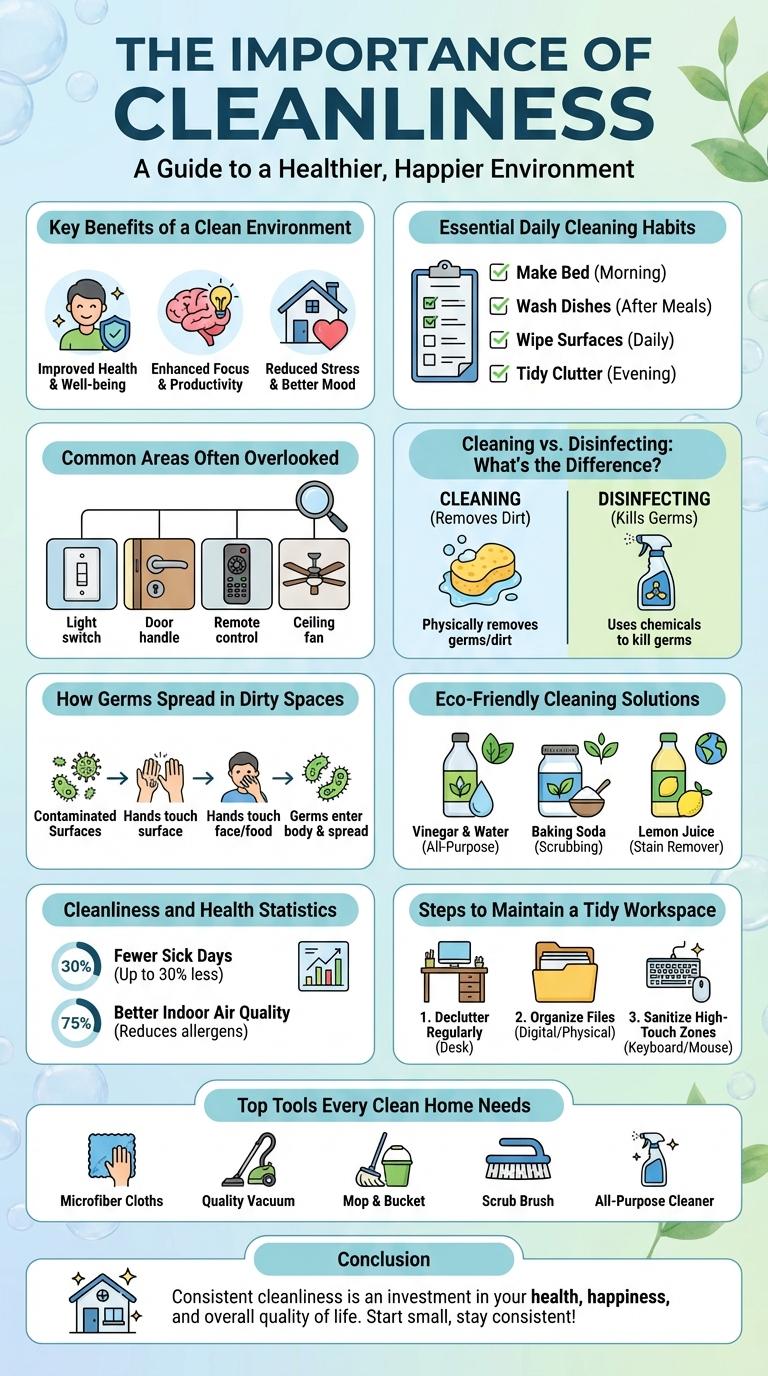
Maintaining cleanliness is essential for promoting health, safety, and overall well-being in any environment. Effective cleaning practices reduce the spread of germs and create a more inviting space for everyone. This infographic visually highlights key tips and benefits of cleanliness to inspire better habits.
The Importance of Cleanliness
Cleanliness plays a vital role in maintaining health and well-being. It creates a safer, more pleasant environment for everyone.
- Prevents Disease - Regular cleaning removes germs and reduces the risk of infections.
- Enhances Mental Health - A clean space promotes relaxation and reduces stress levels.
- Improves Safety - Removing clutter and dirt minimizes accidents and injuries.
Prioritizing cleanliness boosts quality of life and supports sustainable living.
Key Benefits of a Clean Environment
Maintaining a clean environment significantly reduces the risk of diseases by minimizing exposure to germs and pollutants. It enhances mental well-being and productivity by creating a pleasant and organized space. Clean surroundings also protect natural ecosystems, promoting biodiversity and sustainable living.
Essential Daily Cleaning Habits
What are the essential daily cleaning habits for maintaining a spotless home?
Regularly wiping surfaces and decluttering prevent dirt buildup. Maintaining clean floors and fresh air enhances overall hygiene and comfort.
| Cleaning Habit | Benefit |
|---|---|
| Wipe down kitchen counters | Removes bacteria and food residue |
| Make the bed each morning | Creates an organized and inviting space |
| Sweep or vacuum high-traffic areas | Reduces dust and allergens |
| Empty trash bins daily | Prevents odors and pest attraction |
| Clean bathroom sinks and surfaces | Minimizes germs and mold growth |
Common Areas Often Overlooked
Common areas often overlooked in cleanliness routines include door handles, light switches, and remote controls. These high-touch surfaces harbor bacteria and viruses, contributing to the spread of illness. Regular disinfection of these spots is essential for maintaining a healthy environment.
Cleaning vs. Disinfecting: What's the Difference?
Cleaning and disinfecting are essential practices for maintaining a healthy environment. Cleaning removes dirt, dust, and impurities from surfaces using soap and water.
Disinfecting involves using chemicals to kill germs and bacteria on surfaces. It is especially important for preventing the spread of infectious diseases.
How Germs Spread in Dirty Spaces
Germs thrive in dirty spaces, spreading rapidly through contact and airborne particles. Surfaces like doorknobs, countertops, and keyboards often harbor harmful bacteria and viruses.
When people touch contaminated surfaces, germs transfer to their hands and can enter the body through the eyes, nose, or mouth. Regular cleaning and disinfecting significantly reduce the risk of germ transmission in any environment.
Eco-Friendly Cleaning Solutions
| Eco-Friendly Cleaning Solution | Key Benefits |
|---|---|
| Vinegar | Natural disinfectant, reduces chemical use, biodegradable |
| Baking Soda | Deodorizes, gentle abrasive, non-toxic and safe for pets |
| Lemon Juice | Antibacterial properties, natural bleach, environmentally safe |
| Castile Soap | Plant-based, biodegradable, effective on grease and dirt |
| Essential Oils | Natural fragrance, antimicrobial, reduces need for synthetic chemicals |
Cleanliness and Health Statistics
Cleanliness plays a critical role in maintaining public health by reducing the spread of infectious diseases. Proper hygiene practices can prevent illnesses ranging from common colds to severe respiratory infections.
According to the World Health Organization, regular handwashing with soap can reduce diarrheal diseases by up to 40%. Studies show that clean environments in healthcare facilities decrease healthcare-associated infections by 30%. Effective sanitation and waste management lower the risk of vector-borne diseases by minimizing breeding grounds for pests.
Steps to Maintain a Tidy Workspace
Maintaining a tidy workspace enhances productivity and reduces stress. Consistent cleaning habits create a healthier and more efficient environment.
- Declutter Regularly - Remove unnecessary items daily to keep your workspace organized and neat.
- Disinfect Surfaces - Wipe down desks, keyboards, and other frequently touched areas to prevent germs.
- Organize Supplies - Store office materials in designated containers to avoid clutter and improve accessibility.