
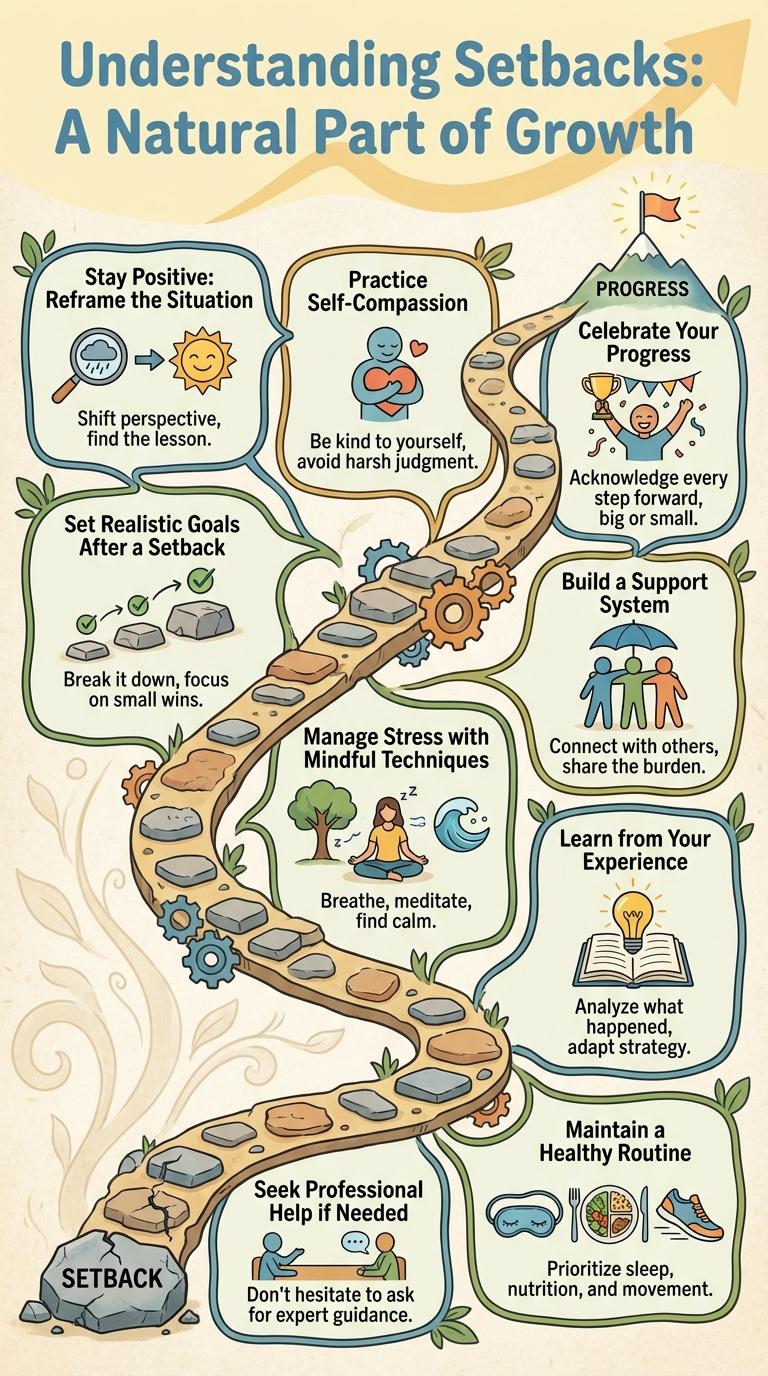
Setbacks are a natural part of life that challenge our resilience and emotional well-being. Understanding effective strategies for healthy coping can transform these obstacles into opportunities for growth. This infographic visually presents practical methods to navigate setbacks with strength and positivity.
Understanding Setbacks: A Natural Part of Growth
Setbacks are an inevitable aspect of personal and professional growth, offering valuable lessons and opportunities for improvement. Embracing setbacks helps build resilience and fosters a mindset geared toward long-term success.
- Setbacks signal growth - Experiencing challenges means you are pushing past comfort zones and expanding your capabilities.
- Reflection promotes learning - Analyzing what went wrong provides insight for better decision-making in the future.
- Resilience strengthens mindset - Overcoming obstacles develops mental toughness required for sustained achievement.
Stay Positive: Reframe the Situation
Setbacks are natural parts of life that everyone encounters. Learning to stay positive helps transform challenges into opportunities for growth.
Reframing the situation means shifting your perspective to see obstacles as temporary and manageable. This approach boosts resilience by encouraging constructive thinking instead of self-defeat. Cultivating a positive mindset fosters emotional strength and motivates proactive problem-solving.
Practice Self-Compassion
| Practice Self-Compassion | Benefits for Coping with Setbacks |
|---|---|
| Be Kind to Yourself | Reduces stress and promotes emotional healing during tough times |
| Recognize Common Humanity | Helps realize setbacks are a shared human experience, reducing feelings of isolation |
| Mindful Awareness | Encourages acknowledging difficult emotions without judgment |
| Positive Self-Talk | Builds resilience by replacing self-criticism with encouragement |
| Set Realistic Expectations | Promotes acceptance and reduces pressure to be perfect |
Set Realistic Goals After a Setback
Setting realistic goals after experiencing a setback helps maintain motivation and promotes steady progress. Breaking down larger objectives into manageable steps prevents overwhelm and encourages persistence.
Clear, achievable goals provide a sense of direction and accomplishment, reducing stress and fostering resilience. Adjusting expectations based on past experiences ensures sustainable growth and learning.
Build a Support System
Building a strong support system is crucial for healthy coping with setbacks. Surrounding yourself with understanding friends, family, or support groups provides emotional strength and encouragement.
Reach out regularly to trusted individuals to share your feelings and experiences. This connection fosters resilience and helps you navigate challenges more effectively.
Manage Stress with Mindful Techniques
Managing stress through mindful techniques helps maintain emotional balance during setbacks. Mindfulness enhances resilience by promoting present-moment awareness and reducing anxiety.
- Deep Breathing - Engage in slow, deep breaths to stimulate relaxation and lower cortisol levels.
- Body Scan Meditation - Focus on different body parts to release tension and cultivate physical awareness.
- Mindful Observation - Notice thoughts and feelings without judgment to decrease negative reactions.
Learn from Your Experience
Experiencing setbacks is a natural part of growth and development. Learning from these experiences enhances resilience and personal insight.
- Reflect Deeply - Analyze what happened to understand the underlying causes and your role in the outcome.
- Identify Lessons - Extract key takeaways that can guide future decisions and actions.
- Adjust Your Approach - Implement changes based on the insights gained to improve future performance.
Embracing setbacks as learning opportunities fosters continuous improvement and emotional strength.
Maintain a Healthy Routine
Maintaining a healthy routine is essential for coping with setbacks effectively. Consistent sleep, balanced nutrition, and regular physical activity help stabilize mood and increase resilience. Establishing daily habits fosters a sense of control and promotes mental well-being during challenging times.
Seek Professional Help if Needed
Experiencing setbacks is a natural part of life, but seeking professional help can provide valuable support and guidance. Therapists and counselors offer tailored strategies to manage stress and rebuild resilience effectively. Early intervention promotes mental well-being and fosters long-term emotional growth.