
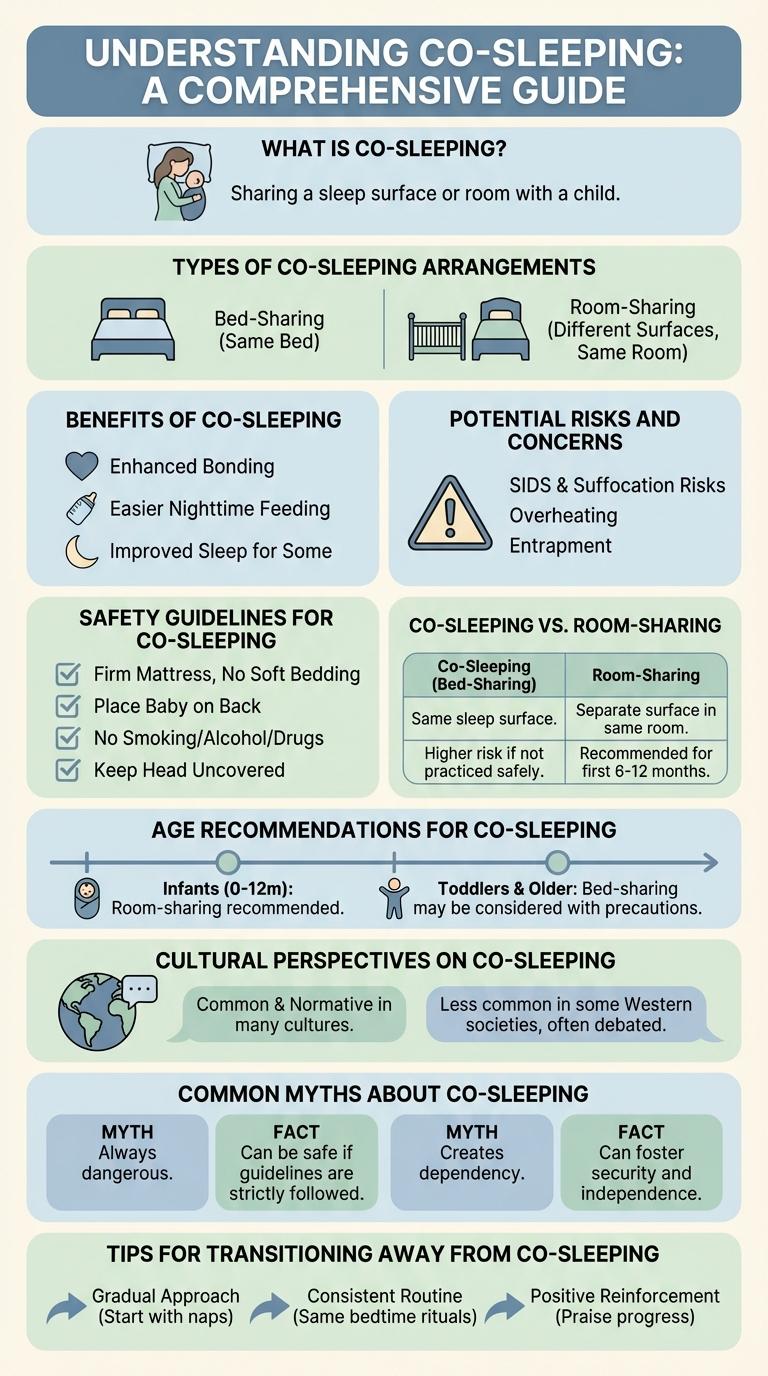
Co-sleeping involves parents and children sharing the same sleeping space, often a bed, to promote bonding and ease nighttime caregiving. This practice can enhance emotional security for infants while also posing considerations for safety and sleep quality. Understanding the benefits and risks through clear infographic visuals helps families make informed decisions about co-sleeping arrangements.
What is Co-Sleeping?
Co-sleeping is a practice where parents and children share the same sleeping space, such as a bed. This approach fosters bonding, enhances nighttime breastfeeding, and provides comfort to the child. Experts recommend following safety guidelines to reduce risks associated with co-sleeping.
Types of Co-Sleeping Arrangements
Co-sleeping involves parents and children sharing a sleeping space, promoting bonding and easier nighttime care. Different arrangements cater to family preferences and safety considerations.
Bed-sharing means the child sleeps directly in the parents' bed, enhancing closeness but requiring safety measures to prevent risks. Room-sharing places the child's crib or bassinet near the parents' bed, balancing proximity and safety. Separate sleeping involves child and parents having distinct sleep spaces, offering independent rest while maintaining nighttime connection.
Benefits of Co-Sleeping
Co-sleeping involves parents and infants sharing the same sleeping space to foster closer bonds and improve infant care. This practice is common in many cultures and offers several developmental and emotional benefits.
- Enhanced Bonding - Physical proximity during sleep strengthens the emotional connection between parent and child.
- Improved Breastfeeding - Mothers find it easier to breastfeed frequently, promoting better nutrition and immune support.
- Increased Infant Security - Babies feel safer and experience less stress, contributing to more restful sleep patterns.
Co-sleeping can support healthier infant development while encouraging a nurturing family environment.
Potential Risks and Concerns
| Potential Risks | Details |
|---|---|
| Suffocation Hazard | Soft bedding increases risk of accidental suffocation for infants during co-sleeping. |
| Sudden Infant Death Syndrome (SIDS) | Co-sleeping has been linked to a higher incidence of SIDS due to unsafe sleep environments. |
| Overheating | Sharing a bed can cause infants to overheat, which is a known risk factor for sleep-related issues. |
| Falls | Infants may fall from the bed during the night, leading to potential injuries. |
| Parental Sleep Disruption | Frequent waking and adjustments during sleep can affect both infant and parent sleep quality. |
Safety Guidelines for Co-Sleeping
Co-sleeping involves parents and babies sharing the same sleeping surface, enhancing bonding and easing nighttime breastfeeding. Ensuring safety during co-sleeping reduces risks of accidents such as suffocation or Sudden Infant Death Syndrome (SIDS).
Use a firm mattress without soft bedding, pillows, or heavy blankets near the baby to prevent suffocation hazards. Always place the baby on their back to sleep and keep the sleep area free from gaps between the mattress and headboard or walls.
Co-Sleeping vs. Room-Sharing
Co-sleeping involves parents and infants sharing the same sleep surface, while room-sharing means the infant sleeps in the same room but on a separate surface. Understanding the differences can help parents make safe and informed decisions.
Both practices influence infant safety, bonding, and sleep patterns differently.
- Co-Sleeping Definition - Parents and baby share the same bed or sleep surface.
- Room-Sharing Definition - Baby sleeps in a separate crib or bassinet within the parents' bedroom.
- Safety Consideration - Room-sharing reduces the risk of Sudden Infant Death Syndrome (SIDS) more effectively than co-sleeping.
- Bonding Impact - Co-sleeping can promote closeness and breastfeeding convenience.
- Sleep Quality - Room-sharing tends to support better infant sleep independence and fewer disruptions.
Age Recommendations for Co-Sleeping
Co-sleeping involves parents and infants sharing the same sleeping surface. It is a common practice in many cultures for promoting bonding and easier nighttime feeding.
Experts recommend avoiding co-sleeping for newborns under 4 months due to higher risks of Sudden Infant Death Syndrome (SIDS). Between 4 to 12 months, supervised co-sleeping may be safer, with proper precautions in place.
Cultural Perspectives on Co-Sleeping
Co-sleeping practices vary widely across different cultures, reflecting diverse parenting beliefs and values. Understanding cultural perspectives helps in recognizing the benefits and concerns associated with shared sleeping arrangements.
- Asian Cultures Favor Co-Sleeping - Many Asian families practice co-sleeping as a way to strengthen family bonds and ensure infant safety through close proximity.
- Western Societies Prefer Independent Sleeping - In Western countries, independent sleeping is often encouraged to promote infant independence and reduce risks related to sharing bedding.
- Indigenous Communities Use Co-Sleeping - Indigenous groups frequently incorporate co-sleeping as part of traditional child-rearing, emphasizing communal care and comfort.
Common Myths About Co-Sleeping
Is co-sleeping dangerous for babies? Research shows that when practiced safely, co-sleeping can strengthen the parent-child bond without increasing risks. Many myths exaggerate dangers that can be avoided with proper precautions.
Does co-sleeping cause babies to become dependent? Studies indicate that co-sleeping supports emotional security and does not hinder child independence. Children often develop healthy sleeping habits over time regardless of early co-sleeping.
Will co-sleeping lead to poor sleep for parents? Evidence suggests that many parents experience improved sleep quality by co-sleeping due to easier nighttime breastfeeding and comforting routines. Sleep disruption is often comparable to independent sleeping infants.
Does co-sleeping increase the risk of sudden infant death syndrome (SIDS)? Safe co-sleeping guidelines reduce SIDS risks significantly. Key factors include avoiding soft bedding, parental smoking, and ensuring a firm sleeping surface.
Is co-sleeping unpopular worldwide? Co-sleeping is common across various cultures and countries, reflecting diverse parenting customs. Western apprehensions are often based on cultural bias rather than empirical data.