
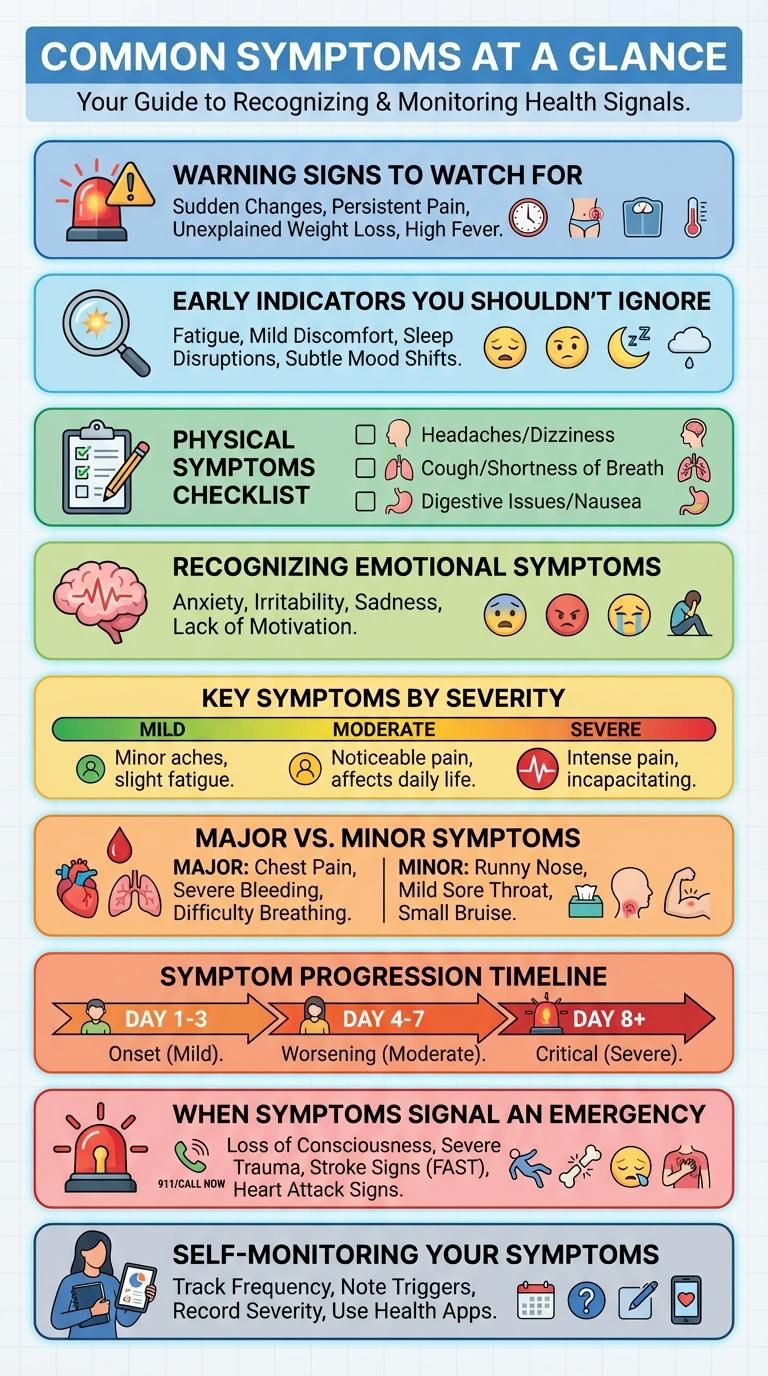
Visualizing symptoms through an infographic simplifies complex medical information, making it easier to recognize warning signs. Clear graphics highlight key symptoms, aiding quick identification and early intervention. This approach enhances understanding and supports better health awareness.
Common Symptoms at a Glance
Recognizing common symptoms quickly helps in early diagnosis and treatment. This infographic highlights key symptoms to watch for in various health conditions.
- Fever - A temporary increase in body temperature often indicating infection.
- Cough - A reflex action to clear the airways, frequently signaling respiratory issues.
- Fatigue - Persistent tiredness that is not relieved by rest and may suggest underlying illness.
Warning Signs to Watch For
Recognizing early warning signs is crucial for timely medical intervention. Understanding these symptoms can help prevent complications and promote better health outcomes.
- Persistent High Fever - A fever lasting more than three days may indicate a serious infection.
- Sudden Shortness of Breath - Difficulty breathing can be a sign of respiratory or cardiac issues requiring immediate attention.
- Unexplained Chest Pain - Chest discomfort can signal heart problems and should never be ignored.
Monitoring these warning signs and seeking prompt medical advice can save lives and improve recovery chances.
Early Indicators You Shouldn't Ignore
| Early Indicator | Description |
|---|---|
| Unexplained Fatigue | Persistent tiredness despite adequate rest and sleep. |
| Sudden Weight Changes | Rapid weight loss or gain without changes in diet or exercise. |
| Persistent Pain | Ongoing pain in muscles, joints, or specific body areas lasting more than a few days. |
| Changes in Skin | New or unusual rashes, discoloration, or sores that do not heal. |
| Altered Bowel or Bladder Habits | Frequent constipation, diarrhea, or difficulty urinating over time. |
Physical Symptoms Checklist
Are you aware of the common physical symptoms that may indicate underlying health issues? Monitoring these signs can help in early detection and treatment. Regularly checking for symptoms such as fatigue, pain, and changes in appetite supports overall well-being.
| Symptom | Description |
|---|---|
| Fatigue | Persistent tiredness despite rest or sleep. |
| Headache | Frequent or severe pain in the head area. |
| Muscle Pain | Unexplained soreness or stiffness in muscles. |
| Appetite Changes | Sudden increase or decrease in hunger levels. |
| Shortness of Breath | Difficulty breathing or feeling breathless during activities. |
Recognizing Emotional Symptoms
Recognizing emotional symptoms is crucial for maintaining mental well-being. Common signs include persistent feelings of sadness, anxiety, or irritability that affect daily life.
Other emotional symptoms may involve mood swings, withdrawal from social interactions, and difficulty concentrating. Early identification helps in seeking appropriate support and treatment.
Key Symptoms by Severity
Understanding the key symptoms by severity helps in early detection and appropriate response. Symptoms can range from mild discomfort to severe health risks requiring immediate attention.
Mild symptoms often include fatigue, slight headaches, and minor aches that usually resolve without intervention. Moderate symptoms may involve persistent cough, fever, and shortness of breath that necessitate medical evaluation. Severe symptoms include chest pain, high fever, confusion, and difficulty breathing, indicating the need for emergency care.
Major vs. Minor Symptoms
Infographics clearly distinguish between major and minor symptoms to help individuals identify the severity of their condition. Major symptoms often require immediate medical attention, while minor symptoms can usually be managed at home.
Major symptoms include high fever, difficulty breathing, and persistent pain or pressure in the chest. Minor symptoms typically involve mild headache, slight fatigue, and occasional coughing.
Symptom Progression Timeline
An infographic illustrating the Symptom Progression Timeline highlights the stages of symptom development over time. Early symptoms typically appear within the first few days, escalating to moderate severity around the first week. Understanding this timeline aids in timely diagnosis and effective intervention.
When Symptoms Signal an Emergency
Recognizing when symptoms signal an emergency is crucial for timely medical intervention. Severe chest pain, difficulty breathing, sudden weakness, or loss of consciousness require immediate attention. Prompt action can save lives and prevent complications in critical situations.