
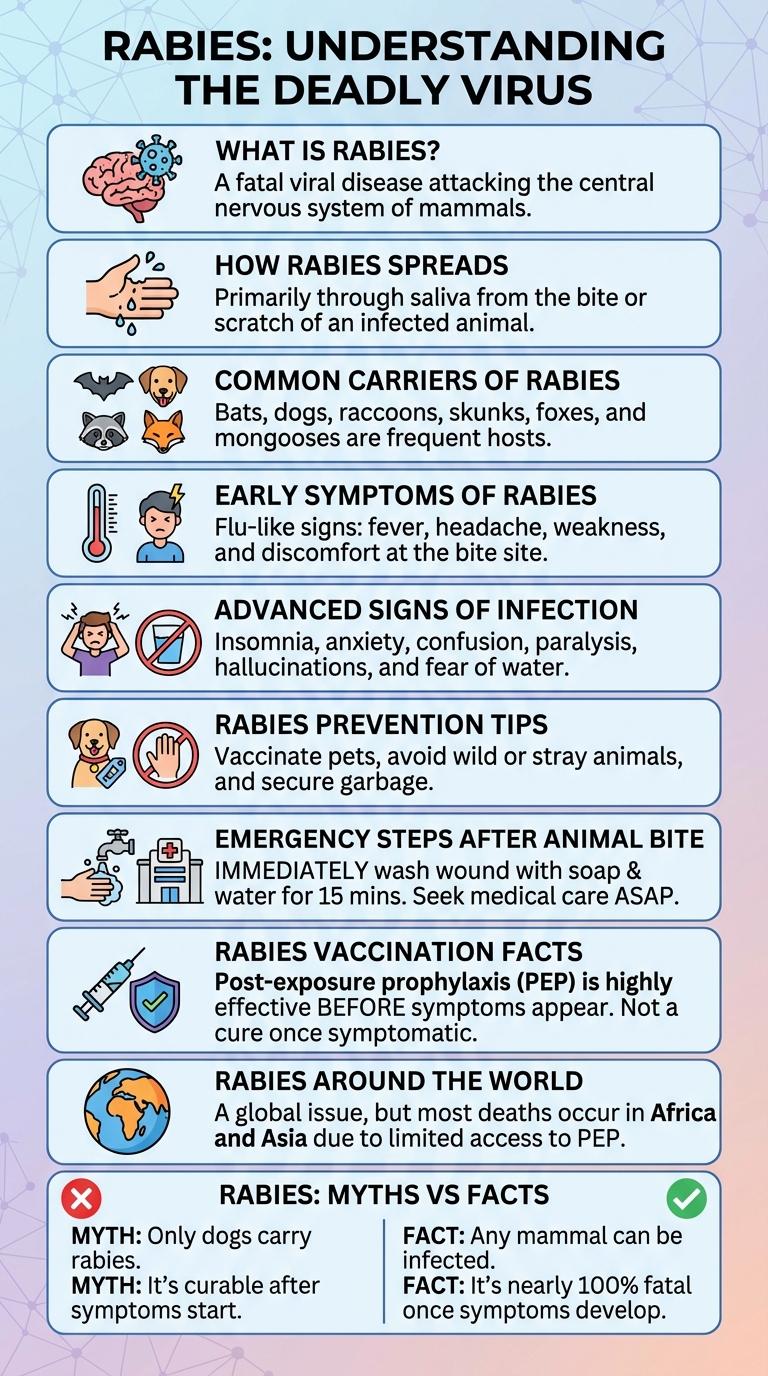
Rabies is a deadly viral infection that affects the central nervous system of mammals, including humans. Transmitted primarily through the bite of an infected animal, the disease progresses rapidly once symptoms appear, making timely prevention and treatment crucial. Understanding key facts about rabies, its transmission, symptoms, and prevention methods can help reduce its impact worldwide.
What is Rabies?
| Aspect | Description |
|---|---|
| Definition | Rabies is a deadly viral infection affecting the central nervous system of mammals, including humans. |
| Cause | The rabies virus, belonging to the Lyssavirus genus, spreads through the saliva of infected animals via bites or scratches. |
| Symptoms | Early signs include fever, headache, and weakness. Progresses to paralysis, agitation, hydrophobia, and confusion. |
| Transmission | Commonly transmitted by bites from rabid animals such as dogs, bats, raccoons, and foxes. |
| Fatality | Rabies is almost always fatal once clinical symptoms appear, making prevention and early treatment critical. |
How Rabies Spreads
Rabies spreads primarily through the saliva of infected animals, usually via bites. The virus enters the body through broken skin or mucous membranes.
Common carriers include bats, raccoons, skunks, and foxes. Once the virus reaches the nervous system, it travels to the brain, causing severe symptoms and eventual death if untreated.
Common Carriers of Rabies
Rabies is a viral disease primarily transmitted through the saliva of infected animals. Common carriers of rabies include wild mammals such as bats, raccoons, skunks, and foxes. Domestic animals like dogs and cats can also transmit rabies if they are not vaccinated.
Early Symptoms of Rabies
Rabies is a deadly viral disease that affects the nervous system after exposure to infected animal saliva. Early detection of symptoms is crucial for timely medical intervention to prevent fatal outcomes.
Recognizing early signs can save lives by prompting immediate treatment and vaccination.
- Fever and Headache - Initial symptoms often include mild fever and persistent headache signaling the body's viral response.
- Fatigue and Weakness - Patients may experience unusual tiredness and muscle weakness during early infection stages.
- Pain or Tingling Sensation - Localized discomfort or itching at the exposure site is a common early warning.
Advanced Signs of Infection
Rabies progresses through advanced signs such as hydrophobia, characterized by intense fear of water due to painful throat spasms. Neurological symptoms include confusion, agitation, hallucinations, and paralysis as the virus attacks the central nervous system. Untreated rabies is almost always fatal once these advanced signs manifest, emphasizing the need for immediate medical intervention after exposure.
Rabies Prevention Tips
Rabies is a deadly viral disease transmitted through the bite of infected animals. Early prevention and awareness are critical to avoid infection and save lives.
Vaccinating pets regularly helps prevent the spread of rabies. Avoid contact with wild animals and report any strange behavior to authorities. Immediate medical attention after a potential exposure can prevent the virus from developing.
Emergency Steps After Animal Bite
Rabies is a deadly viral infection transmitted through the bite of an infected animal. Immediate action after an animal bite can prevent rabies infection and save lives.
- Clean the Wound Immediately - Wash the bite area thoroughly with soap and water for at least 15 minutes to reduce virus particles.
- Seek Medical Attention - Visit a healthcare professional promptly for evaluation and possible rabies vaccination.
- Identify the Animal - If safe, capture information about the animal to help assess rabies risk and facilitate testing or quarantine.
Rabies Vaccination Facts
Rabies is a deadly viral infection transmitted through the bite of an infected animal. Vaccination is the most effective method to prevent rabies in both humans and animals.
Over 15 million people receive post-exposure prophylaxis annually to prevent rabies infection after potential exposure. Rabies vaccines have a near 100% efficacy rate when administered promptly.
Rabies Around the World
Where is rabies most prevalent globally? Rabies is primarily found in Asia and Africa, where the majority of human deaths occur. Vaccination and animal control programs have significantly reduced cases in the Americas and Europe.
What animals are the main carriers of rabies? Dogs are the primary reservoirs for rabies transmission to humans worldwide. In the Americas, bats, raccoons, and foxes also contribute to the spread of the virus.
How many people die from rabies each year? Approximately 59,000 people die from rabies annually, with children under 15 being the most vulnerable group. Most deaths are linked to untreated dog bites in rural areas.
Which regions have the highest rabies vaccination coverage? Countries in Europe and North America maintain high vaccination rates, drastically lowering rabies cases. In contrast, vaccination coverage remains low in many parts of Asia and Africa.
What efforts are in place to control rabies worldwide? The World Health Organization promotes mass dog vaccination and public awareness campaigns. These initiatives aim to eliminate human rabies deaths by 2030 through coordinated global action.