
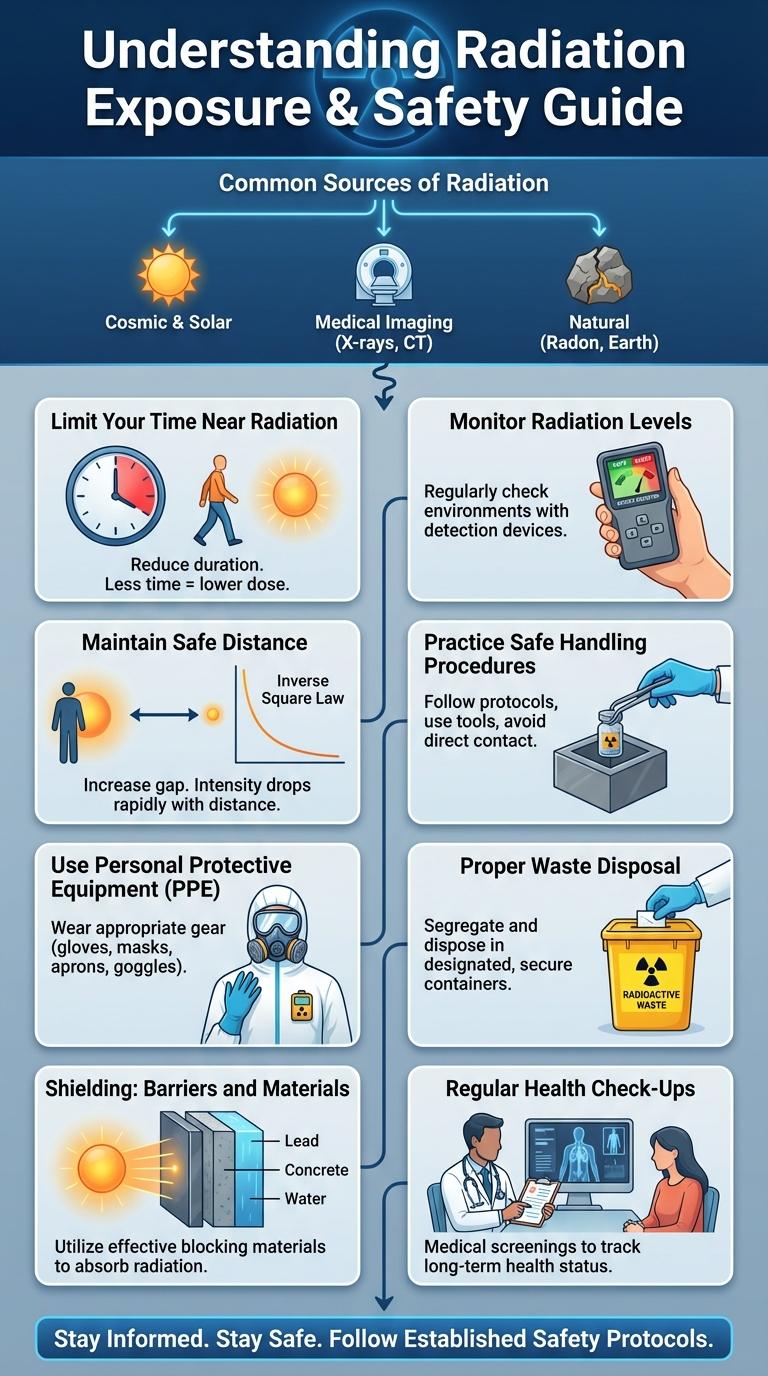
Minimizing exposure to radiation is crucial for maintaining long-term health and safety. Adhering to established safety health protocols effectively reduces the risks associated with radiation in various environments. This infographic highlights essential measures to protect individuals from excessive radiation exposure.
Understanding Radiation Exposure
Understanding radiation exposure is essential for maintaining health and safety in environments where radiation is present. Effective safety health protocols help minimize the risks associated with excessive radiation exposure.
- Limit Time of Exposure - Reducing the duration spent near radiation sources decreases the overall dose received.
- Increase Distance - Keeping a safe distance from radiation sources significantly lowers exposure levels due to the inverse square law.
- Use Shielding - Employing barriers made of lead, concrete, or other materials can block or reduce radiation penetration to protect individuals.
Common Sources of Radiation
Radiation exposure can come from a variety of common sources in daily life and occupational settings. Understanding these sources helps implement effective safety health protocols to minimize risk.
- Medical Imaging Devices - X-rays and CT scans are frequent sources of controlled radiation exposure during diagnostic procedures.
- Natural Background Radiation - Radon gas and cosmic rays contribute to everyday low-level radiation exposure.
- Industrial Equipment - Devices used in power plants and manufacturing may emit radiation if not properly shielded.
Adhering to safety guidelines around these sources reduces potential radiation-related health risks.
Limit Your Time Near Radiation
Limiting your time near radiation sources significantly reduces your overall exposure. Spend the shortest time possible in areas with high radiation levels to minimize health risks.
Plan activities efficiently to avoid unnecessary delays near radiation zones. Use radiation monitoring devices to track exposure duration and maintain safety.
Maintain Safe Distance
| Safety Protocol | Description |
|---|---|
| Maintain Safe Distance | Stay at least 6 feet away from radiation sources whenever possible to minimize exposure levels. |
| Use Barriers | Position physical shields such as lead screens between yourself and radiation-emitting devices. |
| Limit Time Near Source | Reduce the duration spent near radiation sources to decrease cumulative exposure. |
| Wear Monitoring Devices | Use personal dosimeters to track radiation exposure and ensure it remains within safe limits. |
| Follow Workplace Guidelines | Adhere strictly to established radiation safety protocols and signage in the environment. |
Use Personal Protective Equipment
Using Personal Protective Equipment (PPE) significantly reduces the risk of harmful radiation exposure in medical, industrial, and research environments. Proper PPE acts as a barrier, protecting workers from cumulative radiation effects.
- Wear Lead Aprons - Lead aprons shield vital organs by absorbing scatter radiation, minimizing internal exposure.
- Use Lead Gloves - Lead gloves protect hands during procedures involving direct contact with radioactive sources.
- Don Lead Glasses - Lead glasses safeguard the eyes from radiation-induced cataracts by blocking scattered rays.
Shielding: Barriers and Materials
Effective shielding reduces radiation exposure by using barriers made from dense materials like lead, concrete, or specialized polymers. The thickness and type of material depend on the radiation type and energy level to ensure optimal protection. Properly designed shielding limits dose rates, safeguarding both workers and the public from harmful radiation effects.
Monitor Radiation Levels
How can monitoring radiation levels help prevent overexposure? Regularly tracking radiation levels enables timely identification of dangerous exposure zones. Using reliable radiation detectors ensures that safety measures are implemented effectively to protect health.
Practice Safe Handling Procedures
Practice safe handling procedures to minimize radiation exposure and protect your health. Always use appropriate shielding devices, such as lead aprons and barriers, when working with radioactive materials. Regularly monitor radiation levels with calibrated detectors and follow established safety guidelines to ensure a secure environment.
Proper Waste Disposal
Proper waste disposal is essential to minimize exposure to harmful radiation in healthcare and industrial settings. Segregating radioactive materials from regular waste prevents contamination and ensures safe handling.
Use designated containers labeled clearly for radioactive waste to avoid accidental exposure. Following regulatory guidelines for disposal reduces environmental harm and protects public health.