
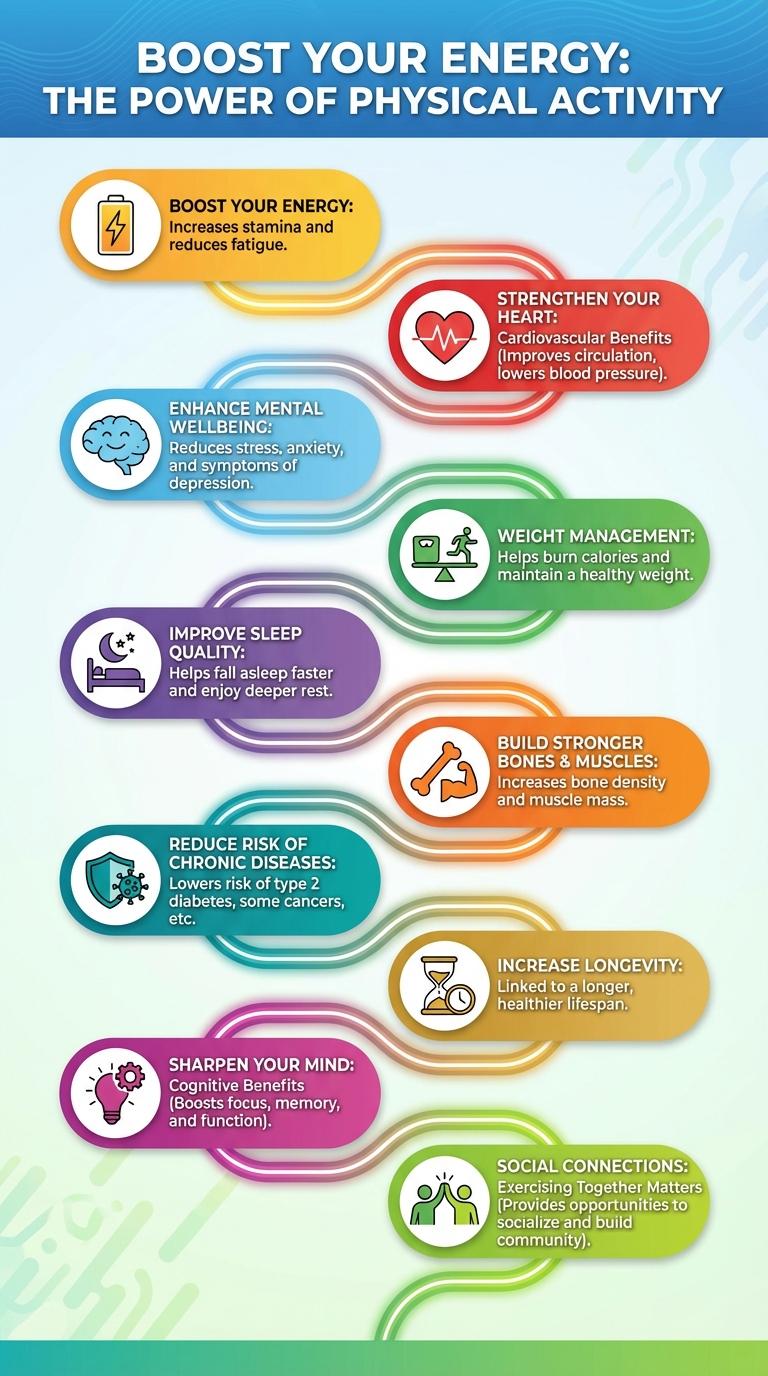
Regular physical activity boosts overall health by improving cardiovascular function, strengthening muscles, and enhancing mental well-being. Engaging in consistent exercise reduces the risk of chronic diseases such as diabetes, obesity, and heart disease. Understanding these benefits encourages individuals to incorporate movement into daily routines for a healthier lifestyle.
Boost Your Energy: The Power of Physical Activity
How does physical activity boost your energy levels? Engaging in regular exercise enhances your cardiovascular health, which improves oxygen flow and increases stamina. This results in higher energy throughout the day.
Why is physical activity essential for mental clarity? Exercise stimulates the release of endorphins, reducing stress and promoting a positive mood. Improved mental focus and reduced fatigue are direct benefits.
What role does exercise play in improving sleep? Physical activity helps regulate your sleep patterns by increasing the production of sleep-promoting hormones. Better sleep quality translates to more energy and alertness.
How can physical activity combat fatigue? Regular movement enhances muscle strength and endurance, reducing feelings of tiredness. Consistent exercise leads to sustained energy and improved daily performance.
Which types of physical activity best boost energy? Aerobic exercises, such as walking, running, and cycling, effectively increase heart rate and oxygen delivery. Incorporating these activities boosts overall vitality.
Strengthen Your Heart: Cardiovascular Benefits
| Cardiovascular Benefit | Details |
|---|---|
| Improves Heart Health | Regular physical activity strengthens the heart muscle, enabling it to pump blood more efficiently throughout the body. |
| Reduces Risk of Heart Disease | Exercise lowers blood pressure, reduces bad cholesterol (LDL), and increases good cholesterol (HDL), decreasing the likelihood of heart disease. |
| Enhances Blood Circulation | Physical activity promotes better blood flow, helping to prevent artery blockages and improving oxygen delivery to tissues. |
| Controls Weight | Maintaining a healthy weight through exercise reduces strain on the heart and lowers the risk of developing cardiovascular conditions. |
| Boosts Endurance | Consistent physical activity increases cardiovascular endurance, allowing the heart to handle increased workloads with less fatigue. |
Enhance Mental Wellbeing Through Movement
Engaging in regular physical activity plays a crucial role in boosting mental health and emotional resilience. Movement triggers positive chemical changes in the brain that improve mood and reduce anxiety.
- Reduces Stress - Exercise lowers cortisol levels, helping to alleviate feelings of stress and tension.
- Improves Sleep Quality - Physical activity promotes deeper and more restorative sleep, essential for mental clarity and emotional stability.
- Enhances Cognitive Function - Movement increases blood flow to the brain, enhancing memory, focus, and overall cognitive performance.
Physical Activity and Weight Management
Engaging in regular physical activity plays a critical role in effective weight management. It helps to burn calories, reduce body fat, and maintain lean muscle mass.
Consistent exercise boosts metabolism and supports long-term weight control by balancing energy intake and expenditure. Physical activity also improves overall health, reducing the risk of obesity-related diseases.
Improve Sleep Quality with Exercise
Regular physical activity plays a crucial role in enhancing sleep quality. Engaging in exercise helps regulate the body's internal clock and promotes deeper, more restorative sleep.
Exercise increases the production of sleep-promoting hormones like melatonin. It reduces stress and anxiety, which are common causes of insomnia. Studies show that people who exercise regularly fall asleep faster and experience longer sleep duration.
Build Stronger Bones and Muscles
Engaging in regular physical activity is essential for building stronger bones and muscles. It supports overall skeletal health and enhances muscle strength, reducing the risk of injuries.
- Increases Bone Density - Weight-bearing exercises stimulate bone growth and improve bone mineral density.
- Enhances Muscle Strength - Resistance training promotes muscle fiber growth and improves muscle endurance.
- Prevents Osteoporosis - Consistent physical activity helps maintain bone mass and lowers the likelihood of osteoporosis.
Reduce Risk of Chronic Diseases
Regular physical activity significantly reduces the risk of chronic diseases such as heart disease, diabetes, and certain cancers. Engaging in at least 150 minutes of moderate exercise weekly helps maintain healthy blood pressure and improves insulin sensitivity. Staying active strengthens the immune system and promotes overall long-term health.
Increase Longevity with an Active Lifestyle
Engaging in regular physical activity significantly extends life expectancy. An active lifestyle reduces the risk of chronic diseases and enhances overall health.
- Reduces Mortality Risk - Studies show that consistent exercise lowers the risk of premature death by up to 30%.
- Improves Cardiovascular Health - Physical activity strengthens the heart and improves blood circulation, reducing heart disease incidence.
- Enhances Mental Well-being - Exercise boosts mood and cognitive function, contributing to healthier aging.
Incorporating daily physical activity is a powerful strategy to increase longevity and quality of life.
Sharpen Your Mind: Cognitive Benefits of Exercise
Engaging in regular physical activity enhances brain function by increasing blood flow and oxygen supply to the brain. Exercise stimulates the release of neurotrophic factors that support neuron growth and synaptic plasticity.
These cognitive benefits improve memory, attention, and problem-solving skills. Consistent exercise also reduces the risk of cognitive decline and neurodegenerative diseases such as Alzheimer's.