
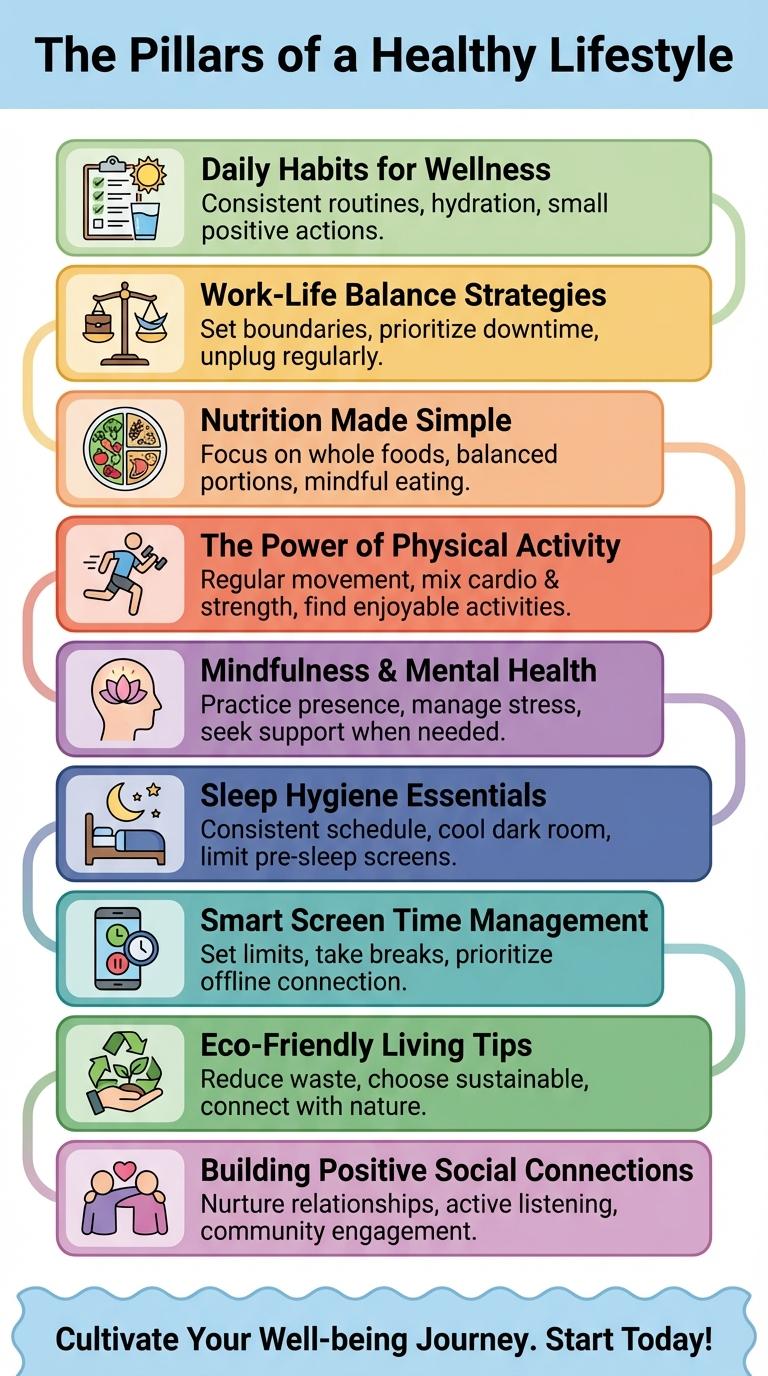
Exploring an infographic about lifestyle reveals key trends and habits shaping daily routines and overall well-being. Visual representation highlights the impact of nutrition, exercise, and sleep on mental and physical health. Understanding these elements helps individuals make informed decisions toward a balanced and fulfilling life.
The Pillars of a Healthy Lifestyle
A healthy lifestyle is built on fundamental pillars that support overall well-being. Key components include balanced nutrition, regular physical activity, adequate sleep, stress management, and social connections. Maintaining these pillars promotes physical health, mental clarity, and emotional resilience.
Daily Habits for Wellness
Daily habits play a crucial role in maintaining overall wellness and enhancing quality of life. Simple changes in routine can lead to significant improvements in physical and mental health.
Incorporating regular exercise, balanced nutrition, and mindfulness practices supports long-term well-being. Consistency in these daily habits promotes energy, reduces stress, and improves mood.
Work-Life Balance Strategies
Work-life balance is essential for maintaining mental health and increasing productivity. Effective strategies allow individuals to manage professional responsibilities alongside personal well-being.
- Set Clear Boundaries - Designate specific work hours and personal time to prevent overlap and reduce stress.
- Prioritize Tasks - Use task management techniques like the Eisenhower Matrix to focus on high-impact activities and avoid burnout.
- Incorporate Regular Breaks - Short breaks throughout the day improve concentration and overall job satisfaction.
Nutrition Made Simple
| Nutrition Made Simple | Key Insights |
|---|---|
| Balanced Diet | Incorporate fruits, vegetables, lean proteins, and whole grains daily |
| Hydration | Drink at least 8 glasses of water each day to maintain optimal body functions |
| Portion Control | Use smaller plates and avoid oversized servings to manage calorie intake |
| Limit Processed Foods | Reduce consumption of high-sugar, high-salt, and trans-fat packed products |
| Mindful Eating | Eat slowly and pay attention to hunger cues to prevent overeating |
The Power of Physical Activity
How does physical activity impact overall health?
Engaging in regular physical activity boosts cardiovascular health and strengthens muscles. It also improves mental well-being by reducing stress and enhancing mood.
Mindfulness & Mental Health
Mindfulness is a powerful practice that enhances mental health by promoting present-moment awareness. Regular mindfulness exercises reduce stress, anxiety, and depression symptoms effectively.
Incorporating mindfulness into daily routines improves emotional regulation and cognitive focus. Techniques such as meditation, deep breathing, and mindful walking boost overall psychological resilience. Studies show consistent mindfulness practice increases gray matter density in brain regions linked to memory and empathy.
Sleep Hygiene Essentials
Good sleep hygiene is crucial for maintaining overall health and improving daily performance. Establishing consistent habits can enhance sleep quality and duration.
- Maintain a consistent sleep schedule - Going to bed and waking up at the same times daily regulates your body's internal clock.
- Create a relaxing bedtime routine - Activities like reading or meditation signal your body it's time to wind down.
- Limit exposure to screens before bed - Reducing blue light from devices helps promote melatonin production for better sleep.
Smart Screen Time Management
Smart screen time management enhances productivity and mental well-being by balancing digital use with offline activities. Setting intentional limits on device usage helps prevent eye strain and reduces distractions.
Using tools like app timers and focus modes promotes healthier habits and improves concentration. Tracking screen time data offers insights to refine daily routines for optimal lifestyle balance.
Eco-Friendly Living Tips
Living an eco-friendly lifestyle helps reduce environmental impact and promotes sustainability. Small daily changes contribute significantly to conserving natural resources.
- Use Reusable Bags - Switching to reusable bags decreases plastic waste in oceans and landfills.
- Conserve Water - Reducing water usage saves energy and protects freshwater ecosystems.
- Choose Energy-Efficient Appliances - Energy-efficient devices lower electricity consumption and carbon emissions.
- Support Local Produce - Buying local reduces transportation emissions and supports sustainable farming.
- Reduce Meat Consumption - Limiting meat intake decreases greenhouse gas emissions from livestock farming.
Adopting these eco-friendly habits fosters a healthier planet for future generations.