
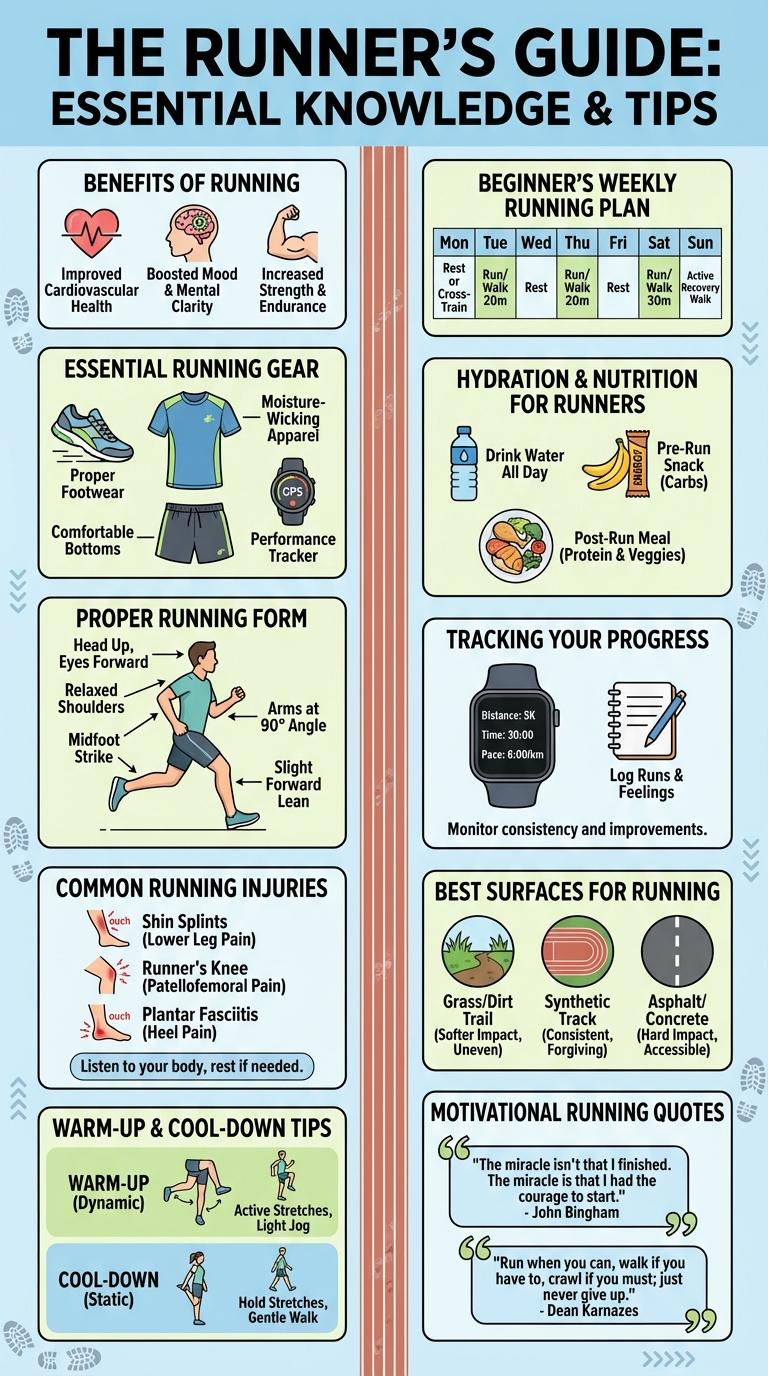
Running improves cardiovascular health by boosting heart and lung function. Regular running increases endurance, strengthens muscles, and aids in weight management. Tracking progress through infographics helps visualize key performance metrics and motivates continuous improvement.
Benefits of Running
Running is a powerful form of exercise that enhances overall health and well-being. It engages multiple body systems to promote physical and mental resilience.
- Improves Cardiovascular Health - Running strengthens the heart, increasing blood circulation and reducing the risk of heart disease.
- Boosts Mental Health - Regular running releases endorphins, which help alleviate stress and improve mood.
- Supports Weight Management - Running burns calories efficiently, aiding in fat loss and maintaining a healthy body weight.
Incorporating running into your routine contributes significantly to a healthier, more energetic lifestyle.
Essential Running Gear
Running requires specific gear to enhance performance and ensure safety. Selecting the right equipment can improve comfort and prevent injuries.
Essential running gear includes footwear, clothing, and accessories designed for optimal support and durability.
- Running Shoes - Proper running shoes provide cushioning, arch support, and reduce impact to protect joints.
- Moisture-Wicking Apparel - Technical shirts and shorts help keep sweat away from the skin to maintain comfort during runs.
- Reflective Gear - Reflective vests or bands improve visibility when running in low-light conditions for safety.
- Hydration Equipment - Water bottles or hydration packs ensure runners stay hydrated during long-distance runs.
- GPS Watches - GPS-enabled watches track distance, pace, and route to optimize training and progress monitoring.
Proper Running Form
Proper running form enhances efficiency and reduces injury risk. Key elements include posture, foot strike, and arm movement.
Maintain an upright posture with a slight forward lean from the ankles. Land midfoot to evenly distribute impact and improve balance. Keep arms bent at 90 degrees, swinging them naturally to aid momentum.
Common Running Injuries
Running is a popular form of exercise that can lead to various injuries if not performed with proper technique and care. Understanding common running injuries helps prevent long-term damage and promotes better recovery.
- Runner's Knee - Pain around the kneecap caused by overuse or misalignment during running.
- Shin Splints - Sharp or dull pain along the shinbone due to stress on the muscles and bones.
- Achilles Tendinitis - Inflammation of the Achilles tendon caused by repetitive strain or sudden increase in intensity.
- Plantar Fasciitis - Heel pain resulting from inflammation of the plantar fascia tissue on the sole of the foot.
- IT Band Syndrome - Pain on the outside of the knee caused by irritation of the iliotibial band during repetitive movement.
Warm-Up & Cool-Down Tips
Proper warm-up prepares muscles and joints for running, reducing injury risks. Effective warm-up routines include dynamic stretches like leg swings and lunges to increase blood flow. Cooling down with light jogging and static stretches aids recovery and prevents muscle stiffness.
Beginner's Weekly Running Plan
How can beginners start running safely and effectively? Establishing a weekly running routine helps build endurance and prevents injury. Begin with short intervals of walking and running to gradually increase fitness levels.
What does a beginner's weekly running plan include? It typically consists of 3 to 4 days of running combined with rest or cross-training days. This approach supports muscle recovery and improves overall performance.
Which distances are suitable for beginner runners? Start with easy runs of 1 to 2 miles per session during the first week. Gradually increase distance by 10% each week to avoid overtraining.
How important is rest in a beginner's running plan? Rest days are essential for muscle repair and energy restoration. Incorporate at least 1 or 2 rest or light activity days each week to stay injury-free.
What role does warm-up and cool-down play? Warming up with dynamic stretches prepares muscles for exercise and reduces risk of strain. Cooling down with gentle stretches aids recovery and improves flexibility.
| Day | Activity |
|---|---|
| Monday | Run 1 mile + brisk walk 1 mile |
| Wednesday | Run 1.5 miles at comfortable pace |
| Friday | Interval training: 1 min run, 2 min walk x 5 |
| Sunday | Light cross-training or rest |
Hydration & Nutrition for Runners
Proper hydration plays a crucial role in maintaining energy levels and preventing dehydration during running. Consuming adequate fluids before, during, and after running helps regulate body temperature and supports optimal performance.
Nutrition fuels the body with essential nutrients needed for endurance and recovery. Runners should focus on a balanced intake of carbohydrates, proteins, and healthy fats to maximize energy and muscle repair.
Tracking Your Progress
Tracking your running progress helps improve performance and stay motivated by monitoring key metrics such as distance, pace, and heart rate. Using GPS-enabled devices or running apps provides accurate data to analyze every run and set achievable goals. Regularly reviewing progress encourages consistency and highlights areas for improvement, enhancing overall running experience.
Best Surfaces for Running
| Running Surface | Benefits |
|---|---|
| Trail | Soft terrain reduces impact on joints, improves proprioception and balance. |
| Grass | Provides cushioning and lowers injury risk; may be uneven requiring caution. |
| Rubber Track | Shock absorption minimizes stress on muscles and bones; consistent surface. |
| Concrete | Durable and flat but high impact forces increase injury risk over time. |
| Asphalt | Smoother than concrete offering moderate shock absorption; widely available. |