
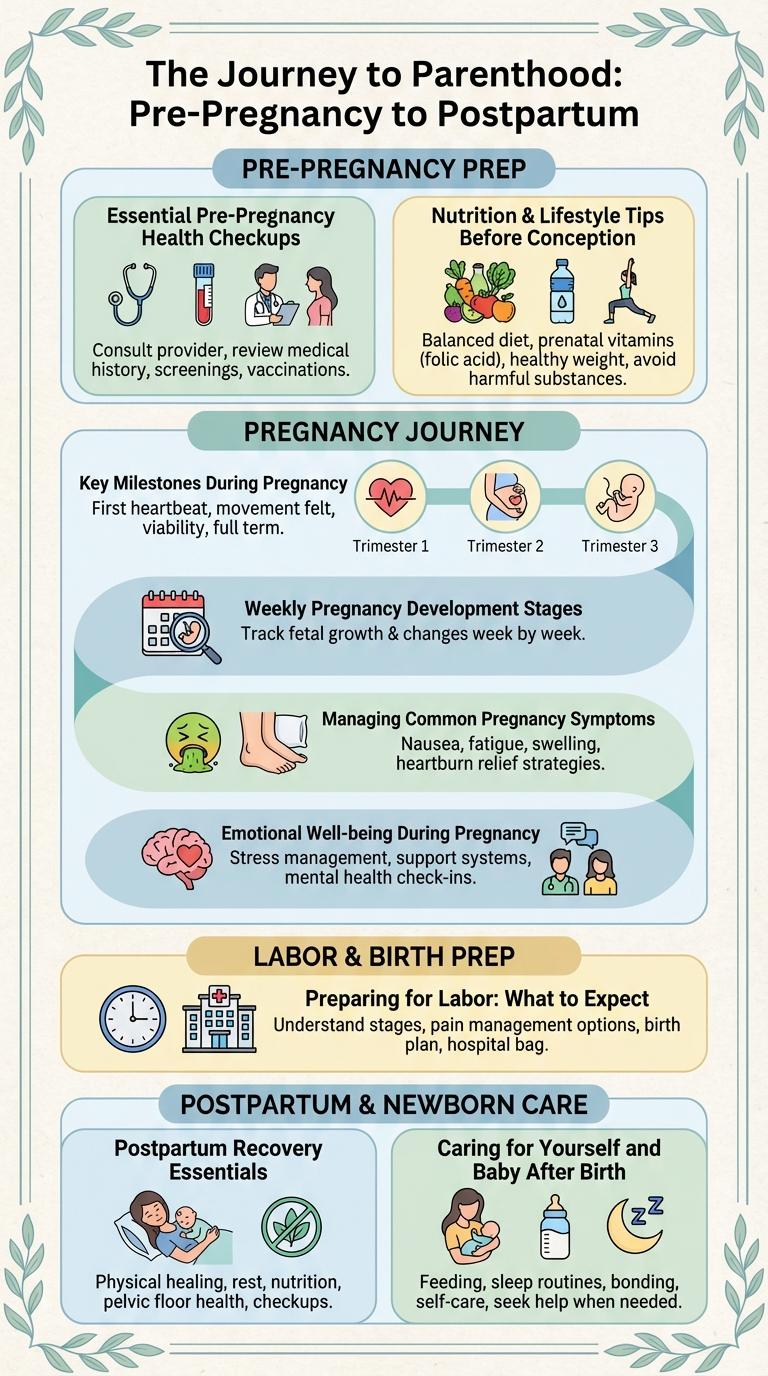
Understanding the key stages before, during, and after pregnancy is crucial for expecting mothers and their families. This infographic highlights essential health tips, nutritional guidance, and emotional support strategies to ensure a smooth journey throughout pregnancy. Clear visualization helps track important milestones and prepare for a safe and healthy experience from conception to postpartum care.
Preparing Your Body: Before Pregnancy
| Aspect | Preparation Tips |
|---|---|
| Nutrition | Increase intake of folic acid, iron, calcium, and vitamins. Eat balanced meals rich in fruits, vegetables, and whole grains. |
| Exercise | Engage in regular moderate exercise such as walking, swimming, or prenatal yoga to improve cardiovascular health and flexibility. |
| Medical Check-up | Schedule a full health screening to identify and manage conditions like diabetes or hypertension. Discuss prenatal vitamins with your healthcare provider. |
| Lifestyle | Quit smoking, avoid alcohol and drugs. Reduce caffeine intake and manage stress through relaxation techniques or counseling. |
| Weight Management | Achieve a healthy body weight before conception to reduce risks during pregnancy and support fetal development. |
Essential Pre-Pregnancy Health Checkups
Essential pre-pregnancy health checkups help ensure a healthy start for both mother and baby. These evaluations identify potential risks and provide guidance on nutrition, lifestyle, and medical conditions.
Common checkups include blood tests, genetic screening, and immunizations. Early detection of issues like anemia, diabetes, or infections allows for timely intervention to improve pregnancy outcomes.
Nutrition & Lifestyle Tips Before Conception
Proper nutrition and lifestyle choices before conception lay the foundation for a healthy pregnancy. Folic acid intake, balanced diet, and regular exercise are crucial during this phase.
Women should focus on consuming leafy greens, whole grains, and lean proteins to support reproductive health. Avoiding alcohol, smoking, and excessive caffeine enhances fertility and reduces risks. Managing stress and maintaining a healthy weight further contribute to optimal conditions for conception.
Key Milestones During Pregnancy
Pregnancy is a journey marked by significant milestones that guide the health and development of both mother and baby. Understanding these key stages helps ensure timely care and support throughout the process.
- Before Pregnancy: Preconception Health - Focus on nutrition, folic acid intake, and medical check-ups to prepare the body for a healthy pregnancy.
- During Pregnancy: Trimester Development - The first trimester involves organ formation, the second trimester marks fetal growth and movement, and the third trimester prepares for birth with lung and brain development.
- After Pregnancy: Postpartum Recovery - Emphasis on physical healing, emotional support, and newborn care during the first six weeks postpartum.
Weekly Pregnancy Development Stages
What changes occur during the weekly stages of pregnancy development? Pregnancy is divided into three trimesters, each with unique developmental milestones. Tracking weekly progress helps expectant mothers understand fetal growth and maternal changes.
| Week | Development Milestone |
|---|---|
| 1-4 | Fertilization and implantation; formation of the embryo and placenta begins. |
| 5-8 | Major organs start to develop; heartbeat becomes detectable via ultrasound. |
| 9-12 | Facial features form; limbs grow longer; fetus starts moving. |
| 13-16 | Skeleton ossifies; reflexes improve; gender may be identified via ultrasound. |
| 17-20 | Fetal movements become more noticeable; lanugo and vernix caseosa develop. |
Managing Common Pregnancy Symptoms
Managing common pregnancy symptoms is essential for the health and comfort of both mother and baby. Effective strategies before, during, and after pregnancy can significantly reduce discomfort and promote well-being.
- Before Pregnancy: Prepare with Nutrition - Consuming a balanced diet rich in vitamins and minerals helps prevent early pregnancy symptoms like nausea and fatigue.
- During Pregnancy: Hydrate and Rest - Staying well-hydrated and getting adequate rest alleviates symptoms such as swelling, headaches, and dizziness.
- After Pregnancy: Postpartum Care - Managing symptoms like fatigue and mood swings involves proper nutrition, sleep, and emotional support to aid recovery.
Emotional Well-being During Pregnancy
Emotional well-being during pregnancy plays a crucial role in both maternal and fetal health. Hormonal changes can cause mood swings, anxiety, and stress, requiring supportive care and mindfulness practices. Monitoring emotional health before, during, and after pregnancy helps ensure a positive experience and reduces the risk of postpartum depression.
Preparing for Labor: What to Expect
Preparing for labor involves understanding the stages and knowing what to expect for a smoother experience. Awareness of physical and emotional changes helps expectant mothers stay calm and confident during childbirth.
- Early Labor - Contractions begin mild and irregular, signaling the start of cervical dilation.
- Active Labor - Contractions become stronger and more frequent, with noticeable progression in cervix opening.
- Transition Phase - The cervix fully dilates, often accompanied by intense contractions and pressure.
- Pushing Stage - Efforts focus on delivering the baby as contractions assist movement through the birth canal.
- Delivery of Placenta - Completion of labor with the expulsion of the placenta, marking the end of childbirth.
Understanding these stages helps in managing expectations and preparing necessary support before, during, and after pregnancy.
Postpartum Recovery Essentials
Postpartum recovery is a vital phase encompassing physical healing and emotional adjustment after childbirth. Proper care supports the mother's return to health and helps in managing postpartum symptoms effectively.
Essentials for postpartum recovery include adequate rest, nutritious meals, and gentle exercise to promote healing and energy restoration. Monitoring mental health and seeking support from healthcare professionals can prevent postpartum depression and ensure overall well-being.