
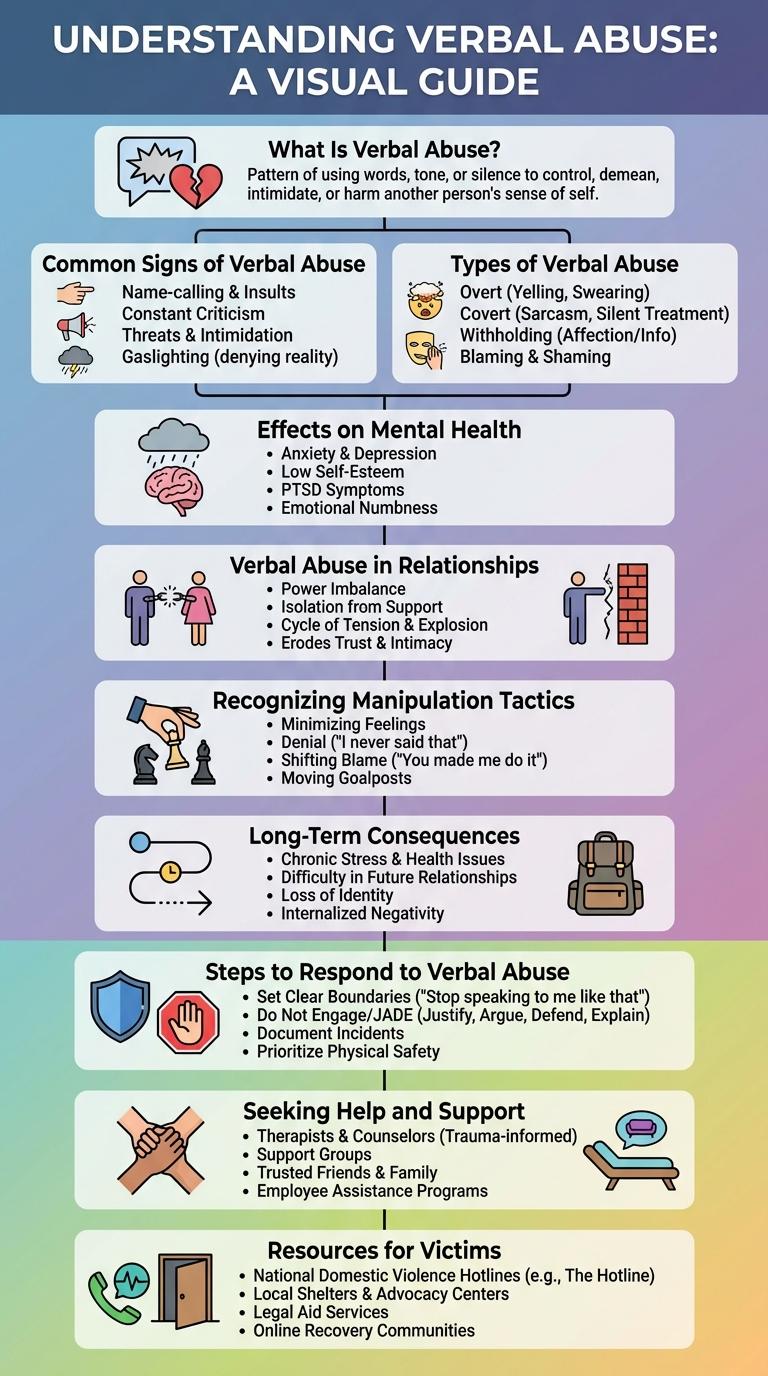
Verbal abuse involves the use of words to harm, belittle, or control another person, often leaving lasting emotional scars. This infographic highlights key signs, common phrases, and the psychological impact of verbal abuse to raise awareness and promote healthier communication. Understanding these patterns is crucial for recognizing abuse and seeking support.
What Is Verbal Abuse?
Verbal abuse involves using words to cause harm, humiliation, or control over another person. It includes insults, threats, and constant criticism that undermine a person's self-worth.
This form of abuse can occur in personal relationships, workplaces, or social settings. Recognizing verbal abuse is essential to protect mental health and seek appropriate support.
Common Signs of Verbal Abuse
Verbal abuse often involves constant criticism, name-calling, and belittling that damages self-esteem. Victims may experience fear, confusion, and a loss of confidence due to repeated negative remarks. Recognizing these signs early is essential to seek help and support.
Types of Verbal Abuse
Verbal abuse involves using words to control, intimidate, or harm another person emotionally. Recognizing different types of verbal abuse is essential for identifying and addressing harmful behavior effectively.
- Insulting - Using offensive language to demean or belittle someone.
- Threatening - Making statements that imply harm or danger to intimidate the victim.
- Blaming - Holding someone responsible unfairly to manipulate or control them.
- Yelling - Raising voice aggressively to dominate or frighten the listener.
- Gaslighting - Twisting facts to make the victim doubt their reality or feelings.
Effects on Mental Health
| Effect on Mental Health | Description |
|---|---|
| Increased Anxiety | Verbal abuse leads to heightened anxiety levels, causing persistent worry and fear. |
| Depression | Repeated verbal attacks contribute to feelings of sadness, hopelessness, and loss of interest in activities. |
| Low Self-Esteem | Constant criticism and insults damage self-worth and confidence. |
| Post-Traumatic Stress | Words that humiliate or threaten can trigger long-lasting emotional trauma and flashbacks. |
| Social Withdrawal | Victims may isolate themselves to avoid further verbal attacks, leading to loneliness. |
Verbal Abuse in Relationships
Verbal abuse in relationships involves the use of words to demean, control, or manipulate a partner. Common forms include insults, threats, and constant criticism that erode self-esteem. Recognizing these signs early is crucial for seeking help and establishing healthy boundaries.
Recognizing Manipulation Tactics
Verbal abuse often involves subtle manipulation tactics designed to undermine a person's confidence and control their behavior. Recognizing these tactics is crucial for protecting oneself and seeking help.
- Gaslighting - Making someone doubt their own memory or perception to gain control.
- Blame Shifting - Avoiding responsibility by accusing others unfairly.
- Silent Treatment - Using refusal to communicate as a form of punishment or control.
Identifying these manipulation tactics can empower victims to set boundaries and pursue support for recovery.
Long-Term Consequences
What are the long-term effects of verbal abuse on mental health? Persistent verbal abuse can lead to chronic anxiety, depression, and low self-esteem. These psychological impacts often continue well into adulthood, affecting overall quality of life.
How does verbal abuse influence relationships over time? Victims may develop trust issues, difficulty expressing emotions, and struggles with intimacy. These challenges can result in social withdrawal and isolation.
Can verbal abuse affect physical health in the long run? Continuous exposure to verbal abuse can trigger stress-related conditions such as headaches, gastrointestinal problems, and hypertension. The body's immune system may also weaken due to prolonged stress.
What impact does verbal abuse have on cognitive functions? Long-term verbal abuse can impair concentration, memory, and decision-making abilities. These cognitive difficulties hinder academic and professional performance.
How does verbal abuse affect a person's self-perception over time? Repeated negative verbal interactions can cause internalized negative beliefs and feelings of worthlessness. This distorted self-image may contribute to self-destructive behaviors.
Steps to Respond to Verbal Abuse
Verbal abuse can cause significant emotional harm and needs a calm, clear response. Recognizing effective steps helps protect your mental well-being and assert your boundaries.
- Stay Calm - Take deep breaths to maintain composure and avoid escalating the situation.
- Set Boundaries - Clearly communicate that verbal abuse is unacceptable and will not be tolerated.
- Seek Support - Reach out to trusted friends, family, or professionals for assistance and guidance.
- Document Incidents - Keep a detailed record of abusive interactions for future reference or legal action.
- Consider Professional Help - Engage counselors or legal advisors to address ongoing abuse effectively.
Seeking Help and Support
Verbal abuse can severely impact mental health, making it crucial to seek timely help and support. Recognizing signs and reaching out to trusted individuals is the first step toward recovery.
Professional counseling offers a safe environment to process experiences and rebuild self-esteem. Support groups connect survivors with others facing similar challenges, providing empathy and understanding. Hotlines and online resources are available 24/7 for immediate assistance and guidance.